
Nebraska buyer guide
Outsourcing software development from Nebraska
A Nebraska buyer guide to international software and AI outsourcing: producer-owned agricultural data, controller and processor authority, privacy, security, time zones, and exit.
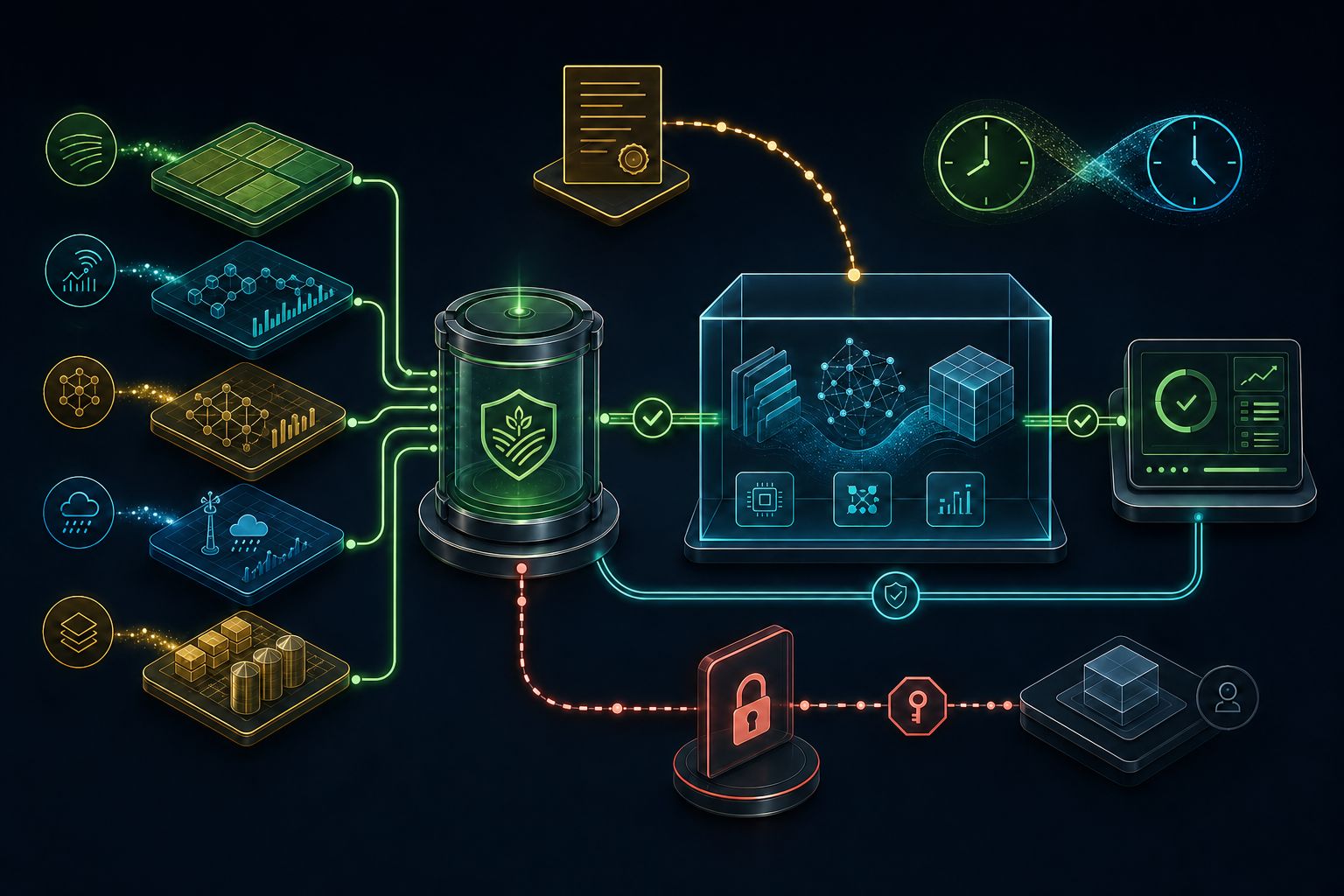
Nebraska outsourcing at a glance
| Buyer condition | Decision before outside-U.S. work | Evidence to retain |
|---|---|---|
| Ordinary software, automation, or AI project with no covered personal or agricultural data | Define the buyer, service, work locations, systems, technical artifacts, customer commitments, export questions, IP chain, release authority, continuity, and exit | Project perimeter, named team and cities, architecture, repositories, tool/model register, contract, tests, approvals, handoffs, and closure |
| Business processes Nebraska consumer personal data and is not a federal small business | Test current Data Privacy Act applicability, entity/data exclusions, controller/processor roles, disclosed purposes, rights, sensitive data, sales, advertising, profiling, assessments, and contract duties | Applicability memo, data map, notices, purpose and consent record, rights tests, assessment decision, processor terms, subprocessor evidence, security, and deletion |
| Business is a federal small business | Do not import the full Act automatically; separately test § 87-1118’s prior-consent restriction on selling personal data that is sensitive data | Size determination, entity scope, sensitive-field inventory, sale analysis, consent record, system stop gate, reviewer, and refresh date |
| Service collects, generates, stores, analyzes, or uses Nebraska agricultural data | Identify the agricultural producer and covered source; preserve producer ownership and control while granting only the service authority actually approved | Producer, farm/land/device/equipment source, field dictionary, data lineage, controller/processor role, approved service, identities, systems, locations, and authority record |
| Provider proposes benchmarking, model training, product improvement, affiliate use, licensing, or third-party transfer | Classify the operation using the agricultural-data definitions and sale exceptions; do not treat a broad service label as unlimited use | Exact dataset and version, raw/aggregated/derived status, purpose, service and sale analysis, recipient, consideration, consent or exception facts, model artifacts, and decision |
| Agricultural data would be sold | Stop until the producer’s express written consent is obtained through a clear and conspicuous disclosure separate from primary service or data-use terms | Producer identity and authority, exact data, seller, purchaser, consideration, intended use, separate disclosure, signed consent, date, revocation/change handling, and receipt |
| New Nebraska agricultural-data collection or processing contract begins on or after January 1, 2027 | Include the specific no-sale-without-express-written-consent provision and reject any attempted waiver or limitation of the Act | Contract effective date, exact provision, producer and entities, data and service schedule, order of precedence, legal review, signature, and controlled template version |
| Buyer discloses covered computerized personal information to a nonaffiliated service provider | Apply the separate § 87-808 reasonable-security contract path based on the actual information and provider | Field and resident map, disclosure route, service provider, safeguards schedule, due diligence, signed terms, monitoring, disposal, incident, and exit evidence |
| Buyer or provider operates in western Nebraska | Schedule the actual location using its maintained IANA zone; do not assume every Nebraska participant is on Central time | City and zone manifest, dated overlap, DST transitions, holidays, recurring-event configuration, named decision windows, and incident alternates |
| Engagement, dataset, model, or subprocessor ends | Return buyer and producer control and prove the disposition of raw data, copies, features, derived data, embeddings, logs, models, backups, credentials, and operational knowledge | Repository/infrastructure transfer, access revocation, secret rotation, data return or destruction, derivative decision, backup aging, subprocessor proof, restoration, and acceptance |
This is operating triage, not a conclusion that a particular person, dataset, farm, device, company, transaction, service, or incident is covered. The general Data Privacy Act and Agricultural Data Privacy Act use different subjects, definitions, exclusions, duties, and enforcement paths. Section 87-808 adds a separate security and service-provider contract layer for computerized personal information. Qualified owners should decide the applicable perimeter from the real facts.
The distinct Nebraska model: a producer-authority custody gate
Nebraska’s current agricultural-data framework makes one outsourcing principle unusually concrete: data access for a service is not the same thing as ownership, unlimited control, or authority to sell.
Section 87-1404 says an agricultural producer is the owner and has control of covered agricultural data originating from that producer’s farm, land, device, or equipment. A controller or processor that collects, stores, or uses the data has a nonexclusive right of control solely for providing services, maintaining equipment, or performing data processing authorized by the producer. The text expressly says that limited control does not include the power to sell the agricultural data.
Build a producer-authority custody gate with five inputs:
- Origin. Name the farm, land, device, equipment, or producer operation from which the data originates. Do not describe a source as “client data” when source and authority differ field by field.
- Classification. Separate agricultural data from aggregated data, derived data, agency-public data, consumer personal data, personal information, technical telemetry, and ordinary deliverables. Exclusion from one statutory definition is not proof of unrestricted use.
- Service authority. State the exact service the controller or processor is authorized to provide and the operations required to provide it. Tie every identity, API, model, export, retention period, and subprocessor to that service.
- Transfer or sale. Route any proposed exchange for monetary or other valuable consideration through the statutory definition, exceptions, producer decision, separate consent, contract, and qualified review. A product manager cannot silently convert maintenance telemetry into an independent data product.
- Return of control. Give the producer and buyer a verifiable way to end access, recover usable records, constrain retained or derived artifacts, rotate secrets, and restore the service elsewhere.
The gate should produce a producer authority capsule.
| Capsule field | Operating question | Minimum evidence |
|---|---|---|
| Producer and authority | Which owner, lessee, or renter is the relevant producer, and who may authorize this operation? | Entity/person, farm/land/device/equipment relationship, signatory authority, delegates, date, and changes |
| Dataset and source | Which exact data and version is involved, and where was each field collected, produced, or generated? | Dataset ID, schema, source system, device/equipment identifier, location, time range, lineage, sample hash, and owner |
| Classification | Is the item agricultural, aggregated, derived, agency-public, personal, sensitive, deidentified, technical, or mixed? | Field-level decision, statutory source, transformation, linkability, assumptions, reviewer, and change triggers |
| Controller/processor/service | Who determines purpose and means, who processes for whom, and what producer-authorized service is being provided? | Role matrix, purpose, service description, instructions, systems, identities, subprocessors, locations, and limits |
| Approved uses | Which collection, storage, analysis, support, maintenance, training, improvement, transfer, or deletion operations are allowed? | Operation allowlist, model/tool settings, query/export limits, environment, duration, acceptance criteria, and monitor |
| Prohibited or gated uses | Which sale, licensing, cross-customer benchmarking, independent training, advertising, credit, insurance, or publication operation needs a separate decision? | Deny rules, approval path, recipient facts, consideration analysis, separate consent where applicable, and audit log |
| Security and incident | Which safeguards, alerts, evidence, and decision owners apply? | Classification, encryption, access, device posture, logs, monitoring, response plan, contacts, exercise, and recovery |
| Exit | What happens to source data, copies, derived artifacts, features, models, backups, identities, and know-how? | Return format, deletion scope, derivative decision, backup schedule, revoked access, rotated secrets, test, and acceptance |
The capsule is not a substitute for the contract or legal review. It is the machine- and human-readable bridge between the producer’s authority, the signed agreement, and the delivery system.
Classify agricultural data before it enters an AI or software pipeline
Section 87-1403 defines agricultural data as specified categories collected, produced, or generated in Nebraska and linked or reasonably linked to an identified or reasonably identifiable agricultural producer. The listed categories include agronomic, climate and weather, land, livestock, management, and sustainability data. The same section excludes aggregated data, derived data, and described data made public by an agency.
Those distinctions matter during engineering:
- agronomic data can include crop, field, planting, seed, yield, disease/pest, fertilizer, and prescription information;
- producer-equipment weather data can include precipitation, wind, and temperature, while public governmental weather information is treated separately;
- land data includes physical attributes and geospatial information;
- livestock data includes identification, pedigree, genetic, and feed information;
- management data includes finances, taxes, employment, commodity prices, legal compliance, supply chains, and conservation practices; and
- sustainability data includes emissions, sequestration, water-quality impact, and conservation information used to verify claims.
An engineering schema should not flatten these into a farm_data object. Create a field dictionary with origin, producer linkability, transformation, sensitivity, service purpose, access, model use, retention, and exit. Mixed records may activate several lanes. A management record can contain individual workforce data governed by other requirements. Precise land or equipment data can create physical-security or commercial sensitivity even when it is not consumer personal data.
Treat aggregated and derived outputs as transformation states, not magic words
The current agricultural definition excludes aggregated and derived data. Aggregated data must be combined and summarized so it cannot reasonably be linked to an identified or identifiable producer, farm, parcel, device, or equipment. Derived data is described as significantly modified, processed, analyzed, or compiled and includes insights, reports, and predictive models.
Do not let a provider self-label a copy “derived” and remove it from custody controls. Record:
- the source datasets and producer authority;
- the transformation code, parameters, model, environment, and version;
- what original values or identifiers survive;
- whether records can be singled out, joined, inferred, or reconstructed;
- who owns or may use the output under the agreement;
- whether confidential, trade-secret, personal, contractual, customer, export, or sector obligations continue;
- whether the transformation was an authorized service operation; and
- what happens to the output when the service ends.
An exclusion from “agricultural data” does not decide every other legal, contractual, security, ownership, confidentiality, or ethical question. The provider should prove the transformation and wait for buyer and producer acceptance.
Separate producer-authorized service from sale
The agricultural statute defines service broadly. It includes services that may maintain, diagnose, repair, support, secure, improve, or provide equipment, software, devices, technology, products, or other service to a producer. Its examples include telematics, remote diagnostics, predictive maintenance, warranty administration, safety notifications, recalls, cybersecurity, product and quality improvement, system-performance enhancement, internal algorithm training, over-the-air updates, and commodity purchase.
That breadth does not create unlimited authority. Section 87-1404 ties the controller or processor’s nonexclusive control to providing services, equipment maintenance, or processing authorized by the producer. Build an operation-to-service matrix:
| Proposed operation | Service question | Buyer/producer gate |
|---|---|---|
| Remote equipment diagnosis | Is the telemetry, identity, history, and technician access reasonably bounded to the approved diagnostic service? | Named device, fields, session, person, location, tools, command authority, logs, result, and revocation |
| Predictive maintenance model | Which data, model, training/evaluation use, cross-producer combination, result, and retention are necessary for the service? | Source cards, environment, producer linkability, model-use decision, evaluation, output, and exit |
| Internal algorithm training | Does the contract and producer authorization cover this exact internal training, and how are source, derived model, reuse, and deletion handled? | Written purpose, dataset/version, isolation, no external training by default, model artifact terms, tests, and approval |
| Product or quality improvement | What product, improvement hypothesis, fields, recipients, duration, and evidence connect the use to producer service? | Work order, minimum data, acceptance metric, access, change control, and producer-facing result |
| Commodity purchase | Which transaction and service facts justify the use, and will information be reused for pricing, marketing, financing, or another independent purpose? | Transaction map, instructions, role separation, prohibited use, retention, and secondary-purpose stop gate |
| Cross-customer benchmark | Is the output truly aggregated, is source use authorized, and will any producer, parcel, device, or equipment remain linkable? | Aggregation specification, threshold, attack/reidentification test, review, recipient restriction, and release |
| Third-party model or enrichment API | Is sending data to this recipient part of the authorized service, a processor disclosure, another permitted disclosure, or a sale? | Entity, terms, consideration, model training/logging, region, purpose, exception/consent analysis, and approval |
Section 87-1403 defines sale as an exchange of agricultural data for monetary or other valuable consideration by a controller or processor to a third party, with listed exceptions. Exceptions address controller-to-processor disclosure, authorized processor use, service provision, affiliates, producer-directed disclosure, legal and safety obligations, unrestricted producer-public information, specified asset transactions, and certain fraud, cybersecurity, integrity, or equipment-misuse needs.
Apply each exception from facts. Do not assume “affiliate,” “service,” “fraud prevention,” “product improvement,” or “processor” merely because it is convenient. Preserve the entity, recipient, purpose, authority, consideration, data, and reviewer decision.
Build a consent gate that cannot hide inside acceptance
Section 87-1405 prohibits a controller or processor from selling agricultural data without the producer’s express written consent. The written consent must be obtained through a clear and conspicuous disclosure separate from the primary terms of service or data-use agreement.
A compliant conclusion belongs to qualified review. The delivery design can still enforce the separation:
- keep ordinary service acceptance and any sale consent in different UI, records, and API states;
- name the producer, seller, purchaser, dataset, categories, consideration, intended use, and duration;
- prevent preselected controls, bundled acceptance, or an ambiguous “partners may use data” statement;
- bind the consent record to the exact dataset and transfer policy enforced by the platform;
- require a new decision when the recipient, data, consideration, purpose, or product changes;
- retain presentation, version, affirmative action, timestamp, signatory authority, and receipt; and
- define withdrawal, termination, future transfer, and previously transferred-data handling with qualified owners.
The software should default to no sale authorized. A CRM note or provider email should not be enough to change the transfer policy.
Prepare the January 1, 2027 contract transition
The Agricultural Data Privacy Act is already operative. Section 87-1406 adds a dated contract requirement: beginning January 1, 2027, every new contract or agreement involving collection or processing of agricultural data in Nebraska must contain a specific provision stating that the controller or processor is prohibited from selling that data without the producer’s express written consent. The section also says a contract provision waiving or limiting the Act’s requirements is contrary to public policy and void and unenforceable.
Do not describe the January 2027 clause as required in every preexisting contract during 2026. Do not wait until January to make the operating system capable of honoring it.
Create a transition register:
| Contract population | Action during 2026 | Evidence |
|---|---|---|
| New agreement expected to be signed on or after January 1, 2027 | Use the reviewed future-state template and the exact applicable provision | Template version, legal review, data/service schedule, signatories, effective date, and executed copy |
| Existing agreement signed before July 18, 2026 | Review § 87-1410’s existing-contract construction text and the actual agreement; do not assume the Act rewrites or erases it | Contract dates, amendments, renewal, data and service facts, reviewer decision, voluntary controls, and change plan |
| Agreement signed July 18–December 31, 2026 | Apply current producer ownership, service authority, sale consent, and security; decide whether to add the future clause early | Data appendix, current compliance controls, clause decision, amendment or renewal trigger, and test |
| Renewal, amendment, order, or added dataset around 2027 | Determine whether the instrument is a new contract/agreement or materially changes the operation | Document map, order of precedence, effective date, new purpose/data/recipient, reviewer, and approved version |
| Click-through or API onboarding | Ensure the contract provision and separate sale-consent experience are not collapsed into one action | Screen/version archive, API policy, event log, separation test, identity, receipt, and rollback |
The clause should connect to a data schedule, service-purpose register, subprocessor list, model/tool inventory, consent ledger, security schedule, incident plan, and exit terms. A sentence in the contract cannot stop an API export unless the system enforces it.
Apply Nebraska’s general Data Privacy Act as a separate lane
Nebraska’s Data Privacy Act applies under the current § 87-1103 perimeter to a person conducting business in the state or producing a product or service consumed by residents, processing or selling personal data, and not qualifying as a small business under the incorporated federal Small Business Act date, subject to listed entity exclusions. The statute does not use a consumer-count or revenue threshold in that applicability provision.
That creates a different triage from threshold-based state laws:
- identify the exact person and product/service nexus;
- determine federal small-business status using the incorporated reference and current qualified analysis;
- review exclusions for the entity, not just a dataset;
- classify the individual or household context because the current consumer definition excludes commercial and employment contexts;
- map personal, sensitive, public, deidentified, and pseudonymous data;
- identify controller/processor roles for each operation; and
- apply rights, notice, consent, sale, advertising, profiling, assessment, and contract controls only after the perimeter is established.
Small-business status is not a universal privacy exemption. Section 87-1118 addresses a person described by the small-business subdivision and prohibits sale of personal data that is sensitive data without prior consumer consent. Preserve the exact sensitive fields—specified diagnoses and traits, uniquely identifying genetic or biometric data, known-child data, and precise geolocation—and prevent sale unless the applicable decision and consent are evidenced.
Turn processor language into executable instructions
Current § 87-1115 requires a processor to adhere to controller instructions and assist with rights requests, security and the stated breach-notification support, and assessment information. Its contract elements include clear instructions, nature and purpose, data type, duration, rights and obligations, confidentiality, deletion or return at the controller’s direction, compliance information, reasonable assessments or an independent-assessment alternative, and subcontractor flow-down. It also makes role determination fact-based and contextual.
Create one instruction record per operation:
- controller and processor entities;
- purpose, service, data subjects, fields, source, and duration;
- collection, storage, use, disclosure, analysis, modification, and deletion operations;
- systems, environments, identities, countries, subprocessors, models, and tools;
- consumer-rights search, correction, deletion, portability, opt-out, authentication, and appeal support;
- sensitive-data consent and known-child route where applicable;
- assessment inputs for targeted advertising, sale, sensitive data, qualifying profiling, and other listed high-risk operations;
- security controls and immediate operational alert;
- evidence, inspection, independent assessment, remediation, and change control; and
- return, deletion, backup, access, secret, artifact, and knowledge-transfer exit.
Agricultural producers acting commercially are not automatically “consumers” under the general Act’s individual/household definition. Agricultural data is not automatically personal data. The same platform can contain both. Keep the two role systems visible and join them only where fields and people actually overlap.
Keep Nebraska’s personal-information security contract visible
Section 87-808 operates independently from the newer privacy statutes. It addresses an individual or commercial entity conducting business in Nebraska that owns, licenses, or maintains computerized data containing personal information about a Nebraska resident. It requires reasonable security and disposal safeguards appropriate to the information, business, and resources. When such data is disclosed to a nonaffiliated third-party service provider, the current text requires a contract for reasonable security practices appropriate to the disclosed information and designed to protect against unauthorized access, acquisition, destruction, use, modification, or disclosure.
That matters when a buyer is outside the full Data Privacy Act perimeter or when a service includes fields covered by both. Build a security-contract crosswalk:
| Data path | Contract control | Operational proof |
|---|---|---|
| Buyer to international provider | Field-level disclosure schedule, permitted systems/locations, reasonable safeguards, no independent use, incident alert, return/disposal | Transfer logs, access list, encryption, endpoint controls, monitoring, exercise, deletion, and acceptance |
| Provider to subprocessor or model service | Prior approval, equivalent safeguards, data/tool/region settings, alert and cooperation, change notice, exit | Subprocessor register, signed flow-down, configuration, logs, assurance, deletion, and removal test |
| Portable device or local workspace | Download and cache constraints, approved device, storage and transport, printing/media, patching, loss response | Device inventory, posture, encryption, DLP, session evidence, exception record, and revocation |
| Disposal | Defined trigger, method, provider evidence, backup aging, litigation/security hold separation, and exception authority | Deletion job, certificate, sample verification, backup schedule, hold record, and buyer approval |
Do not use a generic security addendum without connecting it to the actual data, provider, system, work location, and lifecycle.
Secure agricultural data as a business and operational asset
Section 87-1407 requires a controller or processor in custody or possession of agricultural data to establish, implement, and maintain reasonable administrative, technical, and physical security practices. The practices must be appropriate to the data’s volume and nature and protect against unauthorized access, use, disclosure, modification, or loss.
For outsourced software and AI work, use at least these evidence areas:
- governance: named producer, buyer, controller, processor, security, data, product, incident, and exit owners;
- inventory and lineage: sources, fields, transformations, datasets, models, copies, exports, APIs, subprocessors, locations, retention, and deletion;
- identity: unique accounts, MFA, least privilege, just-in-time privileged access, separation of duties, reviews, and rapid revocation;
- environment: synthetic/minimized development, isolated production, approved devices, network controls, secrets management, and administrative-plane protection;
- data protection: encryption in transit/at rest, key authority, export limits, query throttles, local-copy control, backup protection, and secure disposal;
- software integrity: protected branches, peer review, dependency policy, build provenance, tests, artifact signing where appropriate, deployment approval, and rollback;
- AI controls: dataset/model register, training and logging settings, retrieval boundary, prompt injection defense, output tests, secondary-use prohibition, and model-artifact disposition;
- monitoring: access, export, configuration, model/tool, privileged session, and deletion evidence with synchronized timestamps;
- incident and recovery: immediate alert, evidence preservation, containment authority, communications, clean restoration, producer/buyer decisions, and after-action verification; and
- continuity and exit: alternate decision owners, provider failure, connectivity loss, repository/infrastructure transfer, recovery test, and knowledge handover.
The NIST SSDF and incident-response recommendations are useful methods when adopted by the buyer; they are not Nebraska legal conclusions or certifications.
Design AI work around producer authority
Agricultural AI may predict yield, disease, equipment failure, commodity movement, sustainability outcomes, water use, or operational risk. The result can be valuable, but model value does not erase source authority.
For every AI experiment, record:
- producer and source authority for each dataset;
- whether the input is agricultural, aggregated, derived, consumer personal, personal information, public, synthetic, or mixed;
- approved service and whether internal algorithm training is within the producer’s authorization;
- controller, processor, third-party model, hosting, labeling, evaluation, and human-review roles;
- training, retrieval, fine-tuning, evaluation, prompt/output logging, support, and analytics as separate purposes;
- cross-producer combination and aggregation design;
- location/parcel/device linkability and reidentification or reconstruction tests;
- model/tool regions, retention, secondary training, subprocessors, and configuration changes;
- safety, bias, quality, calibration, drift, explainability, and human decision authority appropriate to the use;
- export, customer, commodity, environmental-claim, equipment-safety, and sector constraints;
- incident, poisoning, prompt-injection, bulk extraction, membership-inference, and model-leakage controls; and
- disposition of raw data, features, labels, embeddings, prompts, outputs, evaluation sets, fine-tuned weights, logs, and backups.
Use a producer-controlled model-release gate:
- source and producer authority accepted;
- classification and transformation accepted;
- service, role, purpose, and model use accepted;
- sale or independent use either rejected or supported by a separate qualified decision and consent where applicable;
- environment, identities, tools, models, regions, and subprocessors approved;
- quality, leakage, security, rights, and deletion tests passed;
- human and automated decision authority documented;
- output ownership, use, sharing, and exit resolved; and
- buyer and producer evidence packet accepted.
Operate across Nebraska’s Central–Mountain boundary
Nebraska crosses the federal Central–Mountain standard-time boundary. The eCFR describes the boundary through the state. Do not infer a participant’s operating zone from the word “Nebraska,” an area code, or a provider CRM field. Record the actual city or work location and maintained IANA identifier.
Most Nebraska buyers will use America/Chicago; western locations may use America/Denver. Calculate the actual date range because daylight-saving transitions and international rules can differ. A distributed agricultural operation may involve a producer, equipment location, buyer team, outside-U.S. engineers, and cloud responders in several zones.
| Work type | Live-overlap need | Asynchronous packet | Authority |
|---|---|---|---|
| Discovery and producer interview | Enough overlap for context, terminology, service purpose, source and authorization decisions | Questions, field dictionary, workflow, assumptions, decisions, and unresolved items | Producer/buyer product owner |
| Data pipeline or model work | Scheduled review of source cards, transformations, quality, risk, and model use | Dataset/version, lineage, code, tests, evaluation, privacy/security checks, and proposed change | Buyer data/model owner with producer authority where required |
| Equipment or operational support | Coverage aligned to the actual operation, safety boundary, and authorized command window | System state, telemetry, diagnostics, proposed action, rollback, and audit evidence | Named operational owner; provider authority expires |
| Release | Consequential buyer coverage regardless of provider workday | Immutable artifact, provenance, scans, tests, migration, observation, rollback, and owner | Buyer release authority |
| Incident | Immediate tested alert, not next-business-day convenience | Progressive evidence capsule, preservation, containment request, scheduled updates, and recovery | Buyer incident commander with producer/customer owners |
Nearshore teams in Colombia or appropriate Mexican cities can offer practical overlap with Central or Mountain buyers. Poland can support an early Nebraska review window. India or the Philippines can support a deliberate overnight engineering cycle. These are operating patterns, not country rankings or promises about individuals. Compare the named people, entity, city, time zone, employment chain, capability, communication, security, data access, continuity, IP chain, total cost, and exit.
Build the RFP around producer and buyer evidence
Require provider candidates to disclose:
- legal entity, business units, named roles, contributor cities/zones, employment chain, and subprocessors;
- every buyer-, producer-, provider-, public-, licensed-, aggregated-, derived-, synthetic-, and model-supplied data source;
- field-level lineage and classification capability;
- how controller, processor, service, third party, affiliate, sale, consumer, and agricultural producer roles are decided and changed;
- producer authorization and consent enforcement without asking the provider to make the buyer’s final legal decision;
- general Data Privacy Act instruction, rights, assessment, sensitive-data, and processor-contract support where applicable;
- § 87-808 service-provider security contract evidence for covered personal information;
- agricultural-data safeguards, source/change monitoring, export controls, incident alert, and recovery;
- January 1, 2027 contract-template readiness for new agricultural-data agreements;
- model/tool, training, logging, region, secondary-use, quality, safety, and derivative-disposition details;
- software-development identity, repository, dependency, build, test, artifact, release, vulnerability, and rollback controls;
- assignment, background IP, open source, third-party materials, data/model ownership, and contributor evidence; and
- exit proof for code, infrastructure, data, derivatives, models, logs, backups, accounts, secrets, subprocessors, and restoration.
Test scenarios, not slogans:
- A developer proposes using producer telemetry in a reusable demo.
- A model vendor changes its terms to permit training on submitted content.
- An “aggregated” benchmark can still isolate one parcel or device.
- A provider wants to share data with an affiliate for product improvement.
- A producer directs a disclosure to a lender, insurer, cooperative, advisor, or platform.
- A customer asks to sell covered agricultural data and bundles consent into updated service terms.
- A small business proposes selling precise consumer geolocation.
- A subprocessor detects suspicious export near the end of the Nebraska buyer’s workday.
- A new collection/processing agreement crosses January 1, 2027.
- The provider fails while live data, derived models, device credentials, and deployment knowledge remain in several regions.
Score evidence completeness, factual uncertainty, buyer/producer control, and reversibility. The provider scorecard can structure the decision, while the outsourcing RFP guide helps turn the scenarios into comparable responses.
Run a representative paid pilot
A strong Nebraska pilot is a narrow equipment-health or crop-operations workflow using synthetic data plus a deliberately small approved producer dataset. The pilot should prove authority and custody, not merely model accuracy.
Require:
- one producer-authority capsule and field dictionary;
- separate agricultural, aggregated, derived, consumer-personal, personal-information, and technical-artifact classifications;
- a synthetic-first development environment and controlled production-data import;
- an approved service-purpose allowlist and a blocked independent-use/sale path;
- a separate sale-consent simulation that cannot be activated by ordinary terms acceptance;
- named contributors, locations, unique identities, least privilege, approved tools/models, and monitored exports;
- reproducible pipeline and build, quality/evaluation tests, provenance, vulnerability evidence, buyer release, and rollback;
- a source-change or model-terms change that reopens approval;
- an aggregation/linkability challenge;
- a rights or correction propagation test where consumer personal data is present;
- an incident exercise producing immediate alert, progressive evidence, containment authority, recovery, and after-action work;
- a Central/Mountain scheduling test for the actual Nebraska location; and
- a full exit covering source data, copies, features, embeddings, model artifacts, logs, backups, repositories, infrastructure, credentials, secrets, documents, and restoration.
Acceptance should cover functionality, producer authority, privacy, security, data quality, model quality, accessibility, performance, observability, documentation, IP provenance, total cost, maintainability, continuity, and exit. Reject the pilot if the provider cannot prove which producer authorized each live-data operation or how authority ends.
Contract for the actual operating model
The agreement should identify:
- buyer, producer, controller, processor, provider, affiliate, subprocessor, third party, and signatory entities and facts;
- services, systems, environments, data categories, sources, devices/equipment, work locations, models/tools, and order of precedence;
- producer ownership and control, limited service authority, instructions, and prohibited independent use;
- agricultural-data sale definition and exception handling without pre-approving unknown transactions;
- separate express written consent mechanism for any proposed covered sale;
- the January 1, 2027 specific clause for qualifying new contracts or agreements;
- no waiver or limitation inconsistent with the Agricultural Data Privacy Act;
- general personal-data roles, instructions, purpose, duration, confidentiality, rights, sensitive data, assessments, information, inspections, subprocessors, and deletion/return where applicable;
- reasonable security for agricultural data and personal information, plus supplier due diligence and flow-down;
- immediate operational incident alert, evidence preservation, containment authority, update cadence, cooperation, communications control, recovery, and review;
- software and model acceptance, source/data/model provenance, open source, third-party materials, background IP, deliverable ownership, assignment, and destination-country evidence;
- service levels, defects, vulnerabilities, safety boundaries, costs, change control, insurance, liability, indemnity, suspension, and survival; and
- transition, repository/infrastructure transfer, data return/destruction, derivative and model disposition, backup aging, access revocation, secret rotation, restoration test, knowledge transfer, and final acceptance.
Avoid “all data belongs to the platform,” “irrevocable worldwide use for any purpose,” or “deidentified/derived data is unrestricted” language without exact classification, authority, and qualified review. A provider cannot receive broader authority from a boilerplate clause than the producer or buyer intends to grant.
Common Nebraska outsourcing mistakes
- Assuming every Nebraska buyer operates on Central time.
- Treating all farm or equipment information as one undifferentiated dataset.
- Treating agricultural data and consumer personal data as the same statutory category.
- Assuming a federal small business is outside every Data Privacy Act requirement, including the sensitive-data-sale rule.
- Describing controller or processor access as ownership or unlimited control.
- Treating a broad service definition as permission for every model-training, product-improvement, affiliate, or transfer use.
- Calling an output aggregated without testing producer, farm, parcel, device, or equipment linkability.
- Calling data derived and ignoring contract, confidentiality, trade-secret, personal-data, security, or exit obligations.
- Bundling agricultural-data sale consent into general terms.
- Treating an affiliate or subprocessor disclosure as automatically exempt without the actual entity, purpose, and operation facts.
- Waiting until January 1, 2027 to design the contract provision or enforcement system.
- Forgetting § 87-808 when the provider receives computerized personal information.
- Using a generic “reasonable security” promise without identities, data paths, systems, evidence, incident, disposal, and recovery.
- Sending producer data to an AI API without recording training, logging, regions, subprocessors, retention, and model-artifact consequences.
- Giving an international support team standing device or production authority when an approved, expiring session would work.
- Ending the engagement by revoking logins while leaving data, derived models, secrets, backups, or operational dependency behind.
Frequently asked questions
Can a Nebraska company outsource software development overseas?
Yes, subject to the actual data, agricultural producer, service, customer, industry, contract, security, export, employment, tax, IP, and destination-country facts. Use named locations, limited authority, buyer-controlled release, evidence, and a tested exit.
Who owns covered agricultural data in Nebraska?
Current § 87-1404 says the agricultural producer owns and has control of covered agricultural data originating from that producer’s farm, land, device, or equipment. It gives a controller or processor a limited nonexclusive right of control solely for producer-authorized service, maintenance, or processing and excludes sale power from that limited right.
Can a software provider use agricultural data to train an internal model?
The current service definition includes internal algorithm training, but that phrase is not unlimited permission. The controller or processor’s authority remains tied to the producer-authorized service. Identify the exact data, model, purpose, entity, environment, cross-producer use, output, retention, contract, and exit, then obtain qualified approval before training.
Can a provider sell Nebraska agricultural data?
Section 87-1405 prohibits sale without the producer’s express written consent obtained through a clear and conspicuous disclosure separate from the primary service terms or data-use agreement. The sale definition contains exceptions that depend on facts. Do not label a transaction exempt without reviewing the exact data, entity, recipient, purpose, consideration, and authority.
What changes on January 1, 2027?
For every new contract or agreement involving collection or processing of agricultural data in Nebraska, § 87-1406 requires a specific provision stating that the controller or processor is prohibited from selling the data without the producer’s express written consent. The Act’s ownership, sale-consent, and security provisions are already operative; January 2027 is not the start date for the whole Act.
Does Nebraska’s Data Privacy Act apply to every business?
No. Current § 87-1103 applies a business/product-or-service, personal-data processing or sale, federal small-business, and listed entity-exclusion perimeter. It does not state a consumer-count threshold. Small businesses should still test § 87-1118’s prior-consent rule for sale of sensitive personal data.
What must a Nebraska processor contract contain?
Current § 87-1115 specifies instructions, nature and purpose, data type, duration, party rights and obligations, confidentiality, deletion or return, compliance information, assessment cooperation or the stated alternative, and subcontractor flow-down. The actual contract should also address systems, locations, models, incident timing, evidence, change, IP, continuity, and exit.
Does derived or aggregated agricultural data become unrestricted?
No such blanket conclusion follows. The agricultural-data definition excludes qualifying aggregated and derived data, but the transformation must actually fit the definitions. Other contracts, confidentiality, ownership, trade-secret, personal-data, security, model, customer, or sector obligations may continue. Preserve lineage, transformation evidence, linkability tests, authority, and exit.
Which time zone should a Nebraska project use?
Use the actual buyer and producer location. Nebraska crosses the federal Central–Mountain boundary, so record the city and IANA zone for every participant and schedule. Do not hard-code “Nebraska time.”
Which country is best for a Nebraska delivery team?
There is no universal best country. Compare named people and locations against capability, overlap, communication, agricultural/data experience, security, authority, continuity, total cost, IP chain, and exit. Nearshore and offshore models can both work when the operating system is explicit.
What should a Nebraska pilot prove?
It should prove producer authority, dataset classification, service limits, consent separation, personal-data controls where applicable, security, model/tool governance, reproducible delivery, incident response, Central/Mountain scheduling, buyer-controlled release, and complete exit using representative—not merely convenient—work.
A practical buyer checklist
- Name the buyer, agricultural producer, provider, controller, processor, affiliates, subprocessors, signatories, contributors, cities, and IANA zones.
- Inventory every dataset, source, field, device/equipment link, transformation, model, copy, recipient, and retention period.
- Separate agricultural, aggregated, derived, consumer personal, sensitive, computerized personal-information, public, synthetic, and technical records.
- Create a producer-authority capsule for each covered service.
- Limit provider control to the approved service, maintenance, or processing operation.
- Put sale and independent use behind a separate qualified decision and producer-consent gate where applicable.
- Test Data Privacy Act applicability without inventing a consumer-count threshold.
- Preserve the small-business sensitive-data-sale stop gate.
- Translate processor duties into executable instructions, rights tests, assessment inputs, evidence, flow-down, and deletion/return.
- Apply § 87-808 service-provider contract safeguards to covered personal-information disclosures.
- Implement agricultural-data administrative, technical, and physical security controls.
- Prepare and test the January 1, 2027 new-contract provision and template transition.
- Record AI training, retrieval, logging, region, secondary use, quality, linkability, human authority, and model-artifact disposition.
- Run source-change, model-terms, aggregation, affiliate, consent, incident, time-zone, provider-failure, and exit scenarios.
- Verify IP assignment, open source, third-party materials, background IP, data/model terms, and destination-country evidence.
- Prove repository/infrastructure transfer, data and derivative disposition, backup aging, access revocation, secret rotation, restoration, knowledge handover, and final acceptance.
Decision rule
Proceed when the buyer can identify the producer and source for every material agricultural dataset; distinguish consumer, agricultural, personal-information, and technical lanes; constrain every outside-U.S. identity and model to an approved service; keep covered sale behind separate express written producer consent; satisfy current privacy and security contract paths where applicable; prepare the January 2027 clause; operate from actual Central or Mountain locations; and restore or exit without hidden provider dependency.
Pause when data origin, producer authority, classification, service purpose, controller/processor role, consideration, recipient, consent, model use, work location, security, incident authority, IP chain, or exit state is unknown.
Reject when a provider claims ownership through access, converts producer data into a reusable product without authority, hides sale consent in general terms, labels linkable data aggregated, treats derived data as automatically unrestricted, sends data to undisclosed models or subprocessors, cannot provide security evidence, or cannot prove return and deletion.
The strongest Nebraska outsourcing arrangement is the one in which a producer’s authority survives every API, model, provider, time-zone handoff, contract transition, and exit—and the buyer can prove it.
Evidence ledger
Sources used on this page
- Neb. Rev. Stat. § 87-1102 — Data Privacy Act definitions — Nebraska Legislature. Supports: Current definitions of consumer, controller, processor, personal data, sensitive data, consent, sale, public information, profiling, targeted advertising, deidentified data, and related Data Privacy Act terms. Direct source; independently sourced; commercial relationship: none. Verified 8/15/2026 by Outsourcing.ai Editorial Team. Accessed 8/15/2026.
- Neb. Rev. Stat. § 87-1103 — Data Privacy Act applicability — Nebraska Legislature. Supports: Current business, product-or-service, processing-or-sale, federal small-business, limited section 87-1118, and listed entity-exclusion perimeter for the Data Privacy Act. Direct source; independently sourced; commercial relationship: none. Verified 8/15/2026 by Outsourcing.ai Editorial Team. Accessed 8/15/2026.
- Neb. Rev. Stat. §§ 87-1101 through 87-1130 — Data Privacy Act — Nebraska Legislature. Supports: Current consolidated Data Privacy Act text covering consumer rights, controller duties, notices, processor contracts, assessments, deidentified data, the small-business sensitive-data-sale rule, enforcement, and permitted operations. Direct source; independently sourced; commercial relationship: none. Verified 8/15/2026 by Outsourcing.ai Editorial Team. Accessed 8/15/2026.
- Neb. Rev. Stat. § 87-1115 — Processor duties and contracts — Nebraska Legislature. Supports: Current instruction, rights, security, breach-assistance, assessment, contract, confidentiality, deletion or return, information, assessment, subcontractor, liability, and fact-based role provisions. Direct source; independently sourced; commercial relationship: none. Verified 8/15/2026 by Outsourcing.ai Editorial Team. Accessed 8/15/2026.
- Neb. Rev. Stat. § 87-1118 — Sensitive-data sale — Nebraska Legislature. Supports: Current prior-consent restriction on a small business described by the applicability section engaging in the sale of personal data that is sensitive data. Direct source; independently sourced; commercial relationship: none. Verified 8/15/2026 by Outsourcing.ai Editorial Team. Accessed 8/15/2026.
- Neb. Rev. Stat. § 87-808 — Security and service-provider contracts — Nebraska Legislature. Supports: Current reasonable-security and disposal duties for covered computerized personal information and contractual security requirements for disclosure to a nonaffiliated third-party service provider. Direct source; independently sourced; commercial relationship: none. Verified 8/15/2026 by Outsourcing.ai Editorial Team. Accessed 8/15/2026.
- Neb. Rev. Stat. § 87-1402 — Agricultural-data findings — Nebraska Legislature. Supports: Current legislative finding that agricultural data is a proprietary business asset originating from a producer's farm, land, devices, and equipment and should receive sale and security protection. Direct source; independently sourced; commercial relationship: none. Verified 8/15/2026 by Outsourcing.ai Editorial Team. Accessed 8/15/2026.
- Neb. Rev. Stat. § 87-1403 — Agricultural Data Privacy Act definitions — Nebraska Legislature. Supports: Current agricultural-data, producer, controller, processor, sale, service, aggregated-data, derived-data, agronomic, weather, land, livestock, management, and sustainability definitions and exceptions. Direct source; independently sourced; commercial relationship: none. Verified 8/15/2026 by Outsourcing.ai Editorial Team. Accessed 8/15/2026.
- Neb. Rev. Stat. § 87-1404 — Agricultural-data ownership and control — Nebraska Legislature. Supports: Current producer ownership and control text and the controller or processor's limited nonexclusive control for producer-authorized service, maintenance, or processing, excluding sale power. Direct source; independently sourced; commercial relationship: none. Verified 8/15/2026 by Outsourcing.ai Editorial Team. Accessed 8/15/2026.
- Neb. Rev. Stat. § 87-1405 — Agricultural-data sale consent — Nebraska Legislature. Supports: Current prohibition on sale without the producer's express written consent and the separate, clear, and conspicuous disclosure requirement for obtaining that consent. Direct source; independently sourced; commercial relationship: none. Verified 8/15/2026 by Outsourcing.ai Editorial Team. Accessed 8/15/2026.
- Neb. Rev. Stat. § 87-1406 — Agricultural-data contract requirement — Nebraska Legislature. Supports: January 1, 2027 requirement for new Nebraska agricultural-data collection or processing contracts to state the prohibition on sale without express written producer consent and current anti-waiver text. Direct source; independently sourced; commercial relationship: none. Verified 8/15/2026 by Outsourcing.ai Editorial Team. Accessed 8/15/2026.
- Neb. Rev. Stat. § 87-1407 — Agricultural-data security — Nebraska Legislature. Supports: Current reasonable administrative, technical, and physical safeguards duty for a controller or processor possessing agricultural data, tailored to data volume and nature. Direct source; independently sourced; commercial relationship: none. Verified 8/15/2026 by Outsourcing.ai Editorial Team. Accessed 8/15/2026.
- 49 C.F.R. § 71.7 — Central–Mountain boundary — Electronic Code of Federal Regulations. Supports: Maintained federal description of the Central–Mountain standard-time boundary through Nebraska and treatment of municipalities on the boundary. Direct source; independently sourced; commercial relationship: none. Verified 8/15/2026 by Outsourcing.ai Editorial Team. Accessed 8/15/2026.
- IANA Time Zone Database — Internet Assigned Numbers Authority. Supports: Maintained identifiers and transition rules for calculating dated overlap between an actual Nebraska buyer location and each outside-U.S. contributor city. Direct source; independently sourced; commercial relationship: none. Verified 8/15/2026 by Outsourcing.ai Editorial Team. Accessed 8/15/2026.
- Secure Software Development Framework — National Institute of Standards and Technology. Supports: Maintained secure-development methodology for supplier requirements, protected environments, software provenance, release integrity, vulnerability response, and buyer-supplier evidence. Direct source; independently sourced; commercial relationship: none. Verified 8/15/2026 by Outsourcing.ai Editorial Team. Accessed 8/15/2026.
- Incident Response Recommendations and Considerations for Cybersecurity Risk Management — National Institute of Standards and Technology. Supports: Current incident-response methodology for preparation, detection, response, recovery, improvement, and communications without replacing Nebraska law, an executed contract, or qualified incident advice. Direct source; independently sourced; commercial relationship: none. Verified 8/15/2026 by Outsourcing.ai Editorial Team. Accessed 8/15/2026.
- Directory of Intellectual Property Offices — World Intellectual Property Organization. Supports: Official destination-country intellectual-property office links for investigating contributor and assignment questions rather than assuming one Nebraska agreement resolves every jurisdiction. Direct source; independently sourced; commercial relationship: none. Verified 8/15/2026 by Outsourcing.ai Editorial Team. Accessed 8/15/2026.
Next scheduled review: October 15, 2026. Corrections: hello@outsourcing.ai.