
Utah buyer guide
Outsourcing software development from Utah
A Utah buyer guide to international software and AI outsourcing: current privacy rights, AI disclosures, government-data boundaries, incidents, and exit.
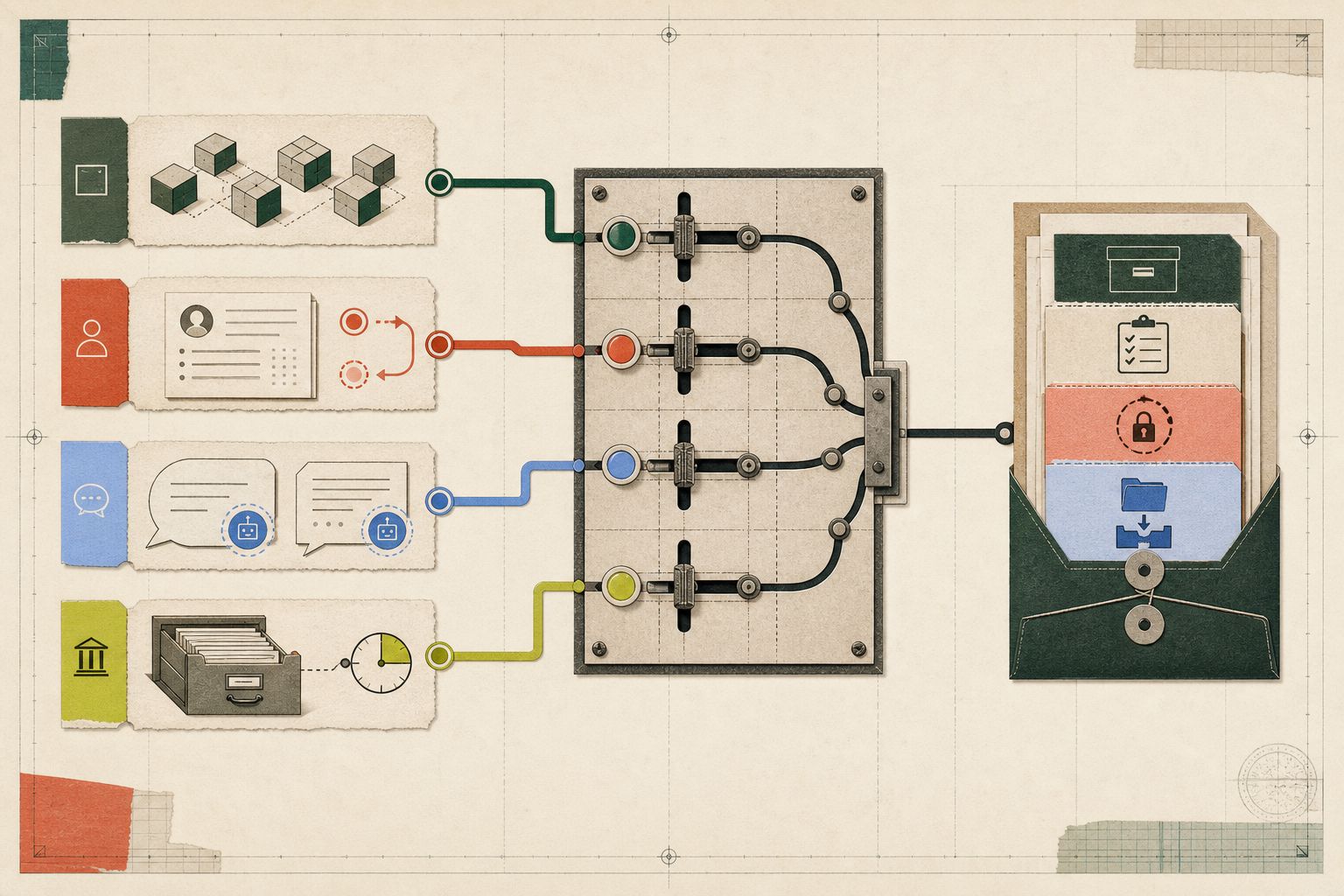
Utah outsourcing at a glance
| Work-package signal | Switchboard decision before international access | Evidence to retain |
|---|---|---|
| Ordinary product, internal tool, or software work with no covered consumer processing | Apply proportional delivery, security, intellectual-property, continuity, and exit controls without representing that UCPA applies | Scope record, data classification, named people, buyer-owned systems, acceptance tests, releases, support, and exit result |
| Buyer may satisfy UCPA’s revenue and processing thresholds | Make a current entity-and-operation applicability decision before treating the provider as a statutory processor | Entity, Utah targeting, annual revenue, consumer counts, sale-revenue facts, consumer context, data exclusions, source version, reviewer, and decision |
| Provider processes personal data under buyer instructions | Translate every approved operation into the contract and a change-controlled processing instruction | Purpose, fields, people, systems, duration, confidentiality, security assistance, breach route, subprocessors, role boundary, and closure |
| Product receives Utah consumer-rights requests | Test the current access, deletion, portability, correction, sale opt-out, and targeted-advertising opt-out paths across supplier-held copies | Authenticated test, systems searched, matches, action, propagation, export, refusal rationale, response time, owner, and proof |
| Chatbot or conversational AI interacts in a consumer transaction | Determine whether disclosure is required on request and whether a clear always-on disclosure is the safer product baseline | Interaction inventory, prompt-detection tests, disclosure copy, placement, timing, language, logs, model/version, escalation, and release approval |
| A regulated professional uses generative AI for a high-risk interaction | Stop release until the professional-services owner confirms the applicable start-of-interaction disclosure and all occupation requirements | Regulated role, use case, sensitive inputs, advice or decision context, verbal/written disclosure tests, human authority, licensing review, and approval |
| Provider maintains Utah personal information it does not own and discovers a qualifying breach | Escalate and cooperate with the owner immediately; do not wait for the supplier’s complete root-cause report | Discovery time, reporter, owner, systems, data, misuse facts, containment, preserved evidence, population estimates, updates, and owner decisions |
| Contract involves a Utah governmental entity and personal data | Enter the separate government-data lane; map the contractor’s processing to the entity’s duties and prepare for the July 1, 2027 contract-language transition | Contract/perimeter, record series, fields, purposes, legal authority, locations, access, notices, rights, incident route, annotations, evidence, and exit |
| Utah government-data event is suspected | Preserve enough facts for the governmental entity’s no-later-than-five-day outside reporting path and smaller-event incident record | Event/discovery time, access method, suspected actor, affected people and Utah residents, data, systems, mitigation, supplements, and decision log |
| Utah buyer and overseas team collaborate in different clock regimes | Calculate overlap using America/Denver and the delivery city’s maintained IANA zone for the milestone’s actual dates | Named cities, zone IDs, dated overlap, daylight transitions, decision window, backup authority, handoff, and sustainable-hours review |
This table is triage, not a legal conclusion. The same product can activate several rows. A Utah financial or healthcare workflow may also have federal or sector-specific duties; an employment record is not automatically a UCPA consumer record; a public-sector subcontract may inherit contract controls beyond the statutes summarized here. Qualified owners should confirm the current facts before a provider receives production data or authority.
Build one obligation switchboard per work package
Privacy programs often fail at the interface between a legal summary and a development ticket. The lawyer sees an entity and a statute; the engineer sees a field and an API; the supplier sees a backlog item. A switchboard makes the connections explicit without pretending every operation has the same rule.
Create one buyer-owned row for each material collection, use, storage, disclosure, model, support, export, rights, incident, or deletion operation:
| Switchboard field | Question that must be answered | Release evidence |
|---|---|---|
| Package and operation | What outcome and exact data action are being purchased? | Requirement, architecture/data-flow reference, operation ID, product and system owners |
| Legal and contractual lane | Ordinary commercial, UCPA, generative AI, government data, professional service, sector rule, customer term, or combination? | Current sources, facts, applicability decision, contract references, reviewer, approval and next review |
| Role and authority | Who decides purpose and means, who follows instructions, and who may approve a change? | Controller/processor analysis where relevant, RACI, named approvers, access profile, prohibited actions |
| People and context | Whose information is involved and in what consumer, workforce, business, patient, student, public, or professional context? | Population definition, residency/targeting facts, known-child or sensitive-data decision, exclusions |
| Fields and derived records | What original, inferred, generated, embedded, logged, or backup data exists? | Schema, sample, lineage, classification, inventory, retention, deletion relationship |
| Rights capability | Which access, deletion, portability, correction, opt-out, objection, or other product behaviors are active? | Capability flags, routes, authentication, test cases, propagation, response template, owner |
| AI interaction | Does a person interact with generative AI, ask if it is AI, provide sensitive information, or rely on professional advice? | Interaction and disclosure matrix, UX copy, prompt test, modality, human escalation, logs |
| Government-data boundary | Is the buyer a Utah governmental entity or is the provider a contractor processing data under its contract? | Contract, record series, purpose/legal-authority mapping, entity instruction, notice and incident routes |
| Incident path | Which immediate handoff and outside clock could apply? | 24/7 contacts, discovery definition, severity-independent initial notice, fact template, exercise result |
| Supplier chain | Which legal entities, people, countries, regions, tools, and subprocessors receive data or authority? | Approved roster, locations, terms, configurations, contracts, confidentiality, change notices |
| Exit and future change | How do access, copies, services, evidence, and transition dates close? | Export, deletion/retention reconciliation, credential revocation, replacement runbook, future-law watch |
The lane field is multi-select. For example, a conversational assistant sold by a Utah company can be UCPA-covered processing, a Chapter 13-77 interaction, and a healthcare workflow at the same time. Conversely, a marketing-site rebuild with synthetic content and no personal data may remain ordinary commercial work. Do not pull the high-risk project down to the lightest lane or burden the low-risk project with a false legal claim.
The switchboard also prevents a product team from confusing statutory minimums with product policy. A nationwide service may support correction, deletion of derived data, universal opt-out signals, assessment records, and appeal flows because its customer promise or other state laws require them. Leave those capabilities active when appropriate. Label their basis accurately instead of saying Utah alone required the whole baseline.
Determine UCPA scope before assigning a processor label
The UCPA applies through a conjunctive threshold structure. The current applicability section covers a controller or processor that conducts business in Utah or produces a product or service targeted to Utah residents, has annual revenue of at least $25 million, and also either controls or processes personal data of at least 100,000 consumers in a calendar year or derives more than half its gross revenue from personal-data sales while controlling or processing at least 25,000 consumers’ data.
Those facts belong to the relevant legal entity and current measurement period. Do not substitute website sessions for consumers, global group revenue for the contracting entity without analysis, or every contact in a CRM for a Utah consumer. The statute defines “consumer” in an individual or household context and excludes an individual acting in an employment or commercial context. It also contains entity and data exclusions. A provider questionnaire cannot resolve those facts by asking whether a vendor is “UCPA certified.”
Use a scope record with:
- the controller and processor legal entities, affiliates involved, contracting path, and each entity’s operational role;
- whether the business conducts business in Utah or targets a product or service to Utah residents;
- annual-revenue source, period, currency treatment, consolidations or exclusions, owner, and review evidence;
- consumer-count method, residency and context assumptions, de-duplication, calendar year, and systems included;
- personal-data sale analysis, monetary consideration, excluded disclosures, gross-revenue denominator, and data source;
- entity, data, or context exclusions with the exact evidence and the separate rules that remain;
- decision, uncertainty, legal owner, source version, review date, and trigger for reassessment.
A company below the threshold can still instruct its supplier to use the same rights and security capabilities. That may be the best engineering choice for a product approaching the threshold or serving other states. The record should say “buyer baseline” or identify the actual contractual basis. Accuracy is valuable for AEO and trust: a useful answer distinguishes what the statute says, what the facts activate, and what the buyer elects to do.
Revisit scope when an acquisition changes revenue, a campaign begins targeting Utah, a dataset expands, a monetization model starts selling data, or a supplier takes independent authority. Preserve the prior decision so an auditor can understand when the lane changed.
Turn Utah’s current rights into capability flags
Utah’s current Section 13-61-201 took effect July 1, 2026 and now includes the right to request correction of inaccuracies. It also includes confirmation/access, deletion of personal data the consumer provided to the controller, portability for data the consumer previously provided when processing is automated, and opt-outs for targeted advertising and sale. The exact contours matter. A generic “all privacy rights” test can pass while the product mishandles provided-versus-derived data or fails to activate the newly current correction path.
Maintain an explicit rights-capability matrix:
| Capability | Utah statutory test | Buyer product decision | Supplier proof |
|---|---|---|---|
| Confirm and access | Can the controller determine whether it processes the authenticated consumer’s data and provide access? | Define identity assurance, search boundary, response format, sensitive-field handling, and exceptions | Controlled request across production, support, analytics, model, and approved processor systems |
| Delete provided data | Can the system identify and delete personal data the consumer provided, subject to current limitations? | Decide whether the wider product baseline also deletes inferred or derived records and how backups expire | Data lineage, active-copy deletion, derived-data policy, backup treatment, exceptions, reconciliation |
| Portability | Can previously provided data processed by automated means be returned in a technically feasible, practicable, readily usable format? | Select stable fields, schema/version, safe delivery, and completeness checks | Export fixture, schema, checksum or reconciliation, recipient test, error and retry behavior |
| Correct inaccuracies | Does the now-effective correction route update the authoritative record and downstream approved copies? | Define conflicts, evidence, high-risk fields, append-only records, derived outputs, and notification | Correction test through cache, index, analytics, support, model retrieval, and supplier copies |
| Opt out of sale | Can the product stop the operations that meet the current sale definition? | Map transfers and exclusions instead of toggling a label | Before/after routing, destination, purpose, monetary-consideration analysis, regression result |
| Opt out of targeted advertising | Can the consumer’s choice prevent the relevant processing? | Decide account/device scope, identity linking, cookie and server-side paths, and other-state signals | UI/API event, propagation, audience suppression, vendor acknowledgment, expiry or persistence |
Do not build Utah as a hard-coded state branch scattered through the application. Use a policy-controlled capability service or configuration with an effective date, source, owner, jurisdiction logic, product baseline, exceptions, and test suite. A state change should update a controlled policy layer and rerun predictable tests—not require engineers to hunt for dozens of if Utah statements.
Test at least one successful path and one failure or refusal path. Verify authentication without collecting excessive new identity data. Search every approved location, including support exports and model-related stores. Record the controller’s final decision; a processor should execute only the instruction and return evidence unless it has separately approved authority.
Make the processor instruction executable
Utah Section 13-61-301 requires a processor to follow the controller’s instructions and, taking account of the nature of processing and information available, assist with controller obligations including processing security and the referenced breach-notification duty. Before processing begins, the parties’ contract must state the instructions, nature and purpose, data type, duration, and rights and obligations. It must impose confidentiality and written flow-down obligations on subprocessors.
The master services agreement should be backed by an operation-level instruction that a developer and access administrator can use:
- legal entities, operation ID, product, owner, controller/processor decision, and effective version;
- exact purposes, data fields, consumer contexts, systems, environments, people, locations, and duration;
- approved collection, access, use, storage, disclosure, transformation, model, support, and deletion actions;
- prohibited sale, targeted advertising, secondary product improvement, training, benchmarking, profiling, or reidentification unless separately approved;
- role-based access, buyer-owned repository and cloud accounts, device requirements, secret handling, audit logs, review and revocation;
- rights-request routing, authentication boundary, search, action, propagation, evidence, exception, and response deadline internal to the buyer’s workflow;
- security and breach assistance, 24/7 escalation, evidence preservation, containment authority, update cadence, and notification-decision ownership;
- subprocessor identity, purpose, data, region, terms, confidentiality, written flow-down, change request, objection, incident, and exit;
- return, deletion, retained-record exception, backup expiration, export, credential revocation, repository handover, and buyer validation.
The role is fact-based. A provider that chooses a new purpose, combines buyer data for its own model, or independently decides recipients may not remain inside the intended processor boundary merely because the contract uses the word “processor.” Route each proposed tool, model, location, purpose, or reuse through the switchboard before it is enabled.
Evidence should match the operation. A broad assurance report can help, but check its legal entity, system boundary, period, region, subservice organizations, exceptions, complementary buyer controls, and bridge coverage. A certificate does not prove that an unlisted model API, personal developer account, or support export is controlled.
Separate Utah’s AI disclosure branches
Utah’s generative-AI chapter is not a universal mandate to label every algorithm. It addresses defined generative-AI interactions and creates different disclosure paths. For a supplier using generative AI to interact with an individual in a consumer transaction, the current required-disclosure section calls for disclosure that the interaction is with generative AI and not a human when the individual clearly and unambiguously asks or prompts whether AI is being used. A regulated occupation has an additional path: an individual providing regulated services must prominently disclose a high-risk generative-AI interaction and still comply with all requirements of the occupation; verbal and written interactions have stated timing and modality rules.
The chapter also describes a safe-harbor disclosure approach at the outset and throughout the relevant interaction. Product and legal owners should determine whether a consistent, conspicuous always-on disclosure is the better nationwide baseline. It is usually easier to test, more transparent to users, and less fragile than detecting every natural-language version of “are you a person?” But do not market a design preference as proof of a statutory safe harbor or regulatory approval.
Create an AI interaction matrix:
| Interaction dimension | Classification question | Testable control |
|---|---|---|
| System behavior | Is this defined generative AI simulating human conversation, a scripted bot, search, scoring, or another automated system? | Architecture, model and version, scripted/generative boundary, sample interactions, owner decision |
| Transaction context | Is the interaction connected with a consumer transaction and which entity is the supplier? | User journey, offer/service, entity map, audience, terms, legal review |
| User question | Can the system recognize clear questions about whether AI is used and respond accurately without evasive wording? | Prompt suite across paraphrases, languages, voice/text, adversarial context, fallback and log |
| Regulated occupation | Is a Utah-licensed or state-certified occupation providing the service? | Role/license mapping, service owner, applicable occupation requirements, approved authority |
| High-risk interaction | Does the interaction collect sensitive personal information or provide personalized information that could be relied on for significant personal decisions? | Field and advice classification, stop gate, disclosure, human route, safety evaluation |
| Modality and timing | Is the interaction verbal or written, and when must the disclosure occur? | Voice opening, written pre-interaction screen, accessibility, replay, session persistence |
| Human authority | What must remain with a licensed or accountable person? | Escalation triggers, review queue, override, identity of decision-maker, response time, audit trail |
| Change | Did the model, prompt, data, advice, channel, occupation, or user population change? | Version event, regression tests, reassessment, approval, rollback |
An overseas team may build and operate the technology, but it should not decide alone whether an interaction is high risk, whether a person is practicing a regulated occupation, or whether a professional requirement has been satisfied. Those decisions remain with the buyer’s qualified owners. Put release authority in the product and compliance workflow, not in a provider chat channel.
Do not limit the data review to prompts. Map attachments, retrieval sources, embeddings, outputs, safety filters, human reviews, session memory, logs, feedback, evaluations, analytics, abuse monitoring, support access, and fine-tuning. “No training” does not answer retention, region, human access, subprocessors, deletion, or future changes.
Keep commercial and government-data lanes separate
The Utah Government Data Privacy Act creates a materially different perimeter. The current definition treats a person under a contract with a governmental entity who may process personal data as a contractor, including relevant employees, agents, and subcontractors. Current Section 63A-19-401.4 subjects a contractor processing or accessing personal data under the contract to chapter requirements to the same extent as the governmental entity for that data, except for the stated training-program treatment. It also schedules specific contract language for contracts entered into or renewed after July 1, 2027.
This is not a statement that every Utah company or every government vendor worldwide is in that lane. Identify the governmental entity, contract, personal data, record series, supplier chain, and actual processing. Keep government data in buyer-approved accounts and environments with an explicit country/access decision. Do not infer that international access is permitted merely because the technical account works.
For a government-data work package, extend the switchboard with:
- governmental entity, program, contract, procurement owner, records officer, privacy owner, security owner, and contractor chain;
- record series, original and derived personal-data types, purpose, legal authority, public/private classification inputs, and approved retention;
- collection notice and purpose limitation supplied by the governmental entity, including where provider-built interfaces display it;
- minimum data needed, fields prohibited from test/support, approved synthetic or anonymized substitutes, and reidentification controls;
- identities, roles, countries, devices, environments, sessions, logs, exports, and subcontractors;
- rights or correction assistance, records requests, legal holds, audit evidence, and controlled disclosure routes;
- breach definition, immediate internal escalation, five-day reporting support, smaller-event record, update and supplement cadence;
- current contract obligations plus the July 1, 2027 specific-language checkpoint for entry or renewal;
- state-agency privacy-annotation support for record series where applicable beginning July 1, 2027;
- return, record-preservation instruction, deletion, access revocation, audit handover, continuity, and buyer validation.
The future annotation requirement is particularly useful as a delivery design input. It calls for an inventory of personal-data types, processing purposes, and legal authority for state-agency record series. A supplier that cannot connect fields and derived records to a record series and purpose will make that work harder. Add those identifiers to schemas, backlog items, tests, exports, and deletion evidence now when the buyer confirms they apply.
Use a transition register rather than waiting for 2027. Include the statutory milestone, affected contracts and renewals, record series, missing language or metadata, owner, procurement lead time, implementation work, test, approval, and completion evidence. Revalidate the law before acting because future-effective provisions can be amended.
Build two incident clocks, not one vague severity process
Utah’s commercial breach statute and government-data law use different triggers and reporting paths. A supplier should never hold the initial handoff until it finishes forensics or decides that an event is “material.” The buyer needs early facts to classify the event under the correct lane.
For commercial personal information, Section 13-44-202 requires an owner or licensee to conduct a reasonable and prompt misuse investigation. It requires a person maintaining data it does not own or license to notify and cooperate with the owner immediately following discovery when the stated misuse condition is met. It adds Attorney General and Utah Cyber Center notification at the stated 500-Utah-resident threshold, and a consumer-reporting-agency path at 1,000 residents. The owner controls the legal notice decision; the provider supplies facts quickly.
For Utah governmental data, Section 63A-19-405 describes notice to the Cyber Center and Attorney General for specified events and requires notification without unreasonable delay but no later than five days from discovery. It tells the entity to submit available information within that period and supplement it as additional facts become available. It also requires an internal incident report for smaller breaches and an annual log path. A supplier’s perfect final report arriving on day six is operationally worse than an accurate initial packet followed by controlled supplements.
Use one incident interface with lane-specific clocks:
| Event field | First supplier handoff | Controlled update |
|---|---|---|
| Identity and time | Reporter, discovering system/person, discovery timestamp with zone, event start if known, buyer owner reached | Corrections with source, author, timestamp, and reason; never overwrite the prior fact silently |
| Systems and access | Affected service, tenant, environment, credentials, availability/integrity/confidentiality concern | Confirmed entry method, actor facts, lateral movement, persistence, restoration and validation |
| Data and people | Potential data types, owners, record series if government work, rough population and Utah-resident estimate | Reconciled individuals/residents, fields, copies, acquisition/access, misuse facts and uncertainty |
| Containment | Safe actions taken, evidence at risk, authority needed, business effect | Containment status, preserved images/logs, recovery, monitoring, residual exposure |
| Notification support | Commercial or government lane candidate, 24/7 owners, next update time | Required statutory fields, buyer decisions, authority/law-enforcement requests, notices and supplements |
Contract for an aggressive internal target—often minutes or hours—so the buyer retains its statutory decision window. Define “discovery” operationally, but do not ask the provider to make the final legal trigger decision. Test nights, weekends, absent owners, an uncooperative subprocessor, unavailable logs, and an initially unknown resident count.
Schedule Mountain-time authority using actual dates
Utah buyer locations generally operate on the America/Denver time-zone rules. The overseas city still needs its own maintained IANA identifier. Never record only “MST,” “Mountain time,” “India time,” or a fixed offset in a recurring operating plan. Daylight-saving changes can occur on different dates, and governments can change rules.
Build a dated overlap matrix for the named people who will actually perform the pilot:
| Window | Utah owner | International owner | Work allowed |
|---|---|---|---|
| Decision window | Product or engineering authority available in the Utah buyer’s local workday | Delivery lead available in a sustainable local period | Requirements, architecture, exceptions, access, data, AI changes, release and incident decisions |
| Delivery window | Named asynchronous approver or clearly stated non-blocking period | Contributors implement within approved boundaries | Code, tests, documentation, controlled research, non-production preparation |
| Handoff window | Incoming owner reviews evidence and blockers | Outgoing owner transfers status, artifacts and unanswered decisions | Written handoff, acceptance evidence, risk, next action and due time |
| Emergency window | Primary and backup incident/release owners | Primary and backup supplier responders | Containment within preapproved authority, evidence preservation, escalation and rollback |
Calculate this for representative winter and summer dates and for every destination under consideration. Then test it in the paid pilot. A nominal four-hour overlap is not useful when half is recurring meetings or the decision-maker is unavailable. Measure median blocker age, decision latency, handoff completeness, rework caused by delay, and after-hours burden by person.
Time-zone distance can be designed as a relay, but only when work is divisible and acceptance evidence is strong. High-ambiguity discovery, regulated-service decisions, government-data incidents, and production releases usually need live buyer authority. Do not use an overseas provider’s willingness to work permanent night shifts as a substitute for an operating model.
Select countries and providers from the work package
Outsourcing.ai can directly scope and deliver a paid software, automation, data, or AI pilot with qualified specialists outside the United States. It can also help a buyer evaluate another provider. The public brand remains Outsourcing.ai; customer, partner, or software-company names should appear only when the relationship, wording, evidence, and written publication permission are approved. A private reference under confidentiality is not permission to publish a logo.
Do not pick a country from hourly rates alone. Score the actual package against:
- named-team skill and evidence on comparable technologies and failure modes;
- dated Mountain-time overlap and sustainable escalation coverage;
- data types, approved countries/regions, support access, government or regulated boundaries, and subprocessor path;
- engagement model, buyer-retained work, provider coordination, management load, and continuity;
- legal entity, taxes and classification, sanctions/export review, destination data rules, and enforceable contracts;
- contributor intellectual-property chain, background materials, open-source and AI-generated code controls;
- buyer-owned repository, cloud, domains, analytics, secrets, model accounts, deployment, logs and backups;
- secure-development practices, evaluation, incident evidence, recovery, and exit;
- complete cost including discovery, rework, buyer time, tooling, travel, security, transition, and contingency.
Nearshore locations may provide a broader live Utah workday. A relay in Europe, Asia, Africa, or another region may be stronger when the package is modular, handoffs are mature, and specialists are scarce. The country label does not answer the provider question. Evaluate the legal entity, named people, systems, data paths, and contract that will actually perform the work.
Request evidence before interviews: a sanitized architecture or delivery artifact, named-team profiles, a sample acceptance packet, security and privacy evidence scoped to the service, proposed tools and subprocessors, AI/data-use terms, availability, price assumptions, and exit method. Verify the people in the pilot are the people proposed for ongoing work.
Run a switchboard pilot before scaling
A good pilot proves one representative vertical slice and the controls around it. It is not several weeks of unbounded staff augmentation. Choose a slice that touches the real uncertainties without exposing the broadest production data or authority.
Before access
Approve the outcome, operation rows, lane classification, data budget, rights capability, AI interaction decision, government perimeter if any, named team, countries, accounts, acceptance evidence, incident contacts, and exit plan. Use synthetic, anonymized, or minimized data until a qualified owner approves more.
During delivery
Track decisions and changes in the buyer’s systems. Require a switchboard update before a new field, model, tool, subprocessor, country, purpose, or environment. Run code review, automated tests, security checks, AI evaluation where relevant, rights regression tests, disclosure tests, incident drills, and handoffs as part of the work—not as a final compliance week.
Acceptance scorecard
| Dimension | Example threshold | Evidence |
|---|---|---|
| Outcome | Representative user path meets agreed behavior and failure handling | Demonstration, automated test, accepted stories, defect and limitation record |
| Switchboard accuracy | Every material operation has a current lane, instruction, owner, source, and change status | Register review, architecture reconciliation, sampled data/log comparison |
| Rights | Applicable capabilities work across each approved active copy | Authenticated access, deletion, portability, correction and opt-out test results |
| AI disclosure | Relevant prompts, modalities and regulated/high-risk branches behave as approved | Prompt suite, voice/written captures, accessibility, escalation and logs |
| Government boundary | Applicable purpose, record-series, access and incident fields are complete | Contract mapping, environment/access review, annotation-support fields, exercise |
| Security and delivery | Releases are reproducible and critical findings are resolved or accepted | Pipeline, dependency/provenance evidence, review, scan, release and rollback record |
| Collaboration | Decisions and handoffs meet the agreed Mountain-time operating target | Decision latency, blocker age, handoff completeness, after-hours load |
| Exit | Buyer can operate, replace, restore and revoke without supplier dependency | Export, runbook, recovery, credential revocation, deletion/retention reconciliation |
Set pass/fail thresholds and approvers before the work begins. A provider should not grade its own evidence without buyer review. Failed controls can be repaired within an agreed boundary; repeated undisclosed changes, inaccessible evidence, substituted staff, personal accounts, unsafe data reuse, or delayed incident escalation are stop signals.
Design exit at the same time as access
International delivery is safer when the buyer can leave. Exit is not only source-code delivery. It includes data, models, prompts, embeddings, evaluation sets, configurations, infrastructure, repositories, package registries, domains, deployment, monitoring, tickets, decisions, credentials, subprocessors, backups, rights requests, incident evidence, and knowledge.
Maintain an exit ledger with item, buyer owner, system of record, export format, dependency, retention basis, deletion method, credential, replacement procedure, validation, and status. Exercise it during the pilot:
- build and deploy from buyer-owned instructions and accounts;
- restore an approved backup without the provider’s primary administrator;
- export code, data, configuration, decisions, issues, tests and evidence in usable formats;
- rotate secrets and revoke a sample contributor without breaking service;
- process a correction or deletion after a component has moved to the buyer or replacement provider;
- reconcile subprocessor and backup copies, lawful retention exceptions, expiry and proof;
- hand operations to a named buyer or replacement owner and close unresolved risks.
If government records or legal holds apply, the buyer decides preservation and disposition. The supplier does not delete merely to produce a clean certificate. If law or contract requires retention, record the item, basis, access restriction, owner, expiry, and final disposition.
Red flags for a Utah buyer
- The proposal says “UCPA compliant” but cannot identify the covered entity, thresholds, consumer context, operation, current correction right, or processor instruction.
- Rights handling is a privacy-policy email address with no test across support, analytics, model, backup, or supplier systems.
- The chatbot hides its identity, lacks a tested response to direct AI questions, or lets the provider decide professional-service disclosure and human authority.
- “No training” is offered as the complete model-data answer while retention, support access, logs, region, subprocessors, deletion and terms changes remain unknown.
- Government data is treated as ordinary SaaS data because a procurement form did not mention the current contractor provision.
- A government-data incident process waits for a final forensic report and cannot assemble the five-day information packet or smaller-event record.
- The provider uses personal repositories, cloud accounts, model subscriptions, messaging, or devices for buyer assets.
- A case study, customer logo, software-company name, certification, government relationship, local presence, or regulatory mitigation claim lacks evidence and written publication permission.
- The team is sold as “24/7” without named people, sustainable schedules, a dated
America/Denveroverlap, backup owners, or measured decision latency. - The contract promises deletion but the architecture has no inventory of embeddings, logs, support exports, analytics, backups, or subprocessors.
- The provider resists a paid pilot, substitutes unreviewed people, withholds acceptance evidence, or makes a new-country or new-tool change without approval.
Frequently asked questions
Can a Utah company outsource software development outside the United States?
Yes, as a general delivery model. Suitability depends on the work, entities, people, countries, data, systems, contract, sector rules, export or sanctions questions, intellectual-property chain, security, management capacity, and exit. A state guide does not make every destination or arrangement appropriate.
Does the UCPA apply to every Utah business?
No. The current law uses business/targeting, revenue, processing-volume or sale-revenue thresholds and contains exclusions. Determine scope for the actual entity and processing. A buyer can still adopt stronger privacy capabilities as product policy or to support other jurisdictions.
Did Utah add a correction right?
Yes. The current Section 13-61-201 version effective July 1, 2026 includes a right to request correction of inaccuracies, taking account of the nature of the data and processing purpose. Products should test propagation through approved supplier-held copies rather than update only the primary profile.
Must every Utah chatbot announce that it is AI at the beginning?
Do not reduce the current chapter to one universal rule. It distinguishes consumer-transaction questions from high-risk interactions in regulated occupations and describes a safe-harbor approach. Classify the actual system, transaction, role, risk and modality with qualified owners. A consistent always-visible disclosure may be the clearer product baseline even when the exact statutory branch is narrower.
Can an overseas provider support a Utah governmental entity?
Potentially, but the buyer must confirm procurement, contract, data, records, security, access-location and other requirements. Utah’s Government Data Privacy Act has a distinct contractor perimeter. Technical ability to connect is not authorization for international access.
How quickly should a provider report a suspected incident?
Immediately through the buyer’s 24/7 route, with available facts and controlled updates. The commercial non-owner duty and the government-data reporting path differ; the government path includes a no-later-than-five-days outside period for the described notice. The provider’s internal target should leave the buyer time to investigate and decide.
Is Mountain-time overlap enough to select a country?
No. Calculate actual dated overlap for named people using maintained IANA zones, then weigh skill, data and legal boundaries, management load, complete cost, delivery evidence, continuity and exit. A smaller high-quality decision window can outperform long nominal overlap.
Can Outsourcing.ai deliver the project directly?
Yes. Outsourcing.ai can scope a representative milestone, assemble a qualified delivery path outside the United States, operate the evidence-led pilot, and hand over buyer-owned assets. The public engagement is under Outsourcing.ai. We do not publish customer, partner, or related-company names without verified support and written permission.
Should we choose a provider from a public “best Utah outsourcing companies” list?
Use lists only as discovery inputs. Require evidence for the actual legal entity, named team, work package, data path, tools, countries, availability, price assumptions, security, intellectual-property chain, incident process and exit. A ranking or logo cannot establish those facts.
Next step
Start with one work-package switchboard row and a representative paid pilot. Record the lane, purpose, data, rights capabilities, AI interaction, government boundary, incident clock, named people, countries, dated overlap, acceptance evidence, and exit test before granting production access. Use the project intake if you want Outsourcing.ai to scope and deliver the pilot, or the provider scorecard to compare a proposed team without publishing private relationship claims.
Evidence ledger
Sources used on this page
- Utah Code Chapter 13-61 — Utah Consumer Privacy Act — Utah State Legislature. Supports: Current official chapter index and effective-version path for UCPA scope, rights, controller and processor responsibilities, enforcement, and the motor-vehicle data provisions scheduled for January 1, 2027. Direct source; independently sourced; commercial relationship: none. Verified 8/15/2026 by Outsourcing.ai Editorial Team. Accessed 8/15/2026.
- Utah Code § 13-61-201 — Consumer rights — Utah State Legislature. Supports: Current official text, effective July 1, 2026, for access, deletion, portability, correction, and opt-out rights, including the limitation tied to causing a system-security breach. Direct source; independently sourced; commercial relationship: none. Verified 8/15/2026 by Outsourcing.ai Editorial Team. Accessed 8/15/2026.
- Utah Code § 13-61-301 — Responsibility according to role — Utah State Legislature. Supports: Official processor-instruction, assistance, contract, confidentiality, subprocessor flow-down, and fact-based controller-versus-processor role requirements. Direct source; independently sourced; commercial relationship: none. Verified 8/15/2026 by Outsourcing.ai Editorial Team. Accessed 8/15/2026.
- Utah Code Chapter 13-77 — Generative Artificial Intelligence — Utah State Legislature. Supports: Current official chapter for generative-AI consumer disclosures, regulated-service and high-risk interaction rules, liability, safe harbor, enforcement, and scope. Direct source; independently sourced; commercial relationship: none. Verified 8/15/2026 by Outsourcing.ai Editorial Team. Accessed 8/15/2026.
- Artificial intelligence FAQs — Utah Department of Commerce Office of Artificial Intelligence Policy. Supports: Current official explanation of Utah's Office of AI Policy, regulatory mitigation agreements, and the state's 2024–2026 AI-law sequence, including consumer-transaction and regulated-occupation disclosure work. Direct source; independently sourced; commercial relationship: none. Verified 8/15/2026 by Outsourcing.ai Editorial Team. Accessed 8/15/2026.
- Utah Code § 13-44-202 — System security breach disclosure — Utah State Legislature. Supports: Current commercial breach investigation and notice path, the immediate non-owner-to-owner cooperation duty, and the 500- and 1,000-resident reporting thresholds. Direct source; independently sourced; commercial relationship: none. Verified 8/15/2026 by Outsourcing.ai Editorial Team. Accessed 8/15/2026.
- Utah Code § 63A-19-401.4 — Requirements for contractors — Utah State Legislature. Supports: Current governmental-data contractor perimeter and the specific contract-language transition for contracts entered into or renewed after July 1, 2027. Direct source; independently sourced; commercial relationship: none. Verified 8/15/2026 by Outsourcing.ai Editorial Team. Accessed 8/15/2026.
- Utah Code § 63A-19-405 — Government data breach notification — Utah State Legislature. Supports: Current governmental-entity breach reporting duties, the no-later-than-five-days outside period, information requirements, supplement path, and incident records for events below 500 individuals. Direct source; independently sourced; commercial relationship: none. Verified 8/15/2026 by Outsourcing.ai Editorial Team. Accessed 8/15/2026.
- Utah Code § 63A-19-401.1 — Privacy annotations — Utah State Legislature. Supports: Official July 1, 2027 state-agency record-series privacy-annotation transition, including data inventory, purpose, and legal-authority fields. Direct source; independently sourced; commercial relationship: none. Verified 8/15/2026 by Outsourcing.ai Editorial Team. Accessed 8/15/2026.
- IANA Time Zone Database — Internet Assigned Numbers Authority. Supports: Maintained time-zone identifiers and transitions for calculating actual overlap between Utah buyers and proposed international delivery cities. Direct source; independently sourced; commercial relationship: none. Verified 8/15/2026 by Outsourcing.ai Editorial Team. Accessed 8/15/2026.
- Secure Software Development Framework — National Institute of Standards and Technology. Supports: Maintained secure-development methodology for supplier requirements, protected environments, provenance, secure releases, vulnerability response, and evidence. Direct source; independently sourced; commercial relationship: none. Verified 8/15/2026 by Outsourcing.ai Editorial Team. Accessed 8/15/2026.
- Directory of Intellectual Property Offices — World Intellectual Property Organization. Supports: Official destination-country intellectual-property office links for researching contributor and rights-chain questions without assuming one U.S. contract resolves every jurisdiction. Direct source; independently sourced; commercial relationship: none. Verified 8/15/2026 by Outsourcing.ai Editorial Team. Accessed 8/15/2026.
Next scheduled review: October 15, 2026. Corrections: hello@outsourcing.ai.