
Oregon buyer guide
Outsourcing software development from Oregon
An Oregon buyer guide to international software and AI outsourcing: data lineage, derived data, recipients, opt-out signals, location, minors, processors, and deletion.
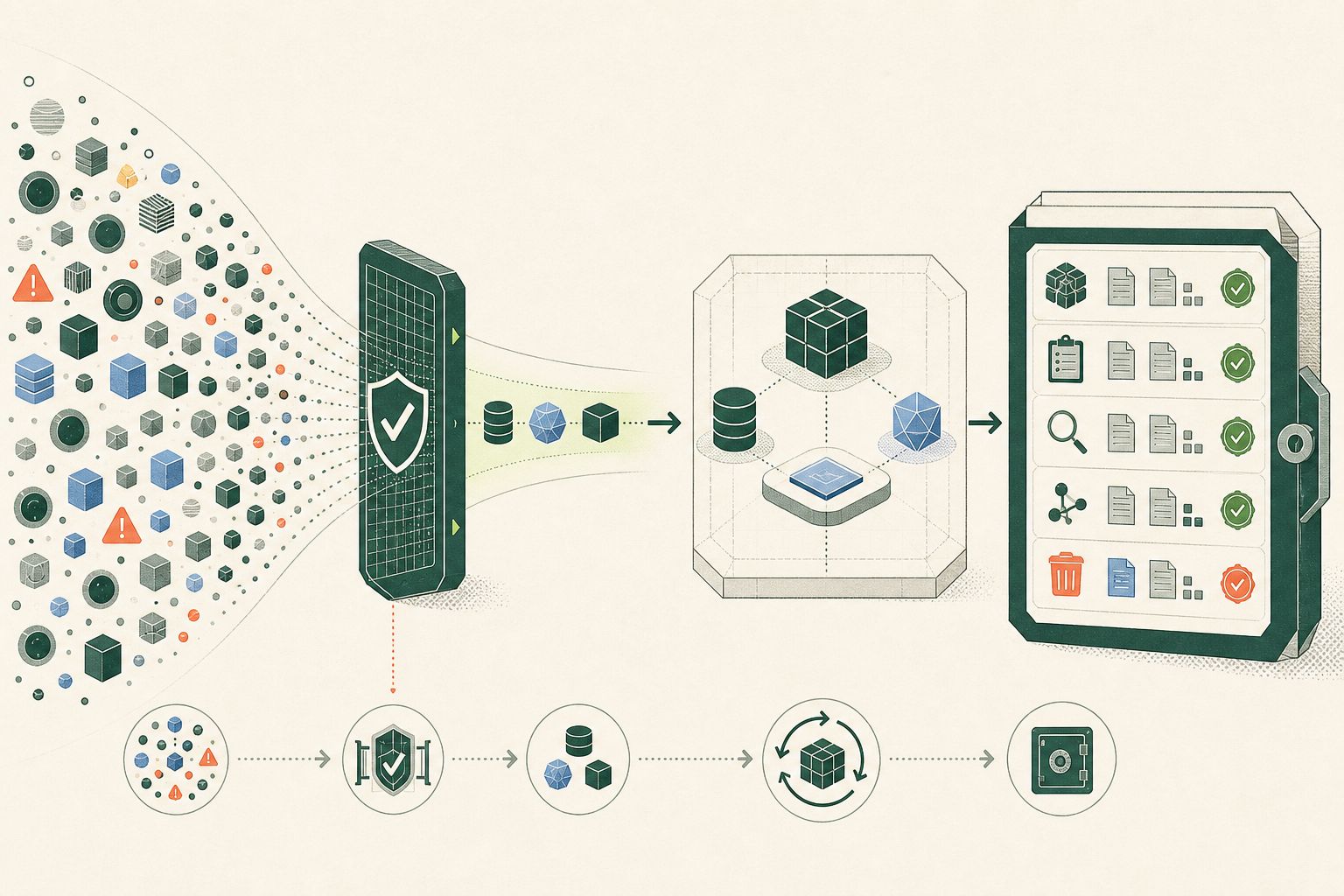
Oregon outsourcing at a glance
| Oregon buyer condition | Decision before supplier access | Evidence to retain |
|---|---|---|
| Ordinary software with no applicable personal-data path | Apply proportionate delivery, security, rights-chain, account, acceptance, and continuity controls without importing irrelevant privacy claims | Brief, system and data classification, named team, buyer-owned repositories, tests, release record, support, and exit result |
| Buyer or operation may be within the OCPA | Determine the exact entity, threshold or motor-vehicle path, consumer context, data, purpose, role, exclusion, and effective provision | Scope memo, operation inventory, source citation, owner, review date, and change triggers |
| Supplier processes personal data for a controller | Translate each controller purpose and instruction into observable operation-level boundaries | Binding contract, instruction ledger, people, fields, systems, countries, subprocessors, confidentiality, safeguards, rights support, assessment inputs, verification, return/deletion, and role-drift record |
| Product creates profiles, scores, inferences, segments, or other derived data | Ensure rights and deletion can reach back-end records, not just source tables | Lineage, transformation/version, purpose, model or query, subject link, recipients, decisions, retention, export, correction, deletion, and verification |
| Product sells data, targets advertising, or profiles consequential decisions | Implement current opt-out and assessment behavior, including universal opt-out signals where applicable | Signal capture, identity/residency decision, propagation, conflict handling, downstream suppression, test matrix, assessment, appeal support, and release evidence |
| Operation involves a consumer under 16 or sufficiently precise geolocation | Stop sale/targeting or other restricted processing before implementation; verify current text and exceptions | Age-knowledge rule, location precision and use map, feature gate, recipient and advertising paths, consent where relevant, test evidence, and qualified approval |
| Deidentified data leaves the buyer | Prove deidentification commitments and oversight rather than treating a label as permanent | Method, risk test, public commitment, recipient contract, monitoring, breach response, reidentification-test boundary, and exit |
| Supplier works outside Oregon’s Pacific-time day | Protect live privacy, incident, release, exception, and deletion authority while enabling sustainable asynchronous work | Named cities and IANA zones, project dates, protected overlap, written handoff, backup owners, daylight-transition test, and off-hours escalation |
This guide does not decide OCPA applicability, consumer status, an entity or data exclusion, whether a transfer is a sale, whether data is sensitive, whether a location is precise within the enacted rule, whether knowledge of age exists, whether consent is valid, whether an assessment is sufficient, or whether a specific request, appeal, disclosure, signal, retention period, or enforcement response is required.
Classify the operation, not just the company
Privacy scope can change within the same organization. A public website, applicant system, connected-vehicle service, nonprofit membership platform, customer analytics pipeline, and internal engineering tool may involve different people, purposes, data, exemptions, and roles.
Create one classification record per material operation:
- Entity and threshold: identify the contracting entity, Oregon nexus, annual processing facts, revenue facts, nonprofit status, vehicle-manufacturer or affiliate path, and all current exclusions under qualified review.
- Consumer context: distinguish individual or household activity from employee, applicant, commercial, or other contexts using current definitions.
- Data: list direct fields, identifiers, device and browser data, precise or approximate location, sensitive data, content, metadata, inferred traits, profiles, segments, scores, and derived data.
- Purpose: connect each field and transformation to a specific disclosed and approved outcome; reject “analytics,” “AI,” and “improvement” as standalone purposes.
- Role: identify the controller, processor, third party, affiliate, natural person, data source, recipient, and every subprocessor for that operation.
- Rights and restrictions: record access, categories, copy, correction, deletion, opt-out, consent revocation, appeal, recipient disclosure, assessment, age, location, and signal behavior that may apply.
- Evidence and custody: identify systems, logs, owners, review dates, retention, deletion method, and exit test.
An exempt entity can still contract with a provider that processes data for non-exempt controllers or operates as a controller elsewhere. A data-specific exclusion does not necessarily exempt unrelated account, analytics, support, advertising, or telemetry data. Keep the analysis at the operation level.
Build a lineage-and-recipient ledger
Oregon’s rights model makes a simple field inventory insufficient. A deletion request can reach data supplied by the consumer, obtained elsewhere, and derived data. Oregon DOJ’s first-year observations specifically call attention to back-end profiles and shopping patterns. The buyer therefore needs to follow data after collection.
Use a ledger with one row per meaningful data state:
| Ledger field | Decision | Evidence |
|---|---|---|
| Subject and source | How the record links to a consumer and where it originated | Source system, collection surface, event, timestamp, lawful classification, and subject key |
| Field and meaning | What the value represents, including uncertainty | Schema, definition, sensitivity, precision, units, status, and steward |
| Purpose | Why this exact state is created or retained | Public notice purpose, internal approval, necessity, expected use, and prohibited use |
| Transformation | How raw data becomes a score, profile, segment, inference, embedding, feature, or aggregate | Code/query/model version, inputs, outputs, reviewer, validation, and lineage link |
| Controller instruction | What the supplier may and may not do | Work-order instruction, system/environment, people, duration, and change gate |
| Recipient | Every applicable disclosure destination and role | Legal entity, service, country, categories or specific-recipient evidence, purpose, contract, and date |
| Rights behavior | How access, copy, correction, deletion, opt-out, consent revocation, and appeal reach this state | Workflow, identity rule, propagation job, exception, deadline owner, test, and result |
| Retention and exit | When and how the state and links end | Retention event, deletion/return method, backup handling, proof, residual record, and accepted exit |
Store the ledger under buyer governance. It may be generated partly from schemas, catalogs, infrastructure, model registries, and contracts, but a named owner must review the meaning. A scan can find a column; it cannot decide purpose, controller role, whether an inference is linked to a person, or whether a recipient relationship changed.
Keep processors inside the instruction boundary
The current statute requires a processor to adhere to controller instructions and assist with rights, security, and assessment information. The contract must describe processing instructions, nature, purpose, data type, duration, rights and obligations, confidentiality, deletion or return, compliance information, subcontracts, and an assessment mechanism.
Translate that contract into operations. For each supplier work package, record:
- approved outcome and prohibited independent purposes;
- fields, source states, derived states, samples, and environments;
- individual supplier identities, legal entity, country, role, and normal hours;
- repositories, cloud tenants, AI services, support tools, logs, exports, and backups;
- subprocessors, notice/approval route, downstream instructions, and removal;
- security controls and evidence appropriate to the work;
- rights, universal-signal, consent, deletion, recipient, and assessment support;
- incident signal, facts, preservation, authority, and updates;
- retention, return, deletion, account revocation, and exit acceptance.
Create a role-drift stop gate. A provider can become a controller for a processing set if it stops following instructions or begins determining purposes and means. Pause before a supplier reuses data to train a model, benchmarks customers, builds a contact list, selects a new advertising purpose, enriches profiles, retains output for its own product, or independently chooses recipients.
Record the proposal, data and purpose change, affected consumers, role analysis, contract change, notice/consent/opt-out effects, assessment, owner, approval or rejection, and implementation evidence. Silence is not approval.
Make rights reach derived and downstream data
A polished request form can hide a broken back end. Test the complete path from authenticated request to every data state and recipient action.
For access and copy, return the required scope in a portable and usable format without omitting profiles, inferences, device records, service tickets, model features, or archived active records merely because they live outside the customer database. Protect trade secrets and other exceptions through a qualified, recorded decision rather than blanket suppression.
For correction, identify which source is authoritative and whether a corrected source should recompute a score, profile, recommendation, eligibility signal, or segment. Preserve correction history where required for integrity without continuing to use the inaccurate value.
For deletion, traverse source, copied, obtained, and derived states. Define behavior for caches, indexes, embeddings, feature stores, logs, backups, model-training inputs, outputs, analytics tables, and downstream processors. Where deletion cannot occur immediately or an exception applies, record the exact data, reason, access restriction, owner, retention event, and eventual action.
For recipient information, maintain evidence that can produce the applicable list of specific third parties or other statutory option. A category-only vendor inventory may not support the selected response. Store the exact legal recipient, role, data set, disclosure date/range, and source record.
Test denials and appeals as well as successful requests. Measure receipt, authentication, search coverage, downstream propagation, reviewer decision, response, appeal, and closure. Do not use a consumer deadline as the supplier’s internal deadline; contract for enough time to investigate and correct failures.
Honor universal opt-out signals as an operating event
Beginning January 1, 2026, the current Oregon framework requires applicable controllers to support universal opt-out mechanisms for sale and targeted advertising. Treat the signal as a product event that must survive identity, device, session, account, data warehouse, campaign, and supplier boundaries.
Build a signal test matrix:
- recognized and unrecognized mechanism states;
- signed-in and signed-out consumer;
- browser, device, app, and account identifiers;
- Oregon residency decision and uncertainty;
- new and returning sessions;
- existing loyalty or premium-feature conflict;
- sale, targeted advertising, measurement, internal operation, and profiling paths;
- marketing platform, data clean room, audience sync, model, and subprocessor propagation;
- withdrawal, preference change, duplicate signal, and account merge;
- logs that prove receipt, interpretation, action, downstream completion, and later non-regression.
Keep preference enforcement outside the supplier’s discretionary analytics layer. The buyer owns the rule and suppression state. A provider can implement and test it but should not be able to silently override it for campaign performance.
When a signal conflicts with voluntary participation in a bona fide reward or premium-feature program, implement the current statutory path and exact consumer experience under qualified review. Do not automatically erase the signal or force continued participation.
Stop precise-location and under-16 misuse before build
Oregon’s 2025 changes, effective in the current 2026 operating period, add strong restrictions around sale of sufficiently precise geolocation and sale or specified advertising/profiling uses of data concerning consumers under 16 when the knowledge standard is met. The current statute and official DOJ materials control; product teams should not reduce these provisions to a banner.
For location, map every coordinate, geofence, Wi-Fi/Bluetooth observation, vehicle position, address-derived point, route, visit, and location inference. Record precision, time, source, consumer/device link, purpose, recipient, sale analysis, retention, aggregation, and feature behavior. A supplier should not lower precision after disclosure and call the upstream sale acceptable without qualified review.
For age, define what the controller actually knows or disregards, the source and reliability of age signals, conflict handling, account/household relationships, and the treatment of profiles inferred to concern a child or teen. Avoid collecting more identity data than needed merely to prove age. Use an age-appropriate, privacy-preserving design selected by qualified owners.
Create a release stop gate for advertising, audience, data-sharing, broker, enrichment, SDK, location, and profiling changes. Require a feature/data-flow diff, location and age analysis, affected purposes and recipients, consent or prohibition decision, signal behavior, test evidence, and named approval before release.
Control AI, models, and derived records
For the upstream acquisition side of this problem, compare the Vermont outsourcing guide. Oregon’s lineage-and-rights model follows data through processor operations and downstream records; Vermont adds a distinct source, direct-relationship, data-broker, purchaser-identity, and intended-purpose gate, with its enacted January 1, 2027 transition kept separate from current law.
AI features can create new personal-data states even when the prompt contains no obvious name. Embeddings, classifications, predicted interests, risk scores, summaries, extracted entities, similarity groups, and recommended actions may link or be linkable to a consumer.
Register each model or AI service with:
- intended purpose and prohibited uses;
- source fields, derived features, prompt/context, outputs, and subject linkage;
- provider, model/service version, account, region, subprocessors, retention, and training terms;
- age, location, sensitive-data, sale, targeting, profiling, and consent gates;
- evaluation by relevant subgroup and harm scenario;
- human review and decision authority;
- access, copy, correction, deletion, opt-out, appeal, and recipient behavior;
- monitoring, change detection, incident, rollback, withdrawal, and exit.
Preserve lineage from output to inputs and version without retaining unnecessary raw content. If the system cannot find and delete a linked derived record, do not promise that its consumer-rights implementation is complete.
Code assistants also create a data path. Approve repositories, file types, prompts, telemetry, output provenance, retention, training settings, licenses, secrets handling, and human review. Keep source and release authority in buyer-controlled systems.
Govern deidentified data after disclosure
Deidentification is not a one-time export label. The current Oregon statute connects deidentified-data use to reasonable measures, public commitment, recipient contracts, oversight, and appropriate action when commitments are breached.
Maintain a deidentification packet:
- source data and intended recipient use;
- transformation method and version;
- direct and indirect identifier handling;
- linkage, singling-out, inference, and auxiliary-data risk;
- environment and access limits;
- public commitment and contract;
- recipient/subrecipient inventory;
- monitoring and periodic risk review;
- authorized method testing and prohibited reidentification;
- incident, breach-of-commitment, withdrawal, deletion, and exit actions.
An overseas analyst should receive only the state needed for the approved outcome. Do not disclose raw data and delegate deidentification to an uncontrolled workstation when the supplier does not need the raw state.
Design Pacific-time authority and sustainable overlap
Oregon buyers generally operate on Pacific time, but the actual buyer and supplier cities and dates determine overlap. Use maintained IANA zones, normal local schedules, holidays, and daylight-transition dates. Do not use a static “PST” label year-round.
Assign work by authority:
- Live: privacy incident command, new data/purpose/recipient, role-drift decision, age/location gate, production release, destructive action, rights denial, and recovery acceptance.
- Short-window: requirements, lineage review, assessment, model evaluation, vulnerability triage, request exception, and test acceptance.
- Asynchronous: bounded implementation, documentation, evidence preparation, routine tests, catalog updates, and low-risk maintenance with written acceptance criteria.
Protect a dependable decision window rather than advertising total overlap hours. Record primary and backup owners and what happens when no Oregon decision-maker is available. Test a daylight-transition week, an off-hours privacy incident, and a deletion request near the internal supplier deadline.
Each handoff should state changed data states and recipients, completed work, evidence, tests, open risk, blockers, next action, owner, deadline, and decisions required.
Choose the provider and engagement model
Use a defined project when outcome, data lineage, processor instructions, interfaces, acceptance, and exit can be bounded. Fund a discovery/data-map milestone before committing to a full build.
Use a dedicated team for an evolving backlog when the buyer can retain product, privacy, architecture, data, release, and acceptance ownership. Review identities, processing operations, recipients, and ledger coverage periodically.
Use staff augmentation when contributors enter the buyer’s existing governance system. Do not use the label to obscure the supplier entity, country, employer, tools, data access, or replacement responsibility.
Use a specialist for a lineage map, privacy engineering review, deidentification test, universal-signal validation, model evaluation, or rights exercise. Define independence when the specialist assesses another provider’s work.
Evaluate legal identity, ownership, financial and insurance evidence, verifiable references, assigned people, countries, subprocessors, privacy engineering, secure development, rights and signal implementation, data lineage, evidence quality, incidents, continuity, conflicts, commercial terms, intellectual-property chain, and a representative paid pilot.
No company, client, partner, or prior-team relationship should be named publicly without evidence and written naming permission. Outsourcing.ai can deliver a defined software or AI project directly, coordinate disclosed specialists, or run an independent provider selection. The proposal identifies the contracting entity, relationship, countries, responsibilities, commercial connection, data paths, intellectual-property terms, acceptance, and exit.
Protect source, accounts, data, and contributor rights
Separate buyer background materials, provider tools, new deliverables, open-source components, third-party services, personal data, deidentified data, models, generated output, configurations, tests, documentation, and evidence. Identify every contributor and responsible entity.
WIPO’s directory helps locate destination-country intellectual-property sources; it does not establish ownership or assignment. Obtain advice for the actual countries, people, employment or contractor relationships, inventions, data, model terms, and contract.
Keep repositories, cloud organizations, identity, domains, registries, signing keys, production accounts, consent/preference service, data catalog, lineage ledger, evidence store, backups, and recovery under buyer governance. Require individual identities, protected history, review, provenance, repeatable releases, inventory, and handover.
Test continuation after revoking the provider’s main administrator. Rebuild or deploy a release, process a synthetic access/deletion/opt-out case, produce a recipient record, restore configuration, inspect lineage, and assign the next change to a buyer or backup owner.
Normalize complete cost and downside
Compare the same outcome, data perimeter, ledger, service level, evidence, support, and exit. Include labor, delivery leadership, buyer product/privacy/security/legal ownership, classification, lineage and catalog work, assessments, rights and signal engineering, model evaluation, cloud and AI usage, licenses, time-zone coverage, travel, currency, insurance, incident support, data migration, evidence retention, rework, replacement, and deletion verification.
State uncertainty as a range plus a validation step. Unknown derived stores, undocumented SDKs, historical recipients, identity fragmentation, model features, inaccessible backups, imprecise age signals, location transformations, and missing subprocessor records can change effort materially.
Model downside: a deletion misses a profile; an opt-out signal is lost after account merge; a supplier independently trains on data; a location feed enters an advertising audience; a child-data restriction is bypassed; a recipient cannot be named; or the former provider owns the only lineage record. Low hourly cost does not compensate for an unreconstructable data path.
Run an Oregon lineage-and-rights pilot
Choose a paid milestone using synthetic or carefully governed representative records. Require the named team to demonstrate:
- Operation classification: entity, consumer context, data, purpose, role, recipients, restrictions, and source basis.
- Lineage: trace one collected record into copied, transformed, inferred, modeled, disclosed, and retained states.
- Processor instruction: provision bounded access and reject an unapproved independent use or AI service.
- Rights: run access/copy, correction, deletion including derived data, denial, and appeal paths.
- Recipient evidence: produce the applicable specific third-party or selected statutory response from system records.
- Universal opt-out: receive a synthetic signal and prove enforcement through account, warehouse, campaign, and subprocessor paths.
- Age/location gate: stop a representative under-16 or precise-location advertising/sale change before release.
- Deidentified disclosure: produce the method, commitment, contract, oversight, and breach-response evidence.
- Incident: signal a suspected data misuse immediately, preserve facts, contain safely, and update the ledger.
- Exit: return/delete approved data, revoke the supplier, recover evidence, and continue with a backup owner.
End with a written continue, revise, or stop decision. Do not scale when derived data is invisible, recipients cannot be reconstructed, role drift bypasses approval, signals stop at the browser, deletion ends at the primary database, location/age gates are cosmetic, or recovery depends on the supplier under review.
Oregon buyer red flags
- The provider says an entity exemption covers every operation without mapping the actual controller and data path.
- A rights search covers only customer-profile fields and omits derived profiles, scores, or patterns.
- Recipient evidence contains categories but cannot identify actual legal entities when required by the selected response.
- Universal opt-out support is a banner setting with no downstream enforcement test.
- A processor can reuse data for model training, benchmarking, enrichment, or its own product.
- “Anonymous” data has no method, contract, public commitment, recipient oversight, or reidentification-risk review.
- Precise location is rounded only after it already entered a prohibited disclosure path.
- An age gate depends on collecting unnecessary identity data or ignores contradictory knowledge.
- Shared supplier accounts prevent attribution.
- The provider owns the only catalog, preference store, lineage, repository, evidence, backup, or recovery credential.
Frequently asked questions
Does the Oregon Consumer Privacy Act apply to every Oregon company?
No. Scope depends on the current entity, Oregon nexus, thresholds or specific motor-vehicle path, consumer context, data, exclusions, and operation. The Oregon DOJ FAQ is informative and says the statute controls. Obtain qualified advice.
Must an Oregon deletion request include derived data?
The current statutory right expressly refers to data provided by the consumer, obtained from another source, and derived data. Map the actual systems and exceptions, and test back-end profiles and other linked states rather than deleting only the primary record.
What changed for Oregon buyers in 2026?
Official Oregon sources identify current changes involving universal opt-out mechanisms, sale of precise geolocation data, specified uses of data concerning consumers under 16, and the general cure provision. Verify the operative statutory text and dates for the particular conduct.
Can an overseas vendor be an OCPA processor?
Location alone does not decide the role. A processor must follow controller instructions and the applicable contract and assistance requirements. A provider that independently determines purposes or means for a data set may create controller role consequences under the fact-based rule.
Is deidentified data outside every Oregon control?
Do not assume so. The current framework connects deidentified-data treatment to reasonable measures, commitments, recipient contracts, oversight, and action on breaches of those commitments. Analyze the actual data and risk.
What is the best outsourcing country for an Oregon buyer?
There is no universal best country. Define skills, data and rights perimeter, live authority, time geometry, engagement model, transfer and intellectual-property constraints, complete cost, evidence, incident route, deletion, and exit. Compare named teams in eligible countries through the same pilot.
What should an Oregon outsourcing pilot prove?
It should prove operation classification, data lineage, recipient evidence, controller instructions, derived-data rights, universal opt-out propagation, age/location stop gates, deidentified-data oversight, immediate incident handoff, sustainable scheduling, revocation, recovery, and replacement.
Is Outsourcing.ai located in Oregon or an Oregon privacy authority?
No Oregon location, local workforce, client history, certification, or regulator status is claimed. This is an online buyer guide and delivery service, not an Oregon local-business listing, law firm, regulator, auditor, data broker, or certification body.
Evidence ledger
Sources used on this page
- IANA Time Zone Database — Internet Assigned Numbers Authority. Supports: Maintained time-zone identifiers and transitions for calculating actual overlap between Oregon buyer locations and proposed international delivery cities. Direct source; independently sourced; commercial relationship: none. Verified 8/15/2026 by Outsourcing.ai Editorial Team. Accessed 8/15/2026.
- Oregon Revised Statutes Chapter 646A — Oregon Legislative Assembly. Supports: Current official statutory text for OCPA scope, motor-vehicle applicability, consumer rights including derived-data deletion and recipient information, controller and processor duties, universal opt-out mechanisms, assessments, deidentified data, enforcement, and 2025 amendments. Direct source; independently sourced; commercial relationship: none. Verified 8/15/2026 by Outsourcing.ai Editorial Team. Accessed 8/15/2026.
- Privacy Law FAQs for Businesses — Oregon Department of Justice. Supports: Current official business guidance on OCPA thresholds, motor-vehicle manufacturer coverage, processor applicability, entity and data exclusions, and the Department's warning that the statute controls. Direct source; independently sourced; commercial relationship: none. Verified 8/15/2026 by Outsourcing.ai Editorial Team. Accessed 8/15/2026.
- Attorney General releases one-year report on Oregon Consumer Privacy Act — Oregon Department of Justice. Supports: Official enforcement observations about specific third parties, back-end and derived data, functioning rights forms, nonprofit coverage, and January 1, 2026 location, minor-data, universal-opt-out, and cure-period changes. Direct source; independently sourced; commercial relationship: none. Verified 8/15/2026 by Outsourcing.ai Editorial Team. Accessed 8/15/2026.
- HB 2008 — 2025 Regular Session — Oregon Legislative Information System. Supports: Official enacted-measure record for the 2025 restrictions involving targeted advertising or sale of data concerning consumers under 16 and sale of sufficiently precise geolocation data. Direct source; independently sourced; commercial relationship: none. Verified 8/15/2026 by Outsourcing.ai Editorial Team. Accessed 8/15/2026.
- NIST Privacy Framework — National Institute of Standards and Technology. Supports: Maintained methodology for identifying and managing privacy risk across data processing, governance, communication, protection, and supplier work. Direct source; independently sourced; commercial relationship: none. Verified 8/15/2026 by Outsourcing.ai Editorial Team. Accessed 8/15/2026.
- Secure Software Development Framework — National Institute of Standards and Technology. Supports: Maintained secure-development framework for supplier requirements, protected development environments, provenance, secure releases, and vulnerability response. Direct source; independently sourced; commercial relationship: none. Verified 8/15/2026 by Outsourcing.ai Editorial Team. Accessed 8/15/2026.
- Directory of Intellectual Property Offices — World Intellectual Property Organization. Supports: Official destination-country intellectual-property office links for researching contributor and rights-chain questions without assuming one contract resolves every jurisdiction. Direct source; independently sourced; commercial relationship: none. Verified 8/15/2026 by Outsourcing.ai Editorial Team. Accessed 8/15/2026.
Next scheduled review: November 15, 2026. Corrections: hello@outsourcing.ai.