
Connecticut buyer guide
Outsourcing software development from Connecticut
A Connecticut buyer guide to international software and AI outsourcing: processor instructions, role drift, insurance evidence, incidents, cost, and exit.
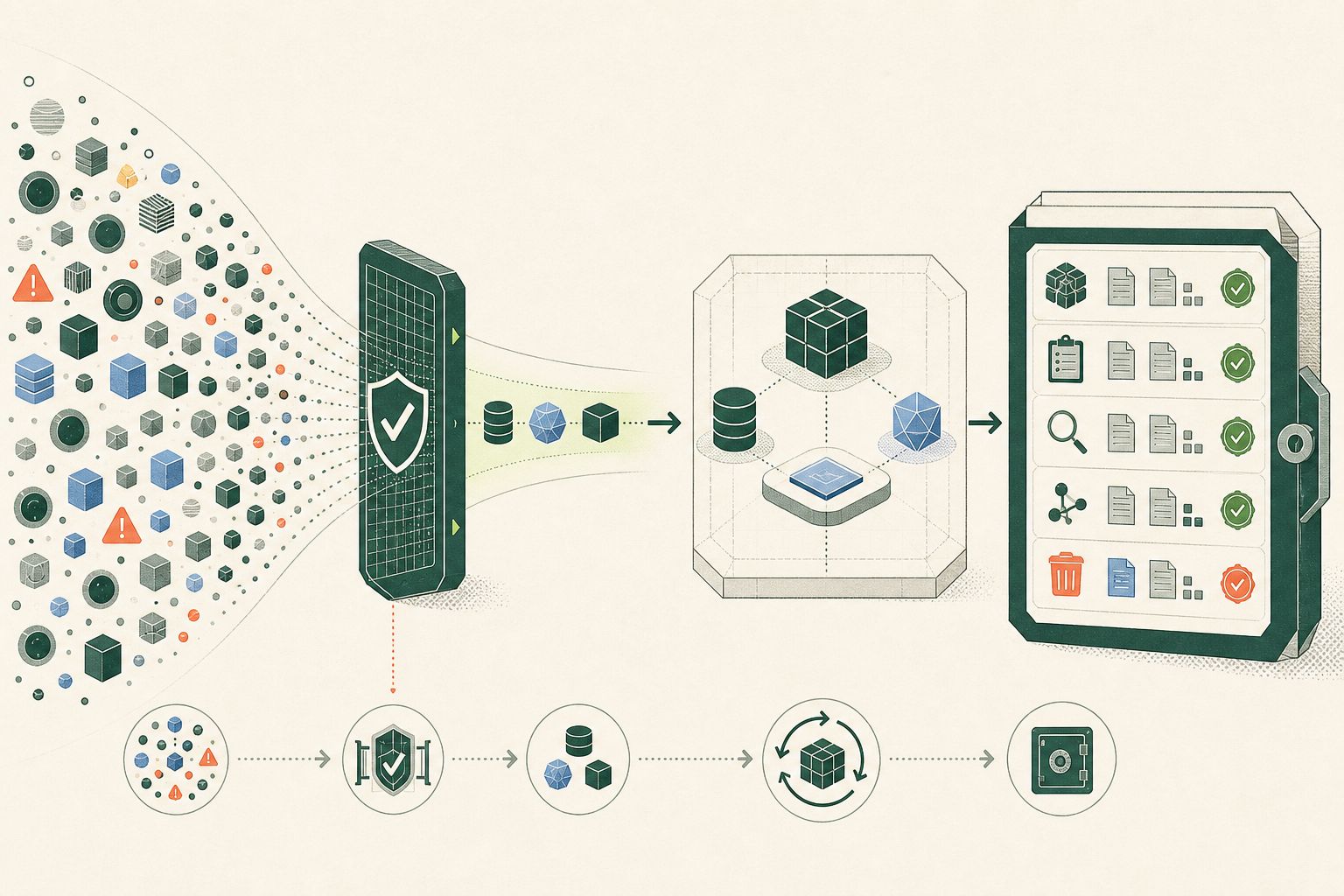
Connecticut outsourcing at a glance
| Connecticut buyer condition | Decision before supplier access | Evidence to retain |
|---|---|---|
| The product may process Connecticut consumer personal data | Determine current applicability, exemptions, roles, purposes, data categories, consent or opt-out requirements, and instructions with qualified review | Scope memo, data map, role record, notices, purposes, request workflow, authorized systems, contract, reviewer, and next-review trigger |
| A provider is intended to act as a processor | Make the instructions operational and prevent independent use or purpose drift | Binding processing schedule, permitted actions, prohibited uses, named subprocessors, technical restrictions, access logs, change approvals, assessment evidence, return or deletion record |
| The workflow uses hosted models, coding assistants, analytics, agents, or vector services | Decide whether the service is a processor, another controller, a subprocessor, or outside the approved path for each operation | Tool register, account owner, inputs and outputs, training and retention terms, region, subprocessors, purpose, disclosure decision, evaluation, logs, deletion, and replacement path |
| The buyer or project is in an insurance-regulated perimeter | Do not assume the general privacy path replaces the current licensee-specific data-security analysis | Perimeter decision, risk assessment, information-security program trace, third-party diligence, contract safeguards, secure-development evidence, event records, certification support, and qualified review |
| The team works outside Eastern time | Protect controller decisions, security approvals, incident command, and acceptance without forcing every contributor onto Connecticut hours | Named cities and IANA zones, project dates, sustainable schedules, protected overlap, written handoff, backup authority, and tested escalation |
This guide translates official material into procurement and delivery questions. It does not determine coverage, exemption, controller status, processor status, insurance-licensee status, consent, notification, or liability for a particular organization or project.
Start with the current 2026 perimeter
Connecticut’s privacy framework changed materially in 2026. The Attorney General’s maintained guidance now describes applicability based on current processing thresholds and also identifies sensitive-data processing, sale, and consumer-health-data circumstances that can bring an organization or service into scope. The same guidance describes expanded sensitive-data categories and current consumer rights. A buyer should use that maintained page and the operative statutory text—not a vendor article written before July 2026.
Create a dated perimeter memo for the proposed product and delivery workflow. Record:
- the buyer entity and the products or services through which it reaches Connecticut residents;
- the individuals and context represented by the data, including whether the record is consumer, workforce, business-contact, health-related, minor-related, or otherwise sensitive;
- the annual processing facts, any personal-data sale, and any sensitive or consumer-health-data processing;
- every entity, role, purpose, system, model, subprocessor, and recipient in the proposed path;
- the exemptions or data-level exclusions being considered and the evidence for them;
- the consumer-rights, consent, notice, opt-out, assessment, security, and contract duties that qualified reviewers conclude apply; and
- the event that forces re-review, such as a new dataset, model, product audience, purpose, sale, integration, subprocessor, or law.
Do not turn an exemption into a slogan. An entity exemption, a data exemption, and a processing-purpose exception can have different boundaries. A product may also contain several lanes that need different treatment. Preserve the conclusion, assumptions, source version, reviewer, and next review date so an offshore delivery team does not operate from an undocumented sales-call answer.
Classify each supplier operation, not only the vendor
The Connecticut Attorney General explains that the controller–processor distinction turns on decision-making authority. A processor follows the controller’s instructions. If it begins deciding the purposes and means for a processing operation, it can become a controller for that operation. A supplier therefore does not receive one permanent role label for every service it performs.
Break the project into operations. For example, a software agency may act under instructions when maintaining a buyer-controlled application, use a subprocessor when sending logs to an approved observability service, and make an independent decision if it repurposes customer conversations to improve its own model. The legal conclusion belongs to qualified reviewers, but the operating facts must be visible to them.
Use a role record for each path:
| Field | Buyer question |
|---|---|
| Data and person | What exact input, output, inference, identifier, or derived record is processed, and whose is it? |
| Purpose | Which documented buyer purpose authorizes this operation? |
| Means and authority | Which choices are fixed by buyer instructions, and which choices can the supplier make? |
| Entity and people | Which legal entity, named team, country, system, model host, and subprocessor perform it? |
| Retention and learning | Is the data stored, logged, embedded, reviewed by humans, or used to train or improve any service? |
| Evidence | Which configuration, log, assessment, test, report, contract, or walkthrough proves the described state? |
| Change control | What change requires buyer approval or stops processing? |
| Exit | How are data, access, derived artifacts, backups, and subprocessors returned, deleted, or retained lawfully? |
Reconcile the record with the privacy notice, consumer-request workflow, assessment, architecture, provider agreement, and actual configuration. If those artifacts tell different stories, pause access rather than selecting the most convenient one.
Turn processor instructions into delivery controls
Connecticut’s current processor provisions address adherence to controller instructions, assistance with consumer rights, security and breach obligations, assessment information, confidentiality, return or deletion, subprocessor controls, compliance information, and assessments. A contract is necessary, but the project needs an executable instruction packet.
For each operation, state:
- the accepted outcome and permitted purpose;
- approved fields, records, repositories, environments, regions, tools, and identities;
- prohibited copying, local storage, export, model use, training, sale, disclosure, and secondary purpose;
- data-minimization and synthetic-data requirements;
- confidentiality and workforce access conditions;
- subprocessor identity, function, location, notice, objection, and flow-down path;
- consumer-rights assistance, search, correction, deletion, export, and response evidence;
- security controls, monitoring, incident trigger, preservation, and assistance;
- assessment inputs and the evidence the provider must make available;
- return, deletion, backup lifecycle, legal retention exception, and verification; and
- the person authorized to approve a deviation.
Make the controls observable. An instruction to use “reasonable security” does not tell an engineer which account is permitted. A promise to delete data does not identify caches, logs, embeddings, backups, tickets, or subprocessors. A statement that data is not used for training does not prove the production configuration, contract version, or account tier. Connect each instruction to a technical or procedural mechanism and a retained evidence artifact.
Add a role-drift stop gate for AI and analytics
AI-assisted delivery creates fast, quiet changes to processing. A developer can paste a record into a coding assistant; an agent can call an unreviewed tool; a support platform can add automatic summarization; an analytics vendor can create inferred segments; or a model provider can change a retention setting. Each action may alter purpose, means, recipients, retention, inference, disclosure, or rights support.
Maintain an approved-service register with the provider and model version, account owner, commercial terms, input and output categories, prompts, embeddings, human review, training or improvement use, region, retention, subprocessors, access, security, logs, deletion, evaluation, and fallback. Link the register to the instruction packet.
Require a stop-and-review event when anyone proposes:
- a new model, agent, plugin, connector, vector store, analytics destination, or support tool;
- production or consumer data where synthetic data was approved;
- a new inference, profiling use, automated decision, or audience;
- model training, fine-tuning, prompt review, service improvement, or benchmark use;
- a new country, entity, human reviewer, or subprocessor;
- a material change to retention, deletion, access, or consumer-request capability; or
- an independent purpose not stated in the buyer’s instructions.
The gate should identify the product owner, privacy owner, security owner, and person authorized to restart work. Record the decision even when the change is rejected. A mature provider will surface the question; a weak provider will treat tool convenience as permission.
Build consumer-rights support before production
The current Connecticut guidance describes rights involving access, correction, deletion, portability, inferences, profiling information, certain third-party sale information, and opt-outs. The exact duty depends on the applicable law and facts, but an outsourcing buyer should know whether its supplier can locate, act on, and evidence a validated request across the approved data path.
Create a rights-support map that identifies the authoritative consumer identity, systems of record, derived stores, provider indexes, model or vector artifacts, logs, archives, subprocessors, response owner, exceptions, and proof. Test with synthetic records. A provider should be able to:
- receive a scoped instruction from the controller without answering the consumer independently unless authorized;
- locate the relevant records and derived artifacts in the proposed systems;
- correct, delete, export, restrict, or preserve them as instructed and applicable;
- cascade approved actions to subprocessors;
- report failures, conflicts, retained exceptions, and completion evidence; and
- avoid disclosing one person’s data while trying to satisfy another person’s request.
Do not wait for the first real request to learn that a model store has no usable subject index or that a supplier cannot distinguish production exports from backups. Include the result in acceptance and ongoing review.
Supply assessment evidence without questionnaire theater
Controller assessments need accurate system and provider facts. Ask the proposed team for information that can support the buyer’s current assessment and change review: purpose, data categories, consumers, benefits, risks, safeguards, recipients, algorithms or models, profiling, sensitive data, sale or targeted-advertising involvement, security, retention, subprocessors, human authority, and reasonably available alternatives.
Separate evidence levels:
- provider-asserted: a completed response or policy;
- contractually committed: an enforceable promise for the proposed service;
- independently examined: a report with issuer, scope, period, exceptions, and relevance;
- observed: a buyer walkthrough of the actual system or process;
- tested: a result from the named team’s pilot or a buyer-controlled control exercise.
An assessment report does not replace service-specific evidence. Confirm that its organization, period, systems, locations, controls, exceptions, and subprocessors match the proposal. Record open issues and compensating controls with owners and expiration dates.
Treat consumer-health and minors’ data as separate stop gates
The Attorney General’s maintained guidance describes specific coverage and restrictions for consumer-health-data controllers and current sensitive-data categories. It also explains current protections involving minors. Do not infer that a general entity exemption, age gate, or health label answers every operation.
If a product can infer health, treatment, disability, reproductive, gender-related, neural, biometric, precise-location, child, or other sensitive information, create a field-and-inference inventory before supplier access. Include raw inputs, labels, model outputs, scores, segments, embeddings, and developer or support views. Obtain qualified decisions about scope, consent, purpose, notice, geofencing, sale, access, processor contracts, and deletion.
Use synthetic data until the lane is approved. Prevent real records from entering prompts, screenshots, issue trackers, demo tenants, local files, or observability tools. Test an unauthorized-data stop, a consent or purpose change, a rights request, and deletion across the actual service chain.
Add the insurance lane only for the applicable perimeter
Connecticut’s Insurance Data Security Law is a separate official source for covered licensees. The current statute and Insurance Department bulletin address risk-based written information-security programs, third-party service providers, secure development, investigations, records, notifications, and specified exceptions. Do not paste this overlay onto every Connecticut company, and do not assume a general privacy-law exemption eliminates insurance-specific duties.
A buyer that may be within the insurance perimeter should obtain a current, qualified scope decision. Where the lane applies, connect the proposed service to:
- the licensee’s risk assessment and information-security program;
- the proposed provider’s access to information systems or nonpublic information;
- due diligence on the actual entity, team, countries, systems, and controls;
- required administrative, technical, and physical safeguards;
- secure-development evidence for internally or externally developed applications as applicable;
- ongoing monitoring and reassessment;
- prompt provider escalation, investigation assistance, evidence preservation, and recovery;
- records needed for regulatory, examination, notification, or certification support; and
- replacement, access revocation, return, deletion, and continuity.
Use an insurance evidence appendix rather than mixing this lane invisibly into a general vendor questionnaire. Identify the licensee owner and reporting authority. Set supplier notification fast enough for the buyer to investigate and meet any applicable deadline; the supplier should report preliminary facts and updates rather than wait for final root cause.
For a neighboring but differently structured provider chain, the Maine outsourcing guide separates broadband customer permission, immediate general custodian notice, and insurance third-party or ancillary-provider event paths, including the January 1, 2027 contract transition.
Design the Eastern-time operating system
Use the buyer’s actual Connecticut location and an IANA identifier—commonly America/New_York—with every critical supplier city and the dates that matter. Daylight-saving transitions can change the overlap when the delivery location changes on a different date or does not change clocks.
Protect live windows for product scope, controller instructions, architecture, privacy and security approval, release acceptance, and incident command. Do not measure overlap only as the hours when someone appears online. Identify who has authority to decide, which decisions require the buyer, and what the team may do asynchronously.
Latin American teams may offer broad same-day overlap depending on the named cities. European teams can align with Connecticut mornings and continue afterward. Asia-Pacific teams can support planned follow-the-sun delivery when the handoff contains accepted outcome, current artifact, evidence, unresolved risk, owner, and next authorized action. Compare named people and sustainable schedules rather than assigning capability to a region.
Test a daylight-saving transition, an unavailable buyer owner, a security escalation outside normal overlap, and a handoff that must stop because an instruction is missing. Document backup authority and maximum decision latency.
Choose the engagement model before the country
For managed project delivery, define the result, acceptance, delivery lead, team, countries, instructions, evidence, change control, support, and handover. The provider owns the agreed delivery system; the buyer retains the decisions and controls that cannot be delegated.
For staff augmentation, make the buyer’s additional management burden visible. Record named people, allocation, daily authority, employment or contracting entity, access, replacement, supervision, evidence, and offboarding. Obtain appropriate classification, employment, tax, and permanent-establishment advice for the actual arrangement.
For a specialist or freelancer, reduce access to what the bounded outcome needs and protect continuity through buyer-owned accounts, repositories, documentation, review, and recovery. Do not give one person unrestricted customer-data and production authority merely because the engagement is small.
For provider selection, compare the named entity and proposed team on the same work package. Outsourcing.ai can scope and deliver a defined project directly, coordinate disclosed specialists, or support an independent selection. The proposal should identify the contracting entity, relationship model, countries, responsibilities, data path, commercial relationships, intellectual-property terms, and exit before access or payment.
Country choice follows the operating requirements. Evaluate legal entity, talent, language, working-time geometry, data and sector constraints, sanctions, payments, contributor rights, security, continuity, complete cost, and recoverability for the specific destination and provider. There is no universal best country for a Connecticut buyer.
Protect the software and rights chain
Separate buyer background assets, provider tools, new deliverables, open-source components, third-party services, data, prompts, evaluation sets, models, derived artifacts, documentation, and operational records. Identify every employee and subcontractor who can contribute or access protected assets, their country, and the entity responsible for their obligations.
The WIPO directory can help locate official destination-country intellectual-property resources, but it does not prove ownership, assignment, confidentiality, or enforcement for a proposed team. Obtain advice for the actual countries, contributors, work, and contract.
Keep repositories, cloud organizations, domains, package registries, model accounts, analytics, signing keys, backups, and recovery paths under buyer governance. Require individual identities, protected branches, dependency and provenance records, repeatable builds, release approval, vulnerability handling, runbooks, and tested offboarding. Verify that the buyer can revoke access and continue without the supplier’s administrator account.
Calculate complete cost and downside
Normalize proposals for the same accepted outcome, role matrix, instruction packet, and evidence requirement. Include delivery labor, management, privacy and security work, model and cloud usage, tools, currency and payment costs, support, shifted hours, travel, rework, rate changes, replacement, rights support, incident assistance, assessment evidence, and transition.
Show unknowns as ranges with a validation action. Legacy data, new sensitive-data classification, an insurance overlay, missing request indexes, subprocessor changes, model evaluation, and buyer-owned environment setup can change effort materially. A low rate does not compensate for an untestable processing path.
Model downside: a provider uses data for an unapproved AI purpose, a rights request cannot be completed, a critical subprocessor changes, credentials are compromised, the delivery lead disappears, an incident arrives outside overlap, or the buyer cannot reproduce the release. Include prevention, detection, response, recovery, financial responsibility, and exit in the comparison.
If the buyer or provider is formed in Delaware, use the Delaware entity-to-operation crosswalk before treating its formation state or registered-agent address as evidence of work location, privacy scope, delivery entity, data role, or authority.
For a neighboring but structurally different publication question, the Rhode Island outsourcing guide separates the commercial-site notice path from thresholded controller-processor operations and from the immediate security-incident path, then traces each public statement into the actual supplier configuration and evidence.
Run a Connecticut instruction-drift pilot
Choose a paid milestone that resembles the intended project without requiring unnecessary personal or nonpublic information. Use synthetic or specifically approved data. Include one product decision, implementation, peer review, secure-development evidence, automated tests, documentation, acceptance, and buyer-controlled handover.
Select several role-record and instruction-packet rows. Ask the named team to demonstrate the approved identity, environment, tool, data, purpose, subprocessor, evidence, and exit. Then exercise:
- a request to add an AI or analytics service that must stop for review;
- a synthetic consumer-rights or deletion request across a provider and subprocessor;
- removal of one contributor and retrieval of access evidence;
- a suspected supplier event with preliminary facts, preservation, updates, and buyer authority; and
- restoration or transfer of the accepted build using buyer-controlled assets.
If an insurance lane applies, connect the exercise to the buyer’s risk assessment, information-security program, third-party evidence, secure-development expectations, investigation path, and records. End with a written continue, revise, or stop decision. Do not scale when the proposed team was absent, roles are unresolved, instructions exist only in a contract attachment, unapproved tools are routine, or exit cannot be demonstrated.
Connecticut buyer red flags
- A pre-2026 privacy summary is treated as current scope advice.
- “We are a processor” is asserted once for every service and operation.
- The provider may use customer material to train or improve tools without a specific, reviewed instruction.
- The data map omits inferences, prompts, embeddings, logs, support tickets, screenshots, or subprocessors.
- Consumer-rights assistance exists only as contract language and has never been tested.
- A certification is offered without matching its entity, system, period, exceptions, and proposed team to the work.
- An insurance questionnaire is applied to every buyer, or a general privacy exemption is assumed to resolve the licensee perimeter.
- The supplier controls the only repository, model account, release key, backup, or recovery identity.
- Eastern-time coverage is promised without named cities, dates, authority, and sustainable schedules.
- Incident escalation waits for a completed investigation or the supplier’s next business day.
Frequently asked questions
What changed for Connecticut privacy in July 2026?
The maintained Attorney General guidance describes broader applicability, expanded sensitive-data categories, and current rights and obligations. Use that guidance with the operative statutory text and qualified review for the exact organization and workflow; do not rely on an older threshold summary.
Does a Connecticut company need a processor contract with an overseas software provider?
That depends on current applicability, exemptions, roles, data, and operations. When the provider acts as a processor under the applicable Connecticut provisions, the current statute specifies duties and contract terms. Qualified counsel should map them to the actual service and other governing requirements.
Can an outsourcing provider use project data in an AI coding assistant?
Not by default. Record the data, purpose, service, role, account, retention, training use, region, subprocessors, security, rights support, and deletion. Use synthetic data unless real data is necessary and approved. A new independent purpose or means can change the role analysis.
Does the Connecticut Insurance Data Security Law apply to every Connecticut business?
No. It is a licensee-specific framework with definitions, requirements, and exceptions. Obtain a current perimeter decision. Where it applies, do not replace its third-party, security-program, development, event, record, or notification analysis with a general privacy checklist.
What is the best outsourcing country for a Connecticut company?
There is no universal winner. Define the outcome, roles, data and insurance perimeter, Eastern-time decisions, skills, engagement model, evidence, complete cost, and recovery. Then compare named teams in eligible countries through a representative pilot.
Is nearshore delivery always better for Connecticut buyers?
No. Same-day overlap can help when decisions require live collaboration, but skill, accountability, evidence, cost, continuity, and data suitability remain provider-specific. A well-designed asynchronous model may outperform a weak nearby team.
What should a Connecticut outsourcing pilot test?
Test the proposed people, instruction adherence, an AI-tool change gate, rights or deletion support, access removal, incident handoff, secure-development evidence, accepted delivery, buyer-controlled handover, and recovery. Add the insurance evidence lane only when applicable.
Is Outsourcing.ai located in Connecticut?
No Connecticut location is claimed. This is an online buyer guide and delivery service, not a Connecticut office, local-business listing, or representation of local employees or clients.
Evidence ledger
Sources used on this page
- IANA Time Zone Database — Internet Assigned Numbers Authority. Supports: Maintained time-zone identifiers and transition data for calculating actual overlap between Connecticut buyer locations and proposed international delivery cities. Direct source; independently sourced; commercial relationship: none. Verified 8/15/2026 by Outsourcing.ai Editorial Team. Accessed 8/15/2026.
- Uniform Time — U.S. Department of Transportation. Supports: Federal time-zone and daylight-saving oversight, supporting date-aware Eastern-time collaboration design rather than a fixed UTC assumption. Direct source; independently sourced; commercial relationship: none. Verified 8/15/2026 by Outsourcing.ai Editorial Team. Accessed 8/15/2026.
- The Connecticut Data Privacy Act — Connecticut Office of the Attorney General. Supports: Current official business guidance on 2026 applicability, controller and processor roles, sensitive and consumer-health data, consumer rights, opt-out signals, and processor instruction boundaries. Direct source; independently sourced; commercial relationship: none. Verified 8/15/2026 by Outsourcing.ai Editorial Team. Accessed 8/15/2026.
- 2026 Connecticut Data Privacy Act business update — Connecticut Office of the Attorney General. Supports: Official July 1, 2026 business update on broadened applicability and expanded sensitive-data categories, used with the Attorney General's maintained CTDPA guidance. Direct source; independently sourced; commercial relationship: none. Verified 8/15/2026 by Outsourcing.ai Editorial Team. Accessed 8/15/2026.
- Connecticut Insurance Department laws and regulations — Connecticut Insurance Department. Supports: Official department access point for current insurance statutes, regulations, and the 2026 statutory supplement, used to verify the maintained legal perimeter before relying on the implementation bulletin. Direct source; independently sourced; commercial relationship: none. Verified 8/15/2026 by Outsourcing.ai Editorial Team. Accessed 8/15/2026.
- Bulletin IC-42 — Connecticut Insurance Data Security Law — Connecticut Insurance Department. Supports: Official implementation bulletin explaining licensee scope, third-party service-provider diligence and safeguards, annual certification evidence, investigations, and event notification. Direct source; independently sourced; commercial relationship: none. Verified 8/15/2026 by Outsourcing.ai Editorial Team. Accessed 8/15/2026.
- Secure Software Development Framework — National Institute of Standards and Technology. Supports: A maintained framework for requesting supplier evidence about secure development, provenance, review, release integrity, vulnerability response, and software protection. Direct source; independently sourced; commercial relationship: none. Verified 8/15/2026 by Outsourcing.ai Editorial Team. Accessed 8/15/2026.
- Directory of Intellectual Property Offices — World Intellectual Property Organization. Supports: Official destination-country intellectual-property office links for investigating contributor and rights-chain questions without assuming one U.S. contract resolves every jurisdiction. Direct source; independently sourced; commercial relationship: none. Verified 8/15/2026 by Outsourcing.ai Editorial Team. Accessed 8/15/2026.
Next scheduled review: October 15, 2026. Corrections: hello@outsourcing.ai.