
Hire an automation consultant
How to hire an automation consultant
Map the workflow, exceptions, ownership, credentials, and failure recovery before choosing a no-code specialist or integration engineer.
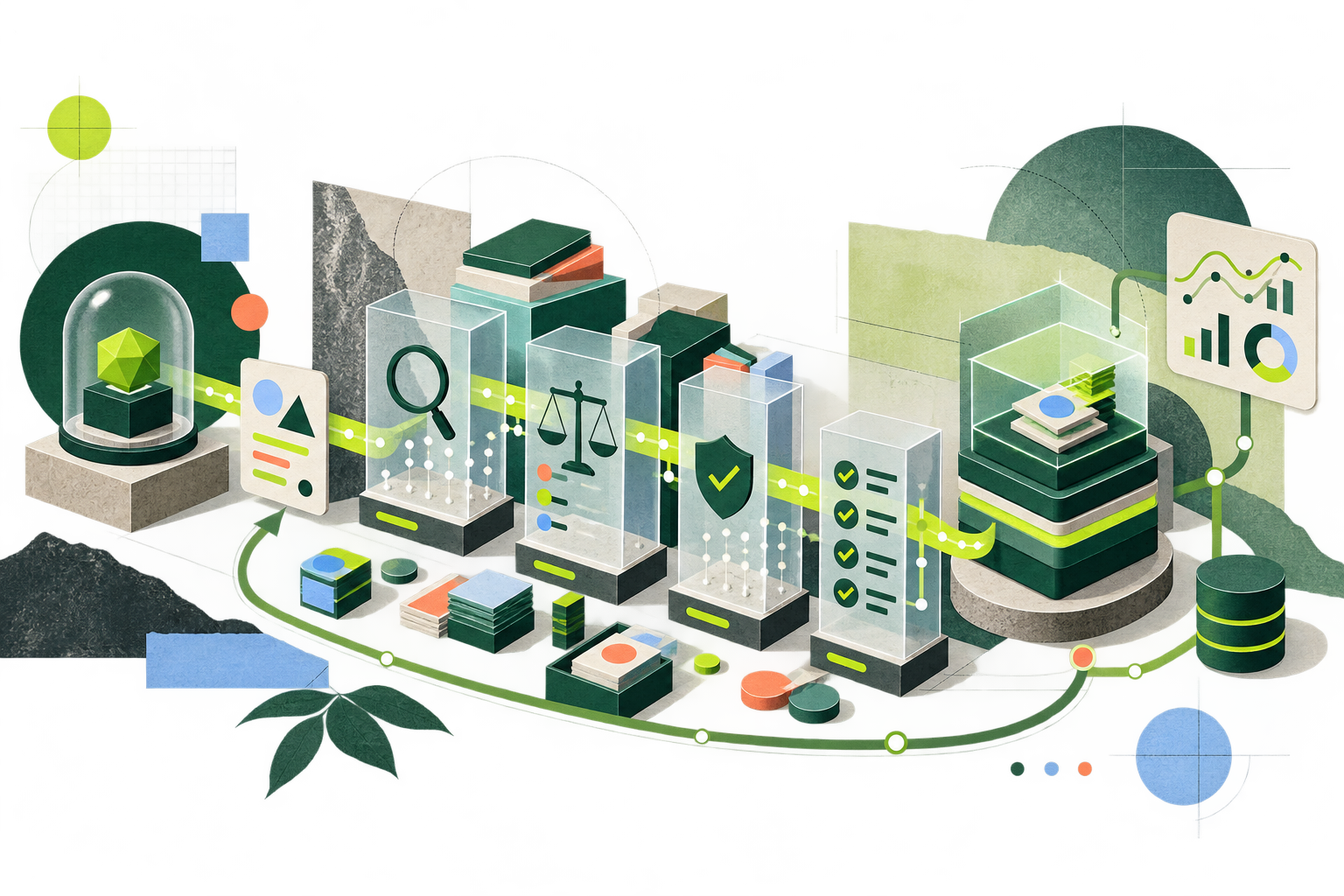
Automation failures usually come from invisible process assumptions, not from an inability to connect two APIs. A useful consultant makes the workflow observable before making it faster.
Prepare a workflow brief
Document the trigger, inputs, decision rules, systems touched, expected output, volume, sensitive fields, exception paths, and person responsible when the automation stops. Include screenshots or examples, but do not share real credentials or personal data during the sales process.
Classify each step as deterministic, judgment-based, or approval-required. This prevents a proposal from quietly replacing a human control with an unreliable model call.
Evaluate beyond the happy path
Ask candidates how they handle duplicate events, retries, partial failure, expired credentials, changed schemas, rate limits, audit logs, alerts, and manual recovery. Request a diagram showing where data moves and which account owns each integration.
Tool choice should follow the operating requirement. A no-code platform may be ideal when the team can maintain it and connectors meet the need. Custom code may be justified for complex logic, stronger testing, high volume, or controls that the platform cannot express.
Define a durable handoff
Require client-owned accounts where practical, least-privilege access, a credential inventory, configuration export, runbook, test cases, monitoring instructions, and a recorded handoff. Acceptance should include a demonstrated failure and recovery, not only a successful run.
Decide whether the workflow is ready
Automation amplifies the process it receives. Before sourcing a consultant, observe the work across enough real cases to identify normal paths, exceptions, approvals, reversals, and informal judgment. If different operators cannot explain the same process consistently, the first engagement may need process design rather than implementation.
Use this readiness test:
| Question | Ready signal | Warning signal |
|---|---|---|
| Is there a named process owner? | One person can approve rules and exceptions | Every team assumes another team decides |
| Are inputs observable? | Required fields and source systems are known | Important context lives in private messages or memory |
| Are decisions explicit? | Rules and approval boundaries can be described | Operators rely on undocumented intuition for most cases |
| Can success be measured? | Time, quality, error, or service outcomes are visible | Only the number of automated steps is measured |
| Can failure be recovered? | Work can be replayed, corrected, or routed manually | A partial run silently corrupts downstream state |
| Is the process stable enough? | Material changes are controlled | The workflow changes weekly without an owner |
Automation can still help an uncertain process, but the consultant should be hired to make the workflow visible and testable before scaling it.
Choose the right kind of consultant
A no-code specialist may fit a bounded workflow that uses supported connectors, moderate volume, and a business team able to maintain the result. An integration engineer may fit custom APIs, complex state, stronger testing, high volume, or reliability requirements beyond a platform’s visual builder. An AI automation specialist may be relevant where a step genuinely requires language or probabilistic judgment—but deterministic rules and approvals should remain explicit.
Do not choose by tool logo. Ask how the candidate decides when not to use the preferred tool, how configurations are tested and exported, and what happens when a connector or price changes.
Create an exception inventory
For each step, list what can arrive late, twice, out of order, incomplete, unauthorized, or in an unexpected format. Include failures in the source system, automation platform, network, credentials, destination, and human approval.
Classify each exception:
- Prevent: validate before changing state.
- Retry: repeat safely with idempotency and bounded attempts.
- Queue: preserve the work for later processing.
- Escalate: send context to a named person.
- Compensate: reverse or repair a partial change.
- Stop: fail closed when continuing would be unsafe.
Ask candidates to demonstrate at least one failure and recovery path during the pilot. A successful happy path proves that components connect; it does not prove the automation can be operated.
Evaluate proposals consistently
Require the same response structure from each candidate: workflow understanding, assumptions, proposed architecture, systems and data touched, access model, exception handling, testing, observability, operating cost, limits, timeline, buyer responsibilities, handover, and exclusions.
Useful evidence includes a redacted runbook, test approach, incident lesson, maintainable configuration, and architecture diagram from similar work. Testimonials are less useful when they do not reveal complexity, failure behavior, or who performed the delivery.
Ask who owns third-party accounts and whether the consultant receives referral or reseller compensation. Commercial relationships do not automatically invalidate a recommendation, but they should be visible before a tool choice is accepted.
Secure credentials and data
Do not send production credentials during sales. Create individual identities, use least privilege, separate development and production, and provide synthetic or minimized data where possible. Store secrets in the platform or cloud’s supported secret mechanism rather than inside workflow steps, documents, or messages.
Document every system, permission, purpose, owner, and revocation step. If an automation uses an AI service, record what content is sent, retention or training settings, approved use, and the consequence of unsupported output. Protect logs as data; they can contain the same sensitive fields as the workflow.
Define observable acceptance
Acceptance should cover representative normal cases and exception cases. Check that duplicate input does not create duplicate effects, retries are bounded, timeouts are visible, approvals cannot be bypassed, errors include useful context, and manual recovery is documented.
Also test configuration export, deployment into buyer-controlled accounts, alert delivery, credential rotation, dependency failure, and the runbook with someone who did not build the automation. The buyer should be able to pause the workflow safely and understand the backlog created while it is paused.
Budget beyond the build
Model platform charges, task or operation usage, API fees, AI model usage, monitoring, storage, support, maintenance, and the cost of human exception handling. Include time for connector changes, schema changes, expiring credentials, and business-rule updates.
The cheapest prototype may be expensive to operate if it creates a large manual review queue or no one can diagnose failures. Ask for low, expected, and high-volume operating scenarios with assumptions exposed.
Establish a baseline and an outcome ledger
Measure the current process before automating it. Record representative volume, cycle time, waiting time, correction rate, exception categories, manual effort, customer or employee impact, and the cost of delayed or incorrect work. Use ranges when the data is incomplete and state how it was sampled.
Then define the intended outcome. “Automate invoice intake” is a scope label; “reduce repeated entry while preserving approval and reconciliation” is closer to an operating decision. Choose measures that can reveal both benefit and harm:
- correctly completed cases;
- cases routed for human review;
- duplicate or conflicting effects prevented;
- time to detect and recover a failed case;
- unresolved backlog and its oldest item;
- manual effort saved or shifted;
- unauthorized, unsupported, or out-of-policy actions blocked;
- downstream corrections and customer-impacting errors.
Keep an outcome ledger during the pilot. Compare automated cases with the baseline and record where effort moved. An automation that reduces data entry but creates an opaque exception queue may have improved one local metric while worsening the whole process.
Require an architecture and authority record
The consultant should return a diagram and tabular inventory of every trigger, connector, account, queue, datastore, model, approval, destination, log, alert, and manual action. For each component, record the owner, environment, data, credentials, expected volume, rate or size limit, failure behavior, retention, operating cost, and replacement path.
Add an authority field to each step:
| Authority | Meaning | Example control |
|---|---|---|
| Observe | Read or classify without changing business state | Scoped read token and logged query |
| Prepare | Draft a proposed action for review | Pending record with no external effect |
| Approve | Human or policy gate authorizes a defined action | Named role, authenticated decision, expiry |
| Execute | Change a system within an approved boundary | Idempotency key, limits, audit record |
| Reverse | Compensate or restore an earlier state | Tested reversal and reconciliation |
| Stop | Disable unsafe processing and preserve backlog | Kill switch, queue, named incident owner |
This prevents a conversational or “AI-powered” layer from quietly gaining payment, deletion, publication, access, or customer-communication authority. Tool access should be narrower than the business sentence used to describe it.
Treat AI steps as probabilistic operations
When a workflow uses a model to extract, classify, summarize, match, draft, or decide, define the eligible inputs, expected output schema, confidence or review rule, prohibited actions, evaluation set, fallback, monitoring, and material-change trigger. Do not hide an AI decision inside a connector called “smart processing.”
Create representative evaluation cases including ambiguity, missing context, adversarial or irrelevant content, prompt injection where retrieved or user-supplied text is involved, sensitive data, unsupported languages, and cases that must stop. Separate model quality from end-to-end safety: a correct classification can still cause harm if it is applied to the wrong account or executed twice.
Require human review for consequences the business has not explicitly delegated to an automated policy. The interface should show source evidence, proposed action, uncertainty, and affected record rather than asking a reviewer to approve an unexplained conclusion.
Record model and service version, prompt or configuration version, provider, region, data handling, evaluation result, approver, and deployment date. Re-run the relevant cases when those facts materially change.
Design the operating service, not only the workflow
Define who watches alerts, during which hours, and what they can do. Specify severity, acknowledgement, containment, update, recovery, reconciliation, and closure evidence appropriate to the business effect. A notification sent to an unowned channel is not monitoring.
The runbook should cover at least:
- confirm whether a case started and which version handled it;
- locate the last safe step and every external effect;
- prevent duplicate continuation;
- preserve evidence and sensitive information appropriately;
- choose retry, manual completion, compensation, or stop;
- reconcile the source and destination systems;
- notify the authorized owner when business impact requires it;
- return queued work in a controlled order;
- record the cause, correction, and prevention action.
Test the runbook with a person who did not build the automation. Measure recovery time and missing permissions or information. Fix those gaps before calling the workflow production-ready.
Control change after acceptance
Inventory changes that can alter behavior without editing the visible workflow: connector releases, API schemas, authentication methods, model versions, prompt configuration, rate limits, field mappings, data-retention settings, platform pricing, and supplier subprocessors.
Define which changes are automatically tested, which require review, and which stop production pending approval. Keep a known-good version and a rollback or manual-continuity plan. Export configurations on a schedule the buyer can verify rather than waiting for termination.
Use a release packet containing the workflow version, dependencies, tests, evaluation results, permissions, known limitations, approver, deployment time, monitoring state, and rollback point. A low-code canvas still needs release evidence when it changes consequential business state.
Frequently asked questions
Should we automate a process before standardizing it?
Usually, make the trigger, decisions, exceptions, and ownership explicit first. A consultant can help with that discovery. Automating undocumented variation tends to hide errors rather than remove them.
Is no-code less secure than custom code?
Security depends on the actual platform, configuration, data, permissions, operations, and threat model. No-code can provide useful controls; custom code can provide flexibility. Neither is safe by category.
Who should own the automation accounts?
The buyer should normally control durable production accounts, billing, identities, data, and recovery methods. Grant the consultant scoped access and preserve an auditable offboarding path.
What is a good first automation pilot?
Choose a bounded workflow with visible value, representative exceptions, reversible effects, and an available process owner. Avoid beginning with the most sensitive or irreversible process simply because its manual cost is high.
How do we know the handoff is complete?
A person outside the build should be able to inspect the workflow, deploy or restore it, rotate a credential, diagnose a failed case, pause and resume safely, and follow the runbook without private consultant knowledge.
Should the consultant provide ongoing support?
Only if the operating need and service are explicit. Define coverage, severity, response, authorized actions, exclusions, recurring price, dependency changes, and transition. The buyer should still retain accounts, evidence, and an emergency stop path.
How often should an automation be reviewed?
Set a schedule based on impact and also trigger review after material process, data, connector, model, permission, volume, regulatory, or ownership changes. Review actual exceptions and recovery evidence, not only whether the workflow remains enabled.
Evidence ledger
Sources used on this page
- Secure by Design — Cybersecurity and Infrastructure Security Agency. Supports: CISA's secure-by-design guidance, supporting requirements for safe defaults, documented ownership, access control, failure handling, and maintainability in automated workflows. Direct source; independently sourced; commercial relationship: none. Verified 8/14/2026 by Outsourcing.ai Editorial Team. Accessed 8/14/2026.
Next scheduled review: February 14, 2027. Corrections: hello@outsourcing.ai.