
Michigan buyer guide
Outsourcing software development from Michigan
A Michigan buyer guide to international software and AI outsourcing: manufacturing access, vehicle software evidence, safe releases, incidents, time zones, and exit.
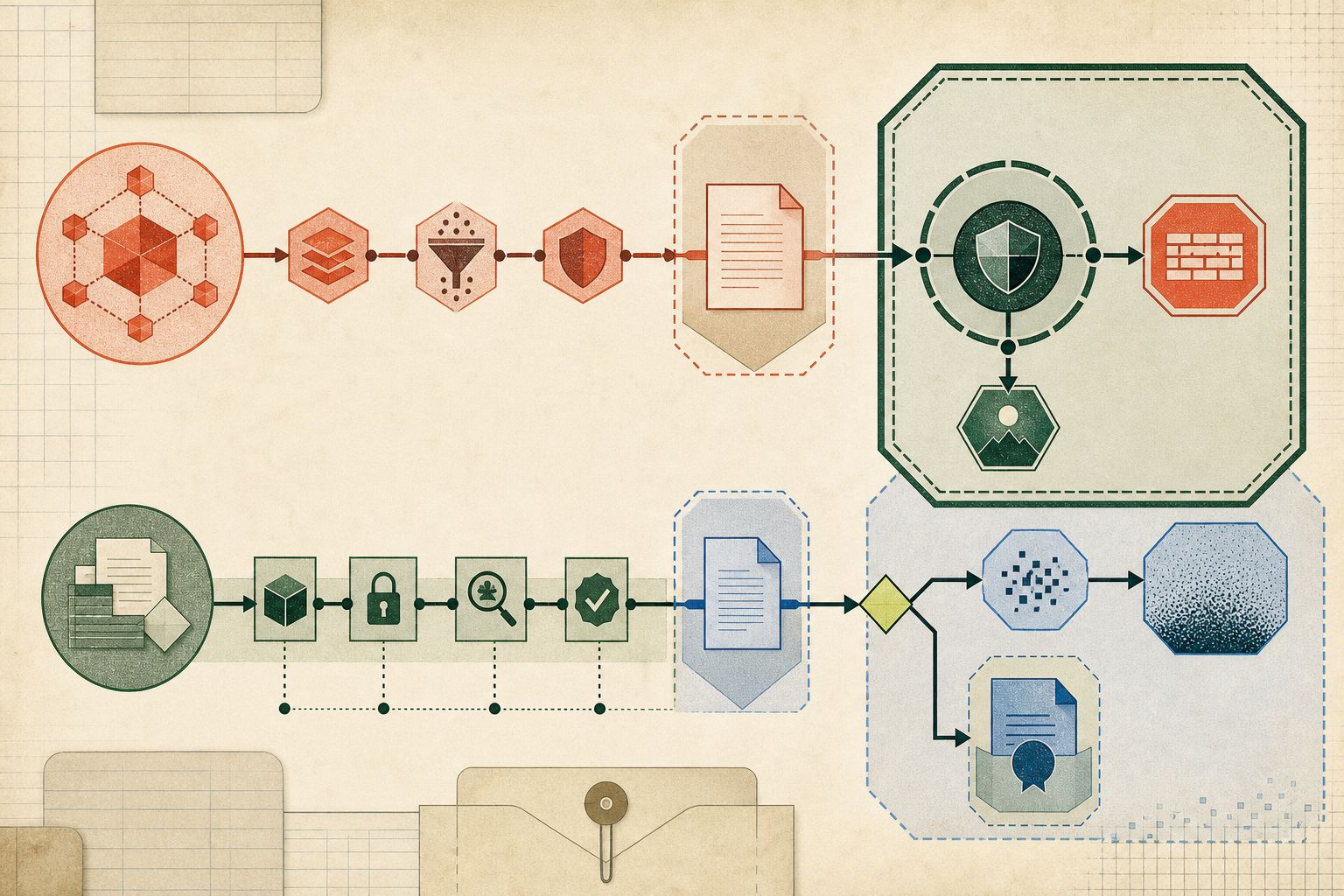
Michigan outsourcing at a glance
| Michigan buyer condition | Decision before supplier access | Evidence to retain |
|---|---|---|
| Ordinary web, business, or internal software | Define the accepted outcome, data, environments, accounts, delivery model, support, and exit without importing irrelevant automotive controls | Brief, responsibility matrix, named team, buyer-owned repository, acceptance tests, release record, cost model, and handover |
| Supplier collaborates on CAD, simulation, test, calibration, firmware, source, or product requirements | Classify the artifact and consequence; separate exploration from an authorized product baseline | Artifact register, purpose, export and contractual review, individual identities, approved tools, version and change history, reviews, tests, rights, retention, and deletion |
| Code can affect a vehicle, connected device, charger, battery system, robot, controller, or other cyber-physical product | Establish buyer-owned safety and cybersecurity authority, a controlled build-and-release path, and field-update and vulnerability duties | Requirement-to-test trace, architecture and interface record, component inventory, provenance, signed or otherwise protected release, residual issues, update plan, monitoring, rollback, and acceptance |
| Remote work can reach a plant, lab, test cell, industrial control system, or production-support environment | Create a session-level remote-access envelope; prevent routine development identities from becoming standing plant administrators | Asset and zone map, approved source and destination, named person, purpose, window, least privilege, buyer approval, monitored session, change and safety state, disconnect, and review |
| The provider handles Michigan personal information | Determine current applicable investigation, resident-notice, contract, and sector paths; contract for immediate technical facts before an incident occurs | Data and role map, incident trigger, discovery time, affected records, access-and-acquisition facts, preservation, buyer escalation, updates, qualified review, retention, and deletion |
| Michigan buyer operations span the Eastern–Central boundary or supplier daylight changes | Schedule by exact facility and team location, IANA identifier, project date, and operational authority | Named locations, maintained zones, shift calendars, daylight transitions, overlap, handoff, incident coverage, plant window, and tested backup owner |
This guide converts current primary sources into procurement and operating questions. It does not determine whether a product is safe, a system is operational technology, a dataset is covered, an export is permitted, an event is reportable, or a particular standard, contract, notice, or regulatory obligation applies.
Classify the work by consequence, not by the word “software”
A marketing site, an accounts-payable integration, a manufacturing analytics dashboard, calibration logic, a robot-cell interface, and code shipped inside a vehicle may all be called software projects. They do not justify the same authority or evidence.
Create four lanes before selecting a provider:
- Enterprise lane: business applications, websites, workflow automation, analytics, and other work with no product or plant control.
- Engineering lane: requirements, models, drawings, simulations, test data, source, firmware, calibration, manufacturing instructions, or product-lifecycle records.
- Product lane: software or data whose failure, compromise, or unauthorized change can affect a vehicle, device, charging system, connected service, safety function, field update, warranty, or customer operation.
- Operations lane: access to plants, labs, test cells, industrial networks, controllers, historians, maintenance systems, quality systems, or production-support services.
Some projects cross lanes. A cloud dashboard may begin in the enterprise lane and later send commands to equipment. An AI prototype may start with synthetic records and later ingest production defects or recommend process parameters. A diagnostic tool may read vehicle data before gaining update capability. Record the transition gate before work begins.
For each work package, name the buyer entity, facility or product, business owner, engineering owner, safety owner where relevant, security owner, data owner, production authority, supplier entity, people, countries, systems, artifacts, privileges, consequence, acceptance authority, and change trigger. The control level follows the highest credible consequence of the actual access—not the supplier’s job title or sales category.
Michigan’s 2026 Auto Workforce Transition Report documents a changing automotive and advanced-manufacturing environment and uneven effects across the supply chain. That makes manufacturing a useful Michigan research lens; it does not mean every Michigan buyer is an automotive manufacturer or that every project needs vehicle controls.
Create a bounded supplier authority envelope
An international team needs enough access to deliver, but access should not silently transfer buyer authority. Define an authority envelope for each role and environment.
| Envelope field | Buyer decision |
|---|---|
| Identity | Which named human or workload identity receives access, through which legal entity and managed device? |
| Purpose | Which accepted work package and ticket permits the access? |
| Destination | Which repository, dataset, service, engineering tool, lab, network zone, machine, or interface is reachable? |
| Capability | Can the identity view, export, simulate, change, approve, deploy, command, update, disable, or recover? |
| Time | Is access continuous, scheduled, shift-bound, session-bound, or activated only by a buyer owner? |
| Observation | Which buyer-controlled logs or session records show entry, action, transfer, approval, failure, and exit? |
| Safety and operations | Which equipment state, interlock, local operator, maintenance window, or stop condition is required? |
| Revocation | Who can terminate the session immediately, and what proves removal across every secondary path? |
Separate development, test, validation, staging, field, and plant environments. Do not let a developer account become a production account because both use the same vendor. Prevent shared identities, unmanaged remote-desktop tools, generic service accounts, and supplier-owned recovery paths. Record any exception, owner, compensating control, expiration, and review.
The buyer should retain authority to approve architecture, safety-relevant requirements, production data, new tools, plant connectivity, privileged access, releases, updates, exceptions, incident activation, external communication, acceptance, and restoration. A provider may operate an agreed delivery system without owning these decisions.
Exercise revocation before scaling. Remove one contributor from identity, source control, cloud, engineering platforms, file exchange, remote-access gateways, ticketing, secrets, test systems, monitoring, backups, and support channels. Confirm that cached credentials, shared accounts, API tokens, and supplier recovery methods cannot restore access.
Require an engineering-custody packet for every material release
A code commit is not a handover. For any material product, manufacturing, or critical-service change, require an engineering-custody packet that lets the buyer understand, reproduce, approve, operate, and later replace the work.
The packet should connect:
- buyer requirement, use case, operating assumptions, and prohibited behavior;
- architecture, interfaces, data flows, dependencies, hardware or environment constraints, and affected variants;
- named authors and reviewers, legal entities, countries, and contributor-rights record;
- source revision, third-party and open-source components, generated material, models, data, tools, and provenance;
- threat, misuse, failure, safety, privacy, and operational analysis appropriate to the consequence;
- static, unit, integration, simulation, hardware-in-the-loop, system, security, regression, performance, and acceptance evidence as applicable;
- build environment, parameters, compiler or tool versions, generated artifacts, hashes, signatures or other integrity controls, and reproducibility result;
- known issues, residual risk, approved deviation, monitoring, support, vulnerability, and update responsibilities;
- deployment or installation instructions, required equipment state, backup, rollback, recovery, and validation; and
- buyer acceptance, date, version, release authority, retention, and supersession record.
NIST’s Secure Software Development Framework provides a maintained structure for protecting development environments and artifacts, producing well-secured software, tracking component provenance, and responding to vulnerabilities. Use it to define outcomes and evidence, not to claim that a supplier is “NIST certified.”
NHTSA’s 2022 vehicle cybersecurity best practices are non-binding federal guidance intended for organizations across vehicle and equipment design, development, manufacturing, assembly, and the software supply chain. They support lifecycle, inventory, access, logging, test, update, vulnerability, incident, and recovery questions when the actual work enters a vehicle perimeter. They do not turn an ordinary Michigan software project into a regulated automotive project and do not by themselves establish product safety or compliance.
Separate product approval from outsourced implementation
For a vehicle, device, charger, battery, controller, robot, or other cyber-physical product, write an interface contract before implementation. Define valid inputs, outputs, states, timing, ranges, authentication, loss-of-communication behavior, degraded mode, logging, version compatibility, update behavior, and safe failure or stop conditions as appropriate.
The supplier should return evidence against that contract. The buyer’s qualified product, safety, cybersecurity, validation, and release owners decide whether the evidence is sufficient. Avoid an arrangement in which the same remote team writes the requirement, implements the control, creates the only test, approves the result, deploys it, and owns the only logs.
For AI or statistical components, specify the intended use, excluded use, data population, labels, baseline, performance slices, uncertainty, human authority, operational limits, drift monitoring, fallback, and update gate. A model that predicts a defect, prioritizes maintenance, generates code, interprets sensor data, or recommends a parameter needs different evaluation. Never let a prototype silently acquire authority to command equipment or accept product.
Keep a product and software inventory that can answer which versions, components, services, credentials, and suppliers are present in each affected product or environment. Connect vulnerability reports to triage, ownership, affected variants, containment, fix, validation, release, field action, customer or partner coordination, and closure. Contract for cooperation after the main development milestone ends.
Put remote manufacturing access behind a session contract
Remote access to an industrial environment is not a convenience setting. CISA’s industrial-control-system materials address remote access, defense in depth, procurement, patching, forensics, and incident planning. Its current Secure by Demand OT guide emphasizes product-security characteristics such as authentication, logging, secure configuration, vulnerability handling, ownership, support, and assurance. Translate relevant outcomes into the specific service rather than copying a generic checklist.
Build an asset and trust-zone map. Identify enterprise IT, engineering workstations, development and test systems, file transfer, jump hosts, identity services, vendor gateways, plant networks, control systems, safety systems, historians, quality systems, maintenance systems, and external support paths as relevant. Record allowed flows and owners.
For each supplier session, require:
- a named person and individual identity;
- an approved ticket, purpose, target, capability, and time window;
- a buyer owner and local operations contact;
- a known equipment and process state, with any required safety or maintenance controls;
- a managed entry path with strong authentication and least privilege;
- buyer-visible session, identity, command, file, configuration, alarm, and change evidence appropriate to the system;
- a tested ability to pause or terminate access;
- confirmation of the resulting system state, unresolved issue, and next action; and
- automatic expiration plus post-session review.
Do not expose a control system to the internet merely to make outsourcing easier. Do not permit an overseas provider to install an unreviewed access appliance or cloud relay. Test updates and configuration changes in a representative non-production environment when feasible. Where operational constraints prevent ordinary patching, record the risk, compensating controls, owner, monitoring, and next decision.
Design for supplier unavailability or compromise. The buyer needs a trusted path to isolate remote access, preserve evidence, continue a safe or degraded operation, restore validated configuration, and reconnect only after authorization. A supplier VPN that is always on is not a continuity plan.
Design the incident handoff around discovery facts
Michigan’s Attorney General said in January 2026 that current Michigan law does not require companies experiencing a breach to notify that office immediately and was advocating for proposed changes. Do not invent an Attorney General reporting workflow from another state or treat a proposal as enacted law. Qualified reviewers should identify the current resident-notice, contract, sector, customer, and other applicable paths for the actual entities, data, event, and date.
The provider agreement should not wait for the provider to decide that an event is legally reportable. Require immediate escalation of technical and operational triggers: suspected unauthorized access or acquisition, lost credentials or devices, unexpected exports, malware, product or plant compromise, unapproved changes, unavailable logs, compromised build infrastructure, exposed secrets, corrupted data, unsafe behavior, or loss of a critical supplier service.
The first handoff should identify discovery time, reporter, legal entity, affected system and environment, product or facility, current service and safety state, identities, data categories, suspected access or acquisition, affected versions, provider and subprocessor involvement, preservation, containment, buyer decisions needed, and next update time. Unknown is acceptable when labeled. Unsupported reassurance is not.
Preserve relevant identity, remote-session, source, build, artifact, cloud-control-plane, endpoint, network, application, database, engineering-tool, controller, deployment, update, support, and backup records. Normalize clocks and record time zones. Prevent rebuilding, reflashing, wiping, or rotating away evidence before buyer incident and operational owners consider preservation, unless immediate safety or containment requires action and the reason is recorded.
Run two parallel paths:
- Product and operations path: isolate unsafe or untrusted capability, protect people and equipment, determine affected variants and facilities, validate trusted configuration, and maintain authorized continuity.
- Data and legal path: identify data ownership and roles, investigate access and acquisition facts, preserve the decision record, and let qualified owners determine notices and communications.
The buyer controls external communications unless the agreement and incident authority explicitly say otherwise. The provider supplies prompt facts and cooperation.
Govern engineering data, AI tools, and cross-border services
Inventory what the remote team can receive or create: product requirements, drawings, CAD, simulation files, source, firmware, calibration, manufacturing instructions, process parameters, test results, defects, telemetry, vehicle or device identifiers, employee data, customer records, security findings, credentials, prompts, embeddings, model outputs, and operational logs.
For each path record source, purpose, owner, classification, legal and contractual restrictions, system, country, person, provider, subprocessor, encryption, training or improvement use, retention, deletion, and incident route. Obtain qualified export-control, sanctions, privacy, trade-secret, contract, and sector review for the actual item, people, destinations, end uses, and access. A label such as “engineering data” does not answer those questions.
Maintain a separate register for coding assistants, hosted models, agents, analytics, collaboration tools, file-transfer services, simulation platforms, remote-support products, and cloud infrastructure. Require review before the supplier changes the service, model, account, region, country, legal entity, subprocessor, retention, training use, or authority.
Use synthetic, redacted, or purpose-built data for discovery when it can prove the outcome. Prohibit a supplier from sending confidential product, production, personal, security, or customer material to a personal or unapproved AI account. An AI agent should not merge, deploy, update, command, approve, or delete merely because it can generate a plausible action.
For each automated action define the initiator, allowed target, precondition, approval, limit, dry run, observation, evidence, failure mode, rollback, and human stop authority. Evaluate erroneous actions, data leakage, prompt or tool manipulation, unreliable outputs, unavailable providers, cost, latency, and recovery—not only average accuracy.
Calculate collaboration time by facility and operational window
Michigan is not one operating clock. The current federal boundary in 49 CFR 71.5 runs through the state and identifies the western Upper Peninsula counties on the Central side of the Eastern–Central boundary. Use the exact buyer facility or office and a maintained IANA identifier, not a proposal that promises “Michigan hours.”
Most familiar Lower Peninsula locations use America/Detroit. Relevant western Upper Peninsula locations may use America/Menominee. Confirm the actual location and maintained identifier rather than inferring from the state or peninsula. Then compare every named supplier city and the project dates, because daylight-saving transitions can occur on different dates or not at all.
Protect synchronous time for architecture, product and safety decisions, plant access approval, production change, incident command, and acceptance. Routine implementation can be asynchronous when the handoff records the accepted baseline, current artifact, evidence, unresolved risks, owner, and next authorized action.
Latin American teams may provide broad same-day overlap with Michigan depending on the cities. Europe may align with Michigan mornings and continue after the buyer day. Asia-Pacific teams may support a relay when the written handoff and backup authority are strong. Do not force every contributor into a permanent night shift to manufacture an overlap claim; fatigue can weaken review and incident response.
Test one Michigan daylight transition, one supplier transition on a different date, a Central-time Upper Peninsula facility when relevant, a plant maintenance window, and an incident outside the delivery lead’s working hours. The calendar should identify who can decide, not only who is online.
Choose the provider and engagement model from the control burden
For managed delivery, define the accepted result, delivery lead, named team, countries, systems, access, evidence, service levels, changes, support, vulnerability response, and handover. The provider owns the agreed delivery process; the buyer retains product, safety, plant, data, security, release, and acceptance authority that cannot be assumed away.
For staff augmentation, the buyer generally carries more architecture, daily management, integration, evidence, and continuity work. Record the proposed person, contributor entity, actual supervision, allocation, hours, access, replacement, and offboarding. Obtain qualified employment, classification, tax, and permanent-establishment advice for the real relationship.
For a specialist, constrain the work to a bounded question and environment. A specialist can review an architecture, create a test harness, automate a business workflow, or investigate a defect without receiving standing production or plant authority.
Evaluate the provider using the proposed people and delivery system. Ask for legal identity, ownership, financial and insurance evidence, references that can be verified and named, countries, subcontractors, engineering and security practices, remote-access product and process, component and build evidence, vulnerability and incident paths, continuity, conflicts, commercial terms, and a representative paid pilot.
No company, partner, client, or prior-team relationship should be named publicly without evidence and written naming permission. Outsourcing.ai can deliver a defined software or AI project directly, coordinate disclosed specialists, or support an independent provider selection. The proposal identifies the contracting entity, relationship, countries, responsibilities, data and system paths, commercial connections, intellectual-property terms, acceptance, and exit.
Protect source, tooling, accounts, and contributor rights
Separate buyer background materials, provider background tools, new deliverables, open-source components, third-party services, data, models, generated output, configurations, tests, documentation, and operational evidence. Identify every contributor and the legal entity responsible for confidentiality and rights.
WIPO’s national-office directory helps locate official destination-country intellectual-property sources; it does not prove that a provider owns or can assign a deliverable. Obtain advice for the actual countries, people, relationship, inventions, software, data, and contract.
Keep repositories, cloud organizations, domains, package and artifact registries, engineering-tool tenants, signing or release keys, deployment paths, monitoring, backups, and recovery under buyer governance. Require individual identities, protected branches, review, automated tests, provenance, reproducible releases, exportable documentation, and a complete account inventory.
Test continuation. Revoke provider access, rebuild a representative artifact in a buyer-controlled or independently recoverable environment, validate it against the accepted packet, restore configuration, and assign the next change to a replacement owner. If the buyer cannot do that, the handover is incomplete even if all source files were delivered.
Normalize complete cost and operational downside
Compare proposals for the same accepted outcome, consequence lane, authority envelope, evidence packet, support, vulnerability response, and exit. Include labor, delivery leadership, buyer engineering, safety and security review, product validation, test equipment, cloud and model usage, licenses, remote-access infrastructure, shifted hours, travel, currency, payment, insurance, rework, incident assistance, field or plant support, replacement, and recovery.
Show uncertainty as a range with a validation step. Legacy equipment, undocumented interfaces, proprietary tools, hardware availability, test-cell scheduling, product variants, field-update constraints, missing component inventories, weak logging, and plant access can materially change effort.
Model downside scenarios: a compromised supplier identity reaches a production-support system; an unreproducible build enters a product baseline; a model recommends an unsafe parameter; a vulnerability affects multiple variants; a provider withholds an engineering-tool account; a critical update cannot be rolled back; or a remote team is unavailable during a plant event. A lower hourly rate is not cheaper when the buyer cannot identify, stop, validate, restore, or replace the work.
Use staged funding: discovery and classification, architecture and access design, representative implementation, evidence and recovery test, then scale. Tie payments to accepted artifacts and demonstrated operating controls rather than activity alone.
Run a Michigan engineering-custody pilot
Choose a paid milestone that resembles the intended work without starting with a safety-critical function, live control authority, or unnecessary production data. A useful pilot might build a non-production integration, analysis service, test harness, simulation component, diagnostic workflow, or bounded automation with representative interfaces.
Require the named team to return one complete engineering-custody packet. Then exercise:
- Access boundary: show every identity, path, environment, capability, approval, log, and expiration.
- Requirement trace: connect the accepted behavior and prohibited behavior to implementation and tests.
- Reproduction: rebuild the artifact from the recorded source, dependencies, tools, and parameters in a buyer-controlled or independently recoverable path.
- Adverse case: demonstrate a failed dependency, invalid input, lost connection, unauthorized request, or other representative failure and the resulting safe or contained behavior.
- Incident handoff: report a suspected credential, build, data, product, or plant event immediately with preliminary facts and preserved evidence.
- Remote-session stop: when industrial access is relevant, terminate a controlled session, validate system state, and prove no secondary path remains.
- Recovery and replacement: revoke the supplier’s primary administrator, restore the accepted baseline, and continue with the buyer or a backup owner.
- Clock transition: exercise the actual Michigan facility zone, supplier city, daylight transition, and off-hours authority path.
End with a written continue, revise, or stop decision. Do not scale when product authority is ambiguous, the provider owns critical accounts, standing plant access replaces session control, builds are not reproducible, evidence cannot connect requirement to release, incidents wait for certainty, or recovery depends on the same supplier identity being investigated.
Michigan buyer red flags
- A provider describes all work as ordinary application development even after it reaches product, test, field, or plant systems.
- “Automotive compliant,” “NHTSA certified,” or “secure OT” appears without an exact scope, requirement, evidence, qualified interpretation, and current review.
- A remote developer can approve and deploy its own product or production change.
- Shared or standing vendor accounts bypass individual, session-bound plant access.
- The buyer cannot reproduce the delivered build or identify its components and tool versions.
- AI tools, generated code, prompts, engineering data, actions, and subprocessors are absent from the artifact record.
- The provider decides whether an event is reportable before telling the buyer what happened.
- A plant or product recovery exercise assumes the supplier’s primary administrator remains trusted and available.
- “Michigan time” is promised without the exact facility, IANA identifier, supplier city, project dates, and operational window.
- Repository, artifact registry, engineering tenant, signing key, remote gateway, monitoring, backup, or recovery remains supplier-owned.
Frequently asked questions
Does every Michigan outsourcing project need automotive cybersecurity controls?
No. Apply controls to the actual entity, product, system, data, access, and consequence. An ordinary business application should receive appropriate software, privacy, security, contract, and continuity diligence without pretending it is a vehicle system. Vehicle guidance becomes relevant when the work actually enters that lifecycle or supply chain.
Is NHTSA’s vehicle cybersecurity best-practices document a certification?
No. NHTSA describes it as non-binding guidance. Use applicable recommendations to shape lifecycle, supplier, inventory, access, logging, update, vulnerability, incident, test, and recovery evidence. Qualified owners must determine the requirements and approvals for the actual product.
Can an overseas developer remotely access a Michigan factory?
This guide does not decide whether a particular access path is permitted. First map safety, operational, cybersecurity, contractual, data, export, customer, insurance, and regulatory constraints. If approved, use a named, least-privilege, time-bounded, monitored session with buyer and local authority, a known equipment state, immediate termination, and tested recovery.
How quickly should a provider report a suspected data or product incident?
Fast enough for the buyer to make its earliest safety, operational, containment, investigation, legal, customer, and continuity decisions. Require immediate preliminary facts and scheduled updates rather than waiting for root cause. Qualified buyer owners determine any external notice.
Is all of Michigan in Eastern time?
No statewide assumption is safe. The current federal boundary places part of Michigan on the Central side, including the western Upper Peninsula counties described in 49 CFR 71.5. Record the exact facility and maintained IANA identifier, then test supplier daylight transitions and operational windows.
What is the best outsourcing country for a Michigan manufacturer?
There is no universal best country. Define skills, consequence lane, engineering and plant access, live authority, data and export constraints, working-time geometry, engagement model, complete cost, evidence, incident response, and recoverability. Compare named teams in eligible countries through the same pilot.
What should a Michigan outsourcing pilot prove?
It should prove the named team’s delivery, individual access, requirement trace, build reproducibility, adverse-case handling, immediate incident handoff, sustainable schedule, buyer-owned custody, revocation, trusted recovery, and replacement. Add plant or product exercises only when the intended scope requires them.
Is Outsourcing.ai located in Michigan or an automotive certifier?
No Michigan location, local workforce, automotive certification, product approval, or Michigan client history is claimed. This is an online buyer guide and delivery service, not a Michigan local-business listing, engineering authority, regulator, or certification body.
For a neighboring operating model that combines a current consumer-data processor lane with a separately gated digital-twin and supervised-maintenance path, compare the Indiana outsourcing buyer guide.
Evidence ledger
Sources used on this page
- IANA Time Zone Database — Internet Assigned Numbers Authority. Supports: Maintained time-zone identifiers and transition data for calculating actual overlap between Michigan buyer locations and proposed international delivery cities. Direct source; independently sourced; commercial relationship: none. Verified 8/15/2026 by Outsourcing.ai Editorial Team. Accessed 8/15/2026.
- 49 CFR 71.5 — Boundary line between eastern and central zones — Electronic Code of Federal Regulations. Supports: Current federal description of the Eastern–Central boundary through Michigan, supporting exact-location scheduling instead of a single statewide time assumption. Direct source; independently sourced; commercial relationship: none. Verified 8/15/2026 by Outsourcing.ai Editorial Team. Accessed 8/15/2026.
- AG Nessel reissues consumer alert on data breaches — Michigan Department of Attorney General. Supports: Current official state explanation that Michigan law does not require companies to notify the Attorney General immediately, supporting qualified review of the actual resident-notice path rather than an invented regulator workflow. Direct source; independently sourced; commercial relationship: none. Verified 8/15/2026 by Outsourcing.ai Editorial Team. Accessed 8/15/2026.
- 2026 Auto Workforce Transition Report — Michigan Department of Labor and Economic Opportunity. Supports: Current state context for Michigan's automotive transition, advanced-manufacturing work, and uneven changes across the supplier ecosystem; it supports the guide's manufacturing lens, not a claim about any buyer. Direct source; independently sourced; commercial relationship: none. Verified 8/15/2026 by Outsourcing.ai Editorial Team. Accessed 8/15/2026.
- Cybersecurity Best Practices for the Safety of Modern Vehicles, 2022 update — National Highway Traffic Safety Administration. Supports: Federal non-binding vehicle-cybersecurity guidance addressing the full lifecycle, suppliers, software inventory, vulnerability handling, access, logging, updates, testing, incident response, and recovery. Direct source; independently sourced; commercial relationship: none. Verified 8/15/2026 by Outsourcing.ai Editorial Team. Accessed 8/15/2026.
- Secure by Demand: Priority Considerations for OT Owners and Operators — Cybersecurity and Infrastructure Security Agency. Supports: Current joint government guidance for evaluating security, authentication, logging, configuration, vulnerability, ownership, support, and assurance characteristics when selecting operational-technology products. Direct source; independently sourced; commercial relationship: none. Verified 8/15/2026 by Outsourcing.ai Editorial Team. Accessed 8/15/2026.
- Industrial control systems recommended practices — Cybersecurity and Infrastructure Security Agency. Supports: Official collection of industrial-control-system practices covering remote access, defense in depth, procurement, patch management, forensics, and incident-response planning. Direct source; independently sourced; commercial relationship: none. Verified 8/15/2026 by Outsourcing.ai Editorial Team. Accessed 8/15/2026.
- Secure Software Development Framework — National Institute of Standards and Technology. Supports: Maintained secure-development framework for requirements, protected development environments, component provenance, secure production, and vulnerability response across supplier work. Direct source; independently sourced; commercial relationship: none. Verified 8/15/2026 by Outsourcing.ai Editorial Team. Accessed 8/15/2026.
- Directory of Intellectual Property Offices — World Intellectual Property Organization. Supports: Official destination-country intellectual-property office links for researching contributor and rights-chain questions without assuming one contract works in every jurisdiction. Direct source; independently sourced; commercial relationship: none. Verified 8/15/2026 by Outsourcing.ai Editorial Team. Accessed 8/15/2026.
Next scheduled review: November 15, 2026. Corrections: hello@outsourcing.ai.