
Wisconsin buyer guide
Outsourcing software development from Wisconsin
A Wisconsin buyer guide to international software and AI outsourcing for manufacturing: twin-to-cell validation, release custody, trade secrets, incidents, and exit.
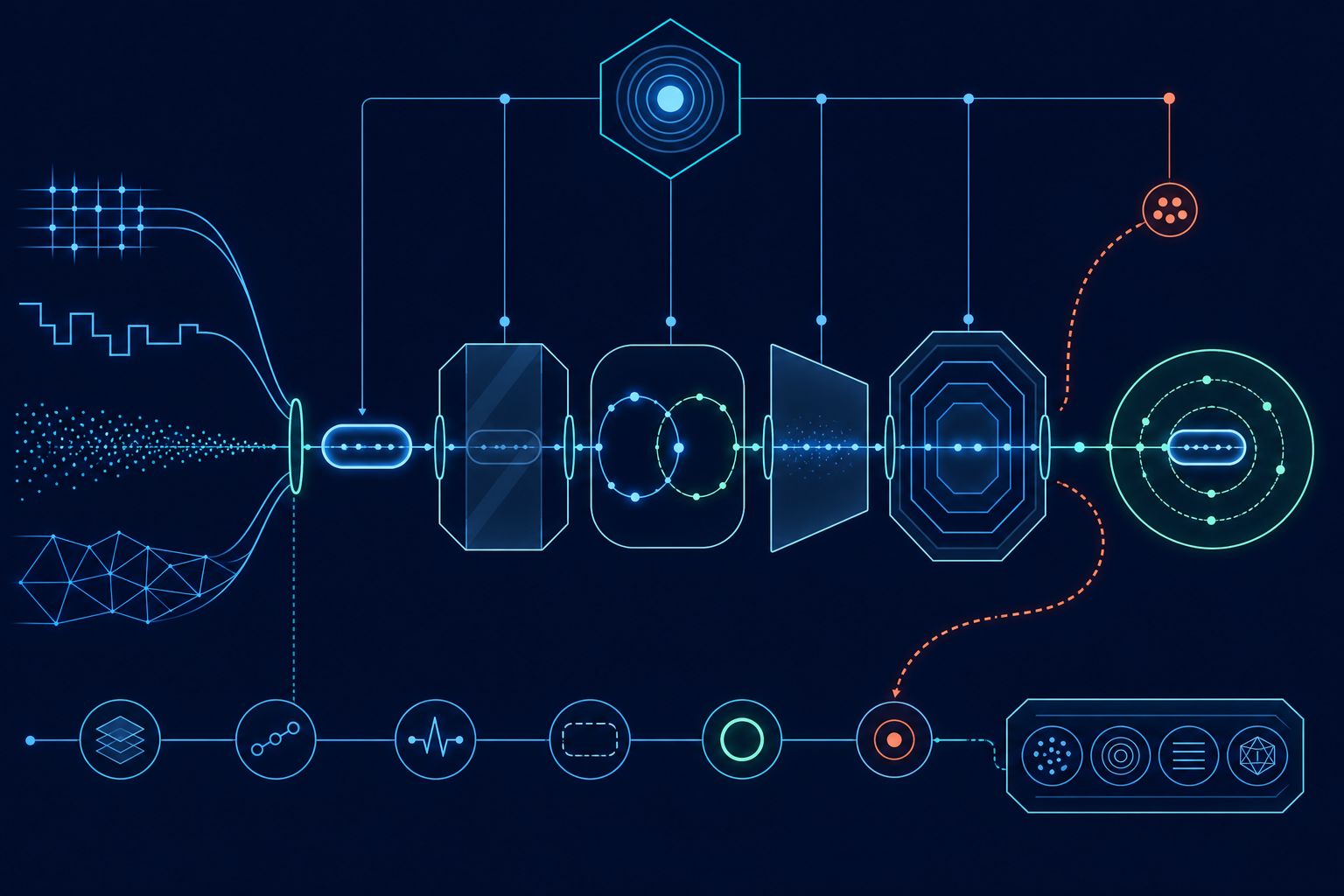
Wisconsin outsourcing at a glance
| Proposed work | Default operating lane | Evidence before production |
|---|---|---|
| Customer portal, internal workflow, ordinary cloud service, or analytics with no physical-process authority | Standard software delivery with buyer-owned repository, environments, acceptance, security, continuity, and exit | Scope, architecture, data map, named team, tests, release record, runbook, accepted outcome, and handover |
| Digital twin, simulator, optimization model, predictive-maintenance model, robotics logic, edge application, or plant integration | Twin-to-cell release passport with distinct simulation, hardware-in-loop, shadow, and production stages | Immutable build, configuration and data baseline, physical assumptions, test envelope, observed results, residual risks, approvals, rollback, and recovery |
| Remote diagnosis or support session touching production IT or OT | Time-boxed, monitored, least-privilege session under Wisconsin buyer command | Ticket, identity, device, location, approved commands, observer, recording or logs, start/expiry, changes, validation, and closure |
| Source, formula, process setting, fixture geometry, recipe, model, training data, or other competitively sensitive material | Trade-secret custody lane based on classification, need, reasonable secrecy measures, and use limits | Asset register, value and secrecy rationale, approved people and systems, access logs, marking, contract, clean-room boundary, downloads, return, and deletion |
| Wisconsin personal information may have been acquired without authorization | Separate incident and statutory decision path; do not let the release workflow make the legal decision | Discovery facts, ownership or storage role, data elements, encryption/readability, people and residence, material-risk analysis, containment, law-enforcement direction, decisions, notices, and recovery |
| Supplier proposes a new model service, remote tool, subprocessor, country, or production connection | Treat as a passport-boundary change, not a routine tool update | Purpose, entity, location, fields, retention, training use, access, security, subprocessors, failure modes, test plan, approval, and reversible removal |
| Buyer is comparing nearshore and offshore teams | Compare the named team against the work and release model after the boundary is defined | Demonstrated artifact, city-to-city overlap, communication, domain reasoning, controls, complete cost, incident response, continuity, and exit exercise |
This is procurement and operating guidance, not a finding that every Wisconsin company is a manufacturer or every software project is operational technology. Wisconsin’s Department of Workforce Development currently identifies robotics, digital twins, predictive maintenance, cyber-secure operational systems, data analytics, and digital integration in its advanced-manufacturing and AI program. That makes the twin-to-cell question useful for many buyers, but the actual system, contract, safety case, regulated context, and site rules control each decision.
Start with consequence, not the provider’s job title
“Software developer” does not reveal whether a person can alter a customer portal or a production line. “AI engineer” does not reveal whether a model drafts a maintenance note or changes a control threshold. Before comparing countries or rates, classify the consequence of the work.
Use four authority classes:
- Artifact-only work. The supplier creates code, tests, documentation, models, designs, or analysis in a controlled development environment. It has no production connection and no ability to authorize a release.
- Observed test work. The supplier can run approved candidates against a simulator, digital twin, synthetic dataset, lab bench, or isolated hardware-in-loop environment. Test infrastructure cannot issue commands to a live process.
- Supervised operational work. A named supplier person receives expiring access for a specific diagnosis or approved action while a Wisconsin buyer owner observes and can terminate the session. The person cannot create permanent access or widen the task.
- Buyer-reserved authority. Safety overrides, physical-process changes, production credentials, protected recipes, risk acceptance, incident classification, external notices, final releases, and restoration from a trusted state remain with named buyer owners unless a separately reviewed operating model explicitly delegates a narrow action.
Classify each work package, system, environment, and role. A provider can occupy different classes in the same project: artifact-only for control logic, observed test for a twin, and no access at all to the production cell. Do not award the highest authority simply because the same engineer understands the code.
Record what a system can cause. NIST describes OT broadly as programmable systems and devices that interact with the physical environment or manage devices that do. That definition focuses attention on effect, not labels. A cloud optimization service may be outside the plant network yet still influence a physical process when its output becomes an automated setpoint. A “read-only” analytics account can become consequential if a downstream service automatically acts on its recommendations.
Build one twin-to-cell release passport
The release passport is a buyer-owned record for one candidate, not a supplier status report. It follows an artifact from development to a controlled operating state and makes hidden substitutions difficult. A release fails the gate when the tested object, production object, operating conditions, or responsible people do not match.
Every passport should contain:
| Passport layer | Required identity and decision | Minimum evidence |
|---|---|---|
| Candidate | What exact thing could be released? | Source commit, immutable build digest, dependencies, firmware, model and data versions, configuration bundle, bill of materials, provenance, signing identity |
| Physical context | Where and under what conditions could it act? | Site, line or cell, equipment IDs, interfaces, sensor and actuator assumptions, network segment, product/recipe, speed, load, environmental and safety bounds |
| Data and model | What inputs, outputs, learning, and retention exist? | Field map, source, quality limits, representativeness, labels, features, drift assumptions, training/improvement status, human review, logging, deletion and export behavior |
| Verification path | What did each nonproduction stage prove and not prove? | Twin scenario set, hardware-in-loop setup, fault injection, boundary and degraded-mode tests, shadow comparison, unresolved variance, reviewer, result |
| Authority | Who may move, stop, approve, release, roll back, or communicate? | Named buyer owners, supplier role, separation of duties, access expiry, release window, command limits, escalation, exception and notice authority |
| Operating envelope | What conditions make the candidate acceptable? | Allowed states, thresholds, dependencies, rate and resource limits, safety interlocks, monitoring, alert conditions, manual fallback and stop criteria |
| Recovery and exit | Can the buyer reverse and continue without the supplier? | Last trusted version, restore inputs, configuration backup, key custody, rollback timing, validation, offline runbook, code and model export, knowledge transfer |
Give the passport a stable identifier and version it. Evidence can live in specialist systems, but the passport must point to immutable or access-controlled records and show their status. Do not paste sensitive plant diagrams, credentials, trade secrets, or incident findings into a broadly visible ticket merely to make the packet complete.
The passport should fail closed when a material element changes. A new PLC firmware version, equipment revision, model checkpoint, feature pipeline, inference provider, network route, site, recipe, maximum speed, sensor range, or subprocessor can invalidate earlier evidence. The change owner may decide that only a targeted retest is necessary, but that decision must be recorded before release.
Keep the four validation environments genuinely separate
A diagram with boxes is not environmental separation. Define the technical and authority boundary for each stage and test that a supplier cannot jump around it.
1. Synthetic and digital-twin stage
Use a synthetic or deidentified dataset and a documented model of the process where practical. Identify what the twin represents, its calibration date, omitted phenomena, allowable error, and failure modes. The twin is evidence about specified scenarios—not proof that every physical condition is safe.
Test normal, boundary, invalid, delayed, duplicated, missing, out-of-order, malicious, and contradictory inputs. Exercise loss of connectivity, stale data, clock drift, resource exhaustion, dependency failure, and manual takeover. For optimization or AI, compare output against a baseline policy and define conditions under which the recommendation must be ignored.
Keep the supplier’s development tools out of production. A twin built from continuously copied production data can quietly become a second operational data store. Document collection, minimization, latency, retention, access, model training, and deletion. If a faithful twin would expose an entire recipe or physical design, provide the smallest abstraction needed for the task.
2. Hardware-in-loop or isolated test stage
The next stage verifies interfaces, timing, protocols, device behavior, and failure handling against representative hardware or a safely isolated rig. Record equipment, firmware, network topology, test instruments, calibration, simulated loads, and physical protections. Results from one device revision should not be silently reused for another.
Separate test identities and networks from production. Seed no reusable production credentials. Block command routes to live systems. Where a vendor service must connect, allow only the documented endpoints, duration, and data. Capture enough traffic, logs, commands, and physical observations to reproduce material results without retaining unnecessary sensitive content.
Test safe failure, not only successful control. Remove a sensor. Freeze a value. Delay an acknowledgment. Corrupt a configuration. Restart at an awkward point. Exhaust storage. Present an incompatible version. Break a dependency. Confirm the system returns to or remains in an approved state, operators receive useful information, and a supplier service cannot silently override the local control.
3. Shadow or advisory stage
Shadow mode observes approved inputs and produces outputs that cannot drive the process. It reveals performance under real conditions while preserving a one-way authority boundary. Prove the one-way property technically; a user-interface “disabled” label is weak if the service account still has write permissions.
Define the comparison: existing controller, human decision, accepted model, or measured outcome. Track false positives, missed events, latency, stability across shifts and product changes, out-of-distribution inputs, operator disagreement, and data-quality failures. Avoid a single average that hides rare but severe errors.
For an AI recommendation, record whether a person can understand the input, recommendation, uncertainty, and available alternative in time to act. Do not create “human review” that merely asks an operator to click approve under production pressure. Specify when the operator must reject, stop, or escalate and design the interface for that action.
4. Guarded production stage
Only the buyer’s named release owner opens the production gate. Require the exact passport candidate, approved window, current site conditions, successful backups, verified recovery materials, active monitoring, available plant and security owners, and a rehearsed stop path.
Begin with the smallest safe envelope: one line, cell, product, shift, data partition, user group, or advisory-only mode. Expand by evidence. Set automatic and manual stop criteria for unsafe state, performance variance, anomalous commands, loss of observability, model drift, dependency failure, unauthorized identity, or inability to restore.
Supplier access remains a separate decision. A provider can attend the release bridge, inspect sanitized telemetry, or advise a buyer operator without holding production write credentials. If supervised access is necessary, issue a just-in-time identity tied to the passport and ticket, restrict commands and destinations, observe it, preserve activity, and revoke it at closure.
Make release authority visible and nontransferable
Projects become unsafe when authority is implicit. A project manager believes the plant engineer owns release; the plant engineer assumes the vendor platform does; the vendor engineer believes CI approval permits deployment. Resolve the ambiguity in the passport.
Assign named owners for:
- requirement and intended outcome;
- physical process and safety;
- system and architecture;
- cybersecurity and access;
- data and model use;
- test design and evidence acceptance;
- production release and stop;
- rollback and trusted recovery;
- incident command and evidence;
- legal, privacy, customer, insurer, or regulator communication; and
- supplier exit and continuity.
Define delegates and coverage. The supplier may prepare an evidence packet, run approved tests, explain a defect, and execute a command under instruction. It should not accept its own unresolved risk, approve its own change for production, decide whether Wisconsin residents must be notified, or declare recovery complete without buyer validation.
Protect the control plane. Production secrets, signing keys, deployment service accounts, safety configurations, backups, and emergency stop capability should be in buyer-controlled systems. Require phishing-resistant authentication where appropriate, separate privileged identities, short sessions, device conditions, logging, and independent recovery. A buyer is not in control if its only administrator, signing key, or deployable build disappears with the provider.
Treat trade secrets as an operating condition
Wisconsin Statutes § 134.90 defines a trade secret through economic value from not being generally known or readily ascertainable and reasonable efforts to maintain secrecy. It expressly includes categories such as formulas, patterns, compilations, programs, devices, methods, techniques, and processes. Whether a particular asset qualifies and which protections are reasonable are legal and fact questions, but the operational implication is clear: an NDA alone is not a custody system.
Create a trade-secret register for material assets in the work package:
- asset and owner;
- business value and secrecy rationale;
- source and derivations;
- approved purpose;
- exact people, legal entities, countries, systems, devices, and environments;
- smallest usable representation;
- download, print, copy, export, training, and reuse rules;
- marking and handling;
- logs and review cadence;
- subprocessor and tool restrictions;
- incident trigger;
- return, deletion, retained exception, and verification; and
- expiry or reclassification.
Use progressive disclosure. A developer fixing a UI does not need a full process recipe. A model engineer may need bounded features rather than raw equipment history. A test team can work against a parameterized twin without seeing customer identities or commercially sensitive tolerances. Split repositories and datasets when one broad workspace would expose unrelated secrets.
Contract for confidentiality, purpose limitation, no unapproved competitive use, no model training or benchmarking, contributor obligations, approved systems, subprocessor flow-down, incident cooperation, return or deletion, and post-termination support. Then implement those terms with identity, encryption, endpoint, repository, network, export, and monitoring controls. Confirm contributor agreements and destination-country rights with qualified counsel; do not assume one Wisconsin choice-of-law clause automatically produces a clean international invention and rights chain.
At exit, reconcile the actual copies. Search repositories, branches, artifacts, package registries, tickets, chat attachments, model stores, prompt logs, notebooks, build caches, observability, backups, local devices, and subprocessors. Preserve only approved records for a documented reason, remove access, and keep evidence of instruction and completion.
Keep personal-information incidents on a separate decision path
An industrial event can be a safety event, operational disruption, security incident, trade-secret exposure, contract breach, and personal-information acquisition at the same time. Do not force every question through one severity field.
Wisconsin Statutes § 134.98 defines particular personal-information combinations and describes different routes for entities and for certain people storing information they do not own or license. It also contains a material-risk condition, timing and notice-method provisions, and a law-enforcement path. The fact-specific legal decision belongs to accountable buyer owners—not the supplier.
For a covered entity, the statute describes reasonable efforts to notify affected subjects in the stated Wisconsin and resident circumstances. The timing provision is a reasonable time not exceeding 45 days after the entity learns of the acquisition, subject to the statutory law-enforcement path. A person other than an individual that stores a Wisconsin resident’s personal information but does not own or license it, and has no contract with the owner or licensee, has a stated owner-notification path as soon as practicable. That no-contract condition is not a reason to omit contract terms; write a clear and usually faster supplier escalation path for all credible events.
Require the provider to report facts broadly enough that the buyer can classify:
- discovery time, reporter, system, location, account, device, and service;
- suspected start, end, persistence, and current state;
- unauthorized person or activity and supporting evidence;
- source, code, configuration, model, telemetry, personal information, trade secret, or credentials involved;
- ownership, licensing, storage, processor, subprocessor, and customer relationships;
- encryption, redaction, readability, keys, access tokens, and acquisition evidence;
- affected people, Wisconsin residence facts, customers, sites, products, and physical processes;
- containment performed, requested, prohibited, and still possible;
- logs, images, builds, commands, communications, and custody preserved;
- downstream services, copies, and recipients;
- safe operating status, trusted restore point, and validation needs; and
- next update time and responsible contacts.
Do not wait for a definitive “breach” label to preserve evidence or stop unsafe access. Conversely, do not let a supplier contact residents, customers, the public, law enforcement, an insurer, or a regulator without delegated authority. Legal scope, material risk, notice recipients, content, method, timing, and delay require the current facts and qualified review.
Put AI inside the passport, not beside it
Predictive maintenance, machine vision, anomaly detection, scheduling, quality prediction, digital twins, copilots, and process optimization can improve industrial work. They can also create an untracked second release system when a model endpoint, feature pipeline, prompt, threshold, or vendor configuration changes outside the code release.
Bind these elements to the candidate:
- intended use and explicitly prohibited use;
- affected process, equipment, people, products, and decisions;
- training, validation, test, shadow, and production data lineage;
- data rights, consent or contract basis where relevant, minimization, retention, and deletion;
- features, labels, preprocessing, missing-data logic, and known proxies;
- model architecture/service, checkpoint, parameters, system prompt, retrieval corpus, tools, and dependencies;
- evaluation scenarios, acceptance thresholds, confidence or uncertainty behavior, and subgroup/site/shift analysis where relevant;
- human review, override, fallback, stop, and escalation;
- drift, input-quality, latency, availability, cost, and abuse monitoring;
- provider training, improvement, human-review, logging, and support settings;
- rollback to a known model and non-AI operating mode; and
- complete export and replacement plan.
A model that only recommends action still needs an authority analysis. If operators predictably follow it, the real system includes the human workflow, time pressure, display, training, and override. If a model output automatically becomes a setpoint, treat it as control logic and validate it through every stage.
Generative tools used by the development team need the same scrutiny. Source code, diagrams, tickets, logs, screenshots, configurations, credentials, or production data should not enter an unapproved assistant. Configure organization accounts, retention and training controls, access, approved models, logging, and output review. Record generated dependencies and code provenance; scan, test, and review generated material like other untrusted contributions.
Procure the product and its lifecycle, not a demo
CISA’s buyer-oriented Secure by Demand guidance for OT owners and operators supports asking how a product is secured, operated, updated, logged, recovered, and supported. NIST’s SSDF gives producers and acquirers a shared language for secure development. Translate those ideas into evidence for the exact service rather than a generic security questionnaire.
Ask each proposed provider to demonstrate:
- secure defaults and the changes needed before use;
- removal or rotation of default and shared credentials;
- supported identity, role, privileged-access, and recovery design;
- protected development, build, signing, dependency, and release environments;
- component and release provenance;
- vulnerability intake, triage, remediation, disclosure, and customer notification;
- supported versions, update mechanism, integrity validation, rollback, and end-of-support policy;
- event, command, identity, configuration, and security logging with usable timestamps and export;
- remote access architecture, broker, destination, recording, expiry, and kill switch;
- offline, degraded, and dependency-failure behavior;
- configuration backup, restoration, and independent buyer administration;
- subprocessor, cloud, support, and country dependencies; and
- contract termination, data return, deletion, license continuity, and replacement operation.
Map every claim to the proposed architecture. An assurance report can support a conclusion but may exclude the edge agent, support portal, subprocessor, model service, or production region. Record the report boundary, period, exceptions, subservice organizations, complementary buyer controls, and bridge coverage. Obtain targeted evidence for the gaps.
Avoid a procurement design that makes later security impossible. Require usable logs before integration, export before data accumulates, buyer administration before production, recovery before dependency, and vulnerability commitments before a critical flaw. The cheapest time to reject an opaque platform is before the first cell depends on it.
Design rollback and trusted recovery before release
Rollback is not “redeploy the previous commit.” An industrial candidate can change code, firmware, model, feature pipeline, schema, device configuration, safety parameters, secrets, network routes, and operator procedures. Restoring only one component can create an incompatible state.
Create a trusted recovery set containing:
- last accepted source, binaries, packages, model, dependencies, and signatures;
- device, firmware, network, application, database, feature, and safety configuration;
- schema and data migration position;
- equipment and process state required before restoration;
- secrets, certificates, and ownership of recovery access;
- approved backup and restore points;
- isolation, manual mode, shutdown, and restart procedures;
- responsible plant, engineering, security, data, and supplier people;
- restore order, maximum safe time, expected evidence, and validation tests; and
- post-recovery monitoring and reconciliation.
Exercise it without relying on the supplier’s primary administrator. Use a representative isolated environment, or a controlled site exercise approved by the appropriate owners. Measure time to revoke access, obtain artifacts, restore, validate physical assumptions, resume safely, and reconcile work performed during degraded mode.
Keep an emergency change inside the same custody model. The test set may be smaller and the authority path faster, but identify the candidate, reason, approver, affected boundary, backup, stop condition, activity, validation, follow-up review, and evidence. “Emergency” should not become the standing route around provenance and safety.
Compare destinations only after the work boundary is fixed
Nearshore and offshore locations can both work for Wisconsin buyers. Nearshore teams may offer longer live overlap; offshore teams may provide overnight analysis, specialized engineering, or a follow-the-sun handoff. Neither geography guarantees industrial discipline, security, communication, or continuity.
Evaluate the named legal entity and people on:
- demonstrated work on comparable technologies and consequence levels;
- ability to reason about physical-process assumptions, failure, degraded mode, and recovery;
- contracting entity, contributor employment or engagement, and rights chain;
- every work, support, data, build, model, and subprocessor location;
- destination law, confidentiality, IP, employment, privacy, surveillance, export, sanctions, and customer constraints reviewed for the actual work;
- secure development, devices, workplace, access, remote support, and incident evidence;
- communication through a representative design disagreement and failure scenario;
- exact city-to-city overlap and escalation coverage;
- continuity across staffing, network, power, cloud, geopolitical, and supplier failure;
- complete cost, including the buyer’s test, assurance, plant, transition, and recovery work; and
- verified exit without the incumbent’s primary personnel.
Use WIPO’s directory to reach the relevant national or regional IP offices, but obtain qualified destination advice for the actual contributor and asset. Recheck current sanctions, export controls, contract restrictions, and customer obligations before access. Do not publish or rely on a static “safe country” list.
Schedule the release window, not just meetings
Wisconsin work should be scheduled from the actual buyer site and contributor cities using maintained IANA time-zone identifiers and representative dates. A Central-time label does not describe holidays, shift patterns, daylight changes abroad, after-hours plant rules, or decision-maker availability.
Separate four windows:
- Discovery and design overlap for requirements, physical assumptions, and decisions.
- Asynchronous build and test with evidence-complete handoffs and prepared questions.
- Release authority window when plant, engineering, security, data, and rollback owners are available.
- Urgent incident coverage with verified primary and backup contacts that does not depend on the ordinary project meeting.
Do not schedule a physical-process release merely because the supplier’s working day ends. Choose a low-risk buyer window with enough time to observe, stop, restore, and communicate. Expire supplier access at the end of the approved window; reopen it through a new decision when necessary.
An overnight handoff should contain the passport ID, candidate, completed work, commands or tests performed, evidence locations, deviations, unresolved questions, operating state, next safe action, prohibited action, required decision, owner, and urgency. A message saying “ready to deploy” transfers pressure, not usable custody.
Normalize complete cost
Compare providers against the same bounded work package and acceptance model. The relevant equation is:
Complete cost = supplier fees + buyer product and engineering time + plant and safety participation + security and privacy controls + test infrastructure + cloud and tooling + travel + rework + downtime exposure + transition and exit.
Require proposals to identify:
- named roles, level, allocation, management, quality, security, and documentation;
- included environments, simulators, test rigs, devices, model usage, and licenses;
- work locations, hours, holidays, on-call coverage, travel, and expenses;
- currency, taxes, payment fees, rate changes, minimums, and termination charges;
- assumptions about production access, site staff, data preparation, validation, and commissioning;
- security evidence, incident support, vulnerability response, updates, and support duration;
- ownership and licensing of code, configuration, models, data, artifacts, and tools;
- repository, build, signing, monitoring, backup, and recovery ownership;
- handover, export, return, deletion, training, and replacement assistance; and
- buyer-side time required for every gate.
Model normal delivery, delayed commissioning, incident response, supplier replacement, and critical-product end-of-support. A low rate can be expensive when the buyer must reverse-engineer configurations, rebuild a test environment, purchase omitted licenses, or keep the incumbent because no one else can restore the cell.
Run a paid twin-to-exit pilot
Choose a real vertical slice that matters but can remain outside autonomous production authority. Four to six weeks can test the operating system when the scope is narrow.
Week 0: classify and establish custody
- Define the outcome, system, physical consequence, authority class, data, trade secrets, and applicable requirements.
- Name buyer and supplier people, legal entities, cities, devices, environments, services, and subprocessors.
- Execute work, confidentiality, rights, security, incident, access, return/deletion, continuity, and exit terms.
- Create the initial passport, trusted baseline, decision owners, and stop conditions.
Week 1: isolate and model
- Set up buyer-owned repository, identities, build path, secrets, evidence storage, and logging.
- Build the minimum twin or synthetic environment and document its limitations.
- Reduce data and secret exposure; prove production routes and credentials are absent.
- Baseline quality, performance, security, physical assumptions, and cost.
Weeks 2–3: produce and verify a candidate
- Deliver an immutable vertical slice with source, tests, provenance, configuration, model/data version, and operating notes.
- Exercise normal, boundary, invalid, stale, missing, malicious, and dependency-failure scenarios.
- Run the hardware-in-loop or isolated interface test where relevant.
- Record disagreements and reject at least one unsupported supplier assumption.
Week 4: shadow and incident exercise
- Run a controlled shadow comparison without a write route to production.
- Measure errors, latency, stability, operator usability, and stop criteria.
- Inject a suspected unauthorized acquisition or anomalous command; preserve facts, revoke access, route to buyer command, and prepare but do not send any external notice.
Weeks 5–6: release rehearsal, recovery, and exit
- Rehearse the final gate with named owners, exact candidate, backups, access expiry, monitoring, and rollback.
- Restore the last trusted set without the supplier’s primary administrator.
- Export code, configuration, model, test evidence, decisions, runbooks, and open risks.
- Revoke a contributor and service identity; verify return/deletion and buyer or replacement operation.
Score accepted outcome, passport completeness, assumption quality, test reproducibility, authority adherence, shadow performance, incident latency, recovery, sustainable communication, complete cost, and exit independence. Expand only the authority and scope supported by evidence.
Minimum evidence before a machine-affecting release
- The work and every role are classified by physical and operational consequence.
- The exact candidate, dependencies, configuration, firmware, data, model, and build provenance are immutable and identified.
- Physical context, interfaces, assumptions, safe bounds, and excluded conditions are documented.
- Twin limitations, hardware-in-loop setup, shadow comparison, deviations, and residual risks are visible.
- The Wisconsin buyer owns final release, stop, exception, incident, communication, and recovery authority.
- Supplier identities, devices, cities, systems, tools, data, model services, and subprocessors are approved.
- Trade-secret purpose, people, systems, copies, monitoring, and exit controls are operational.
- The personal-information incident path preserves ownership, acquisition, material-risk, timing, and notice decisions separately.
- Logs capture identities, commands, changes, releases, configuration, and security events with usable time.
- A trusted recovery set and manual or safe fallback have been exercised.
- The provider’s vulnerability, update, support, and end-of-life commitments match the product lifecycle.
- Complete cost, dated overlap, urgent coverage, continuity, and destination-specific diligence are documented.
- Buyer or replacement personnel can operate, recover, and change the delivered slice after access revocation.
If a material item is missing, keep the candidate in the earlier stage, shrink the operating envelope, remove data or secrets, isolate the environment, or pause the release. Do not replace missing evidence with an NDA, a certification logo, or a supplier’s confidence.
Frequently asked questions
Can a Wisconsin manufacturer hire an overseas software team?
Potentially. The decision depends on the work, system consequence, contracts, customer and sector requirements, data, trade secrets, export and sanctions questions, site rules, security, safety, and destination. Begin with artifact-only authority and move a machine-affecting candidate through buyer-owned validation. Keep final production release and trusted recovery with named Wisconsin buyer owners.
Is every industrial software project operational technology?
No. A payroll portal and a control-system change have different consequences. Classify what the system observes, recommends, commands, or can cause. NIST’s OT guidance focuses on programmable systems that interact with or manage the physical environment, including unique performance, reliability, and safety considerations. The same application can contain ordinary IT and machine-affecting paths that need different controls.
What is a twin-to-cell release passport?
It is a buyer-owned, versioned evidence record for one releasable candidate. It binds source and build provenance, configuration, firmware, data and model versions, physical assumptions, validation results, operating limits, named approvals, release window, monitoring, stop conditions, rollback, incident routing, and exit artifacts. It prevents a tested object or condition from being silently replaced before production.
Does a successful digital-twin test prove a change is safe?
No. A twin represents specified aspects of a process and necessarily omits or approximates others. Record its calibration, limitations, scenarios, and error. Use additional isolated interface or hardware-in-loop tests, shadow observation, qualified engineering and safety review, and a guarded production envelope appropriate to the actual risk.
Should the provider receive production access?
Not by default. Many teams can deliver code, configuration, analysis, and test evidence without production credentials. When a specific diagnosis or action requires access, use a named, just-in-time, least-privilege, monitored session tied to the passport and ticket, with buyer observation, command limits, expiry, activity evidence, validation, and revocation.
Is an NDA enough to protect Wisconsin trade secrets?
No. A contract is important, but Wisconsin’s trade-secret definition includes reasonable efforts to maintain secrecy. Identify the asset, value, approved purpose, people, entities, countries, systems, copies, tools, and retention. Minimize disclosure, control and review access, restrict reuse and AI training, monitor custody, and verify return or deletion. Ask qualified counsel about the specific asset and destination.
Does every supplier security event trigger Wisconsin resident notice?
No. Section 134.98 has defined information, entity and storage relationships, unauthorized-acquisition facts, material-risk conditions, timing, methods, and a law-enforcement path. Preserve and escalate facts quickly, but have accountable legal and incident owners decide scope, affected people, notice, content, method, and timing. The supplier should not make or publish that decision unless expressly authorized.
Why contract for immediate supplier escalation if the statute mentions 45 days?
The statutory timing provision addresses an outside notice period for a covered entity under the stated conditions, not a supplier service level. The buyer needs time to contain, investigate, preserve evidence, classify data and roles, assess risk, coordinate stakeholders, recover safely, and make any notice decision. Contract for prompt signals and staged updates rather than treating 45 days as an incident-response target.
Can an outsourced AI model control a production process?
That is a high-consequence design requiring qualified engineering, security, data, safety, legal, and operations review. Start in a twin, progress through representative interface testing and technically enforced shadow mode, define human and automatic stops, prove a non-AI or trusted fallback, and begin with the smallest safe envelope. Do not let a cloud model or supplier account become the unowned final release authority.
Is nearshore better than offshore for Wisconsin industrial work?
Not universally. Nearshore overlap can help live design and release support; offshore work can create a useful overnight analysis window or provide specialized skills. Compare named teams on the physical problem, evidence quality, exact city-to-city overlap, secure development, access, incident behavior, continuity, complete cost, and recovery and exit—not a regional stereotype.
Who should own signing keys, backups, and rollback?
The buyer should retain effective independent control. A supplier may operate approved tooling, but production signing, privileged recovery, trusted backups, safety configurations, and the ability to restore should not depend on one external administrator or account. Exercise recovery after revoking a supplier identity before expanding production authority.
What is the best first outsourced project?
Choose a bounded vertical slice with real value, synthetic or minimized data, a buyer-owned repository, a representative twin or test boundary, measurable acceptance, and no standing production access. Require an immutable candidate, failure testing, shadow comparison where relevant, an incident drill, trusted recovery, contributor revocation, and complete handover. The pilot should test custody and reversibility as well as engineering speed.
Next step
Use the project brief generator to define the outcome, then add the consequence class, machine or system boundary, physical assumptions, candidate and provenance fields, twin limitations, validation stages, trade-secret register, data and AI path, named buyer authorities, incident route, release window, trusted rollback set, complete-cost assumptions, and exit test. Score proposed teams with the provider scorecard and require a paid twin-to-exit pilot before expanding production access.
Evidence ledger
Sources used on this page
- Wisconsin Training for Resilient Advanced Industry Needs — Wisconsin Department of Workforce Development. Supports: Current official Wisconsin context identifying advanced manufacturing and AI as program priorities and specifically naming robotics, digital twins, predictive maintenance, cyber-secure operational systems, data analytics, human-AI collaboration, and digital systems integration. Direct source; independently sourced; commercial relationship: none. Verified 8/15/2026 by Outsourcing.ai Editorial Team. Accessed 8/15/2026.
- Wisconsin Statutes § 134.90 — Uniform trade secrets act — Wisconsin Legislature. Supports: Current official statutory text for Wisconsin trade-secret definitions, reasonable secrecy efforts, improper means, misappropriation, and remedies. Direct source; independently sourced; commercial relationship: none. Verified 8/15/2026 by Outsourcing.ai Editorial Team. Accessed 8/15/2026.
- Wisconsin Statutes § 134.98 — Notice of unauthorized acquisition of personal information — Wisconsin Legislature. Supports: Current official statutory text for covered personal information, entity and custodian paths, material-risk conditions, reasonable-time and 45-day notice limit, notice methods, and law-enforcement delay. Direct source; independently sourced; commercial relationship: none. Verified 8/15/2026 by Outsourcing.ai Editorial Team. Accessed 8/15/2026.
- NIST SP 800-82 Rev. 3 — Guide to Operational Technology Security — National Institute of Standards and Technology. Supports: Final federal guidance for securing operational technology while accounting for its performance, reliability, safety, physical-process, topology, threat, vulnerability, and countermeasure characteristics. Direct source; independently sourced; commercial relationship: none. Verified 8/15/2026 by Outsourcing.ai Editorial Team. Accessed 8/15/2026.
- Secure by Demand: Priority Considerations for Operational Technology Owners and Operators — Cybersecurity and Infrastructure Security Agency. Supports: Official buyer-oriented methodology for evaluating the security characteristics, lifecycle commitments, default configurations, authentication, logging, upgrade, vulnerability, and ownership qualities of operational-technology products. Direct source; independently sourced; commercial relationship: none. Verified 8/15/2026 by Outsourcing.ai Editorial Team. Accessed 8/15/2026.
- Secure Software Development Framework — National Institute of Standards and Technology. Supports: Maintained secure-development methodology for protected development environments, provenance, requirements, secure releases, vulnerability response, and evidence shared between software producers and acquirers. Direct source; independently sourced; commercial relationship: none. Verified 8/15/2026 by Outsourcing.ai Editorial Team. Accessed 8/15/2026.
- NIST SP 800-61 Rev. 3 — Incident Response Recommendations and Considerations — National Institute of Standards and Technology. Supports: Current final incident-response methodology for integrating preparation, detection, response, recovery, improvement, and risk management rather than treating response as a supplier notification template. Direct source; independently sourced; commercial relationship: none. Verified 8/15/2026 by Outsourcing.ai Editorial Team. Accessed 8/15/2026.
- IANA Time Zone Database — Internet Assigned Numbers Authority. Supports: Maintained time-zone identifiers and transition rules for calculating dated overlap between Wisconsin buyer sites and proposed international delivery cities. Direct source; independently sourced; commercial relationship: none. Verified 8/15/2026 by Outsourcing.ai Editorial Team. Accessed 8/15/2026.
- Directory of Intellectual Property Offices — World Intellectual Property Organization. Supports: Official destination-country intellectual-property office links for researching contributor, invention, design, software, and rights-chain questions without assuming a Wisconsin contract resolves every jurisdiction. Direct source; independently sourced; commercial relationship: none. Verified 8/15/2026 by Outsourcing.ai Editorial Team. Accessed 8/15/2026.
Next scheduled review: October 15, 2026. Corrections: hello@outsourcing.ai.