
South Carolina buyer guide
Outsourcing software development from South Carolina
South Carolina guide to international software and AI outsourcing: State procurement clauses, proposal disclosure, data location, incidents, authority, and exit.
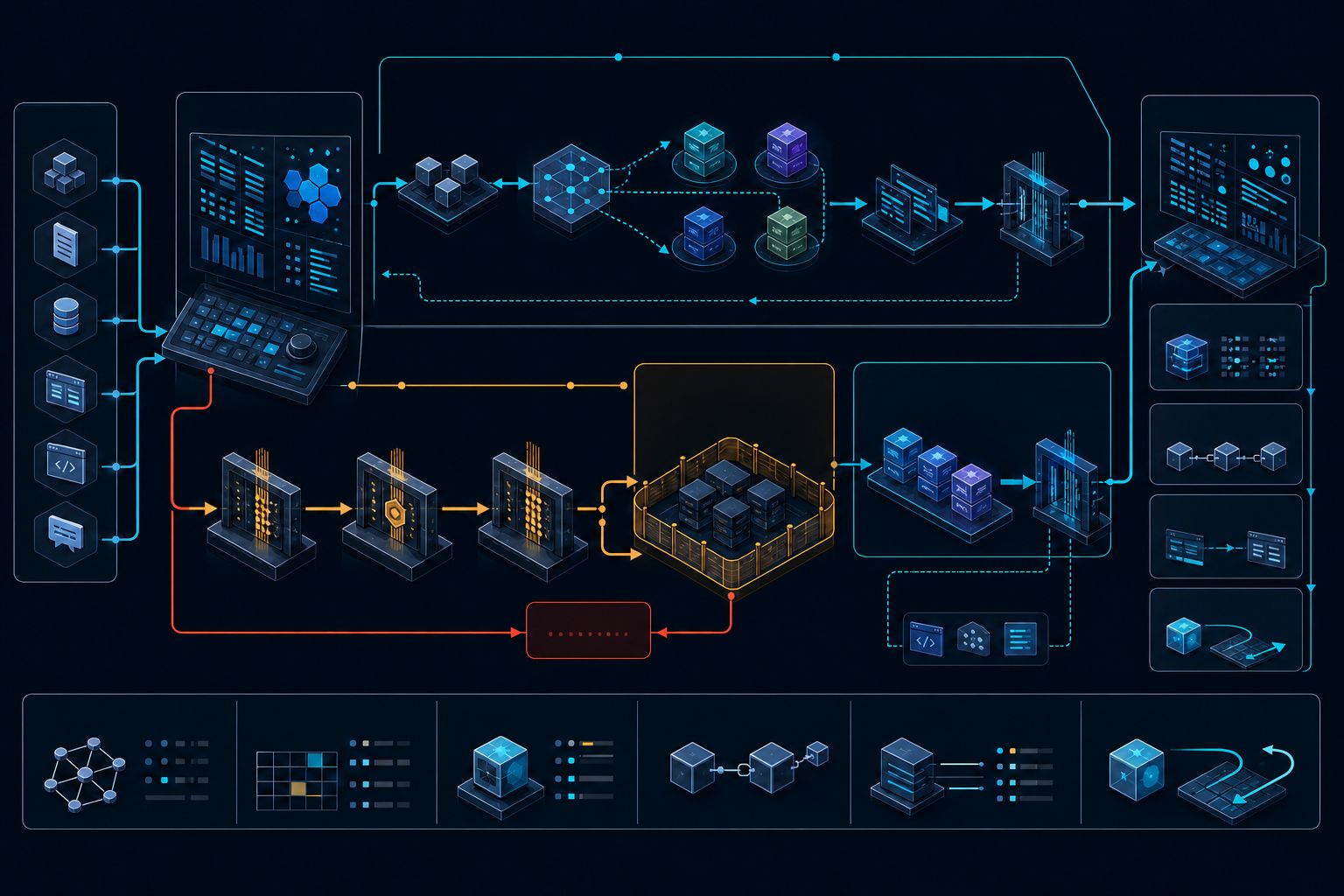
South Carolina outsourcing at a glance
| Buyer condition | Decision before outside-U.S. delivery | Evidence to retain |
|---|---|---|
| Ordinary private commercial project | Apply the buyer’s actual data, industry, customer, export, security, IP, and continuity requirements; do not import State clauses solely because the buyer is in South Carolina | Entity and project scope, named team, work locations, systems, data map, contract, access, release authority, incident route, and exit test |
| Team is preparing a State offer | Separate publishable offer content from claimed confidential, trade-secret, or protected material using the exact solicitation instructions | Clean offer, separately redacted copy where required, marking basis, disclosure owner, review record, submission receipt, and retained source artifacts |
| Agency staff requests a change or promises payment | Verify that the person and transaction are within actual procurement authority before relying on the direction | Solicitation and contract, procurement officer identity, agency certification and limit, written authorization, amendment, funding and scope record |
| Solicitation includes information-security clauses | Build a clause-activation matrix; definitions and cross-references can determine which people, systems, data, subcontractors, locations, and incident actions are permitted | Exact clause number and version, modification, order of precedence, defined terms, requirement owner, technical control, test, exception, and acceptance |
| Location-of-data or offshore-performance language is activated | Keep restricted information and work inside the stated boundary; do not route it to an international developer, support user, model, log sink, or subprocessor | Work-package classification, contributor-location manifest, system and support map, network/access evidence, data-region configuration, subcontracts, and negative tests |
| International work may remain eligible | Prove that the package is genuinely outside the activated restriction and cannot reconstruct or access protected government information | Written eligibility decision, sanitized inputs, synthetic data, interface contract, non-linkability review, artifact scanning, evidence bridge, buyer acceptance, and change trigger |
| Supplier detects a compromise or improper use | Follow the executed contract’s alert and evidence requirements plus the buyer’s immediate response path; do not rely only on a general statute | Signal time, clause and work package, systems, identities, locations, evidence custody, containment, owner acknowledgment, scheduled updates, decisions, and recovery proof |
| Project or subcontract ends | Return State/buyer information and assets, revoke access, reconcile residual copies, and preserve auditable records | Repository and data return, deletion or retention decision, backup expiry, subprocessor confirmation, secret rotation, access revocation, restoration, and acceptance |
The table does not decide that a project is subject to the South Carolina Consolidated Procurement Code, that an agency employee has authority, that an offer marking will prevent disclosure, that a compendium clause is in a contract, or that an international work package is permitted. Those conclusions depend on the exact governmental body, procurement, contract documents, defined terms, facts, and qualified review.
The distinct South Carolina model: activate clauses before assigning work
South Carolina’s Division of Procurement Services publishes a broad Compendium of standard clauses. Its own guidance warns that a proposed clause may or may not fit a particular acquisition, that an agency must assess its needs and risk, and that some standard privacy or security language may impose only minimal obligations. That creates a practical rule for outsourced delivery: the clause library is neither a universal prohibition nor a menu a contractor can ignore. The controlling record is the actual solicitation and resulting contract, including amendments, modifications, custom provisions, definitions, and order of precedence.
Use a clause-activation matrix. One row should connect each relevant requirement to the exact work package, information, people, systems, locations, subcontractors, approval, evidence, and exit action.
| Matrix field | Question | Failure it prevents |
|---|---|---|
| Contract source | Which solicitation, amendment, offer provision, contract clause, attachment, policy incorporation, or negotiated change creates the requirement? | Relying on a generic web summary or obsolete template |
| Clause/version | What is the exact identifier, date, text, modification, and defined-term chain? | Applying a remembered clause that differs from the signed language |
| Scope | Which deliverable, service, environment, information class, person, system, or subcontract tier is covered? | Treating the whole vendor as allowed or prohibited without work-level analysis |
| Authority | Who may interpret, approve, modify, accept, waive where legally permitted, or reject? | Treating a product owner or vendor manager as a procurement officer |
| Location | Where may performance, access, processing, storage, transmission, support, logs, backups, and incident review occur? | Approving a U.S. data center while overseas support can still view the data |
| Evidence | What configuration, roster, report, log, test, attestation, or inspection proves the requirement? | Questionnaire compliance without operational proof |
| Change trigger | What new person, tool, model, subprocessor, purpose, region, incident, or scope change reopens the decision? | A compliant award silently drifting during delivery |
| End state | What must be returned, destroyed, retained, transferred, revoked, or certified at termination? | Contract end without custody end |
The matrix should be completed before task assignment, not after a foreign contributor opens a ticket. Procurement, security, legal, data, product, and engineering owners should see the same current version.
Keep private and State work in separate lanes
A South Carolina address does not make a private company’s software project a State procurement. Conversely, a contractor’s commercial master agreement does not displace a State solicitation. Build a perimeter record first.
Private commercial lane
For ordinary private work, identify the buyer and provider entities, named people and cities, data and systems, product users, regulated activities, export questions, IP chain, accounts, incident owner, release authority, continuity, and exit. Apply any relevant private-sector or customer obligations. Use NIST methods only where the buyer adopts them; do not label them South Carolina requirements.
State procurement lane
The Division describes a two-tiered structure: agencies can have direct procurement authority within applicable limits, while central procurement offices handle covered acquisitions above or outside those limits. It emphasizes actual authority because public funds cannot be committed merely by apparent authority. For each State path record:
- the governmental body and whether the procurement is covered by the State’s described structure;
- solicitation number, procurement method, procurement officer, issuing office, and current amendments;
- agency certification category and limit where relevant;
- the person authorized to sign the award, amendment, work order, acceptance, or other commitment;
- the current contract value and whether a change would exceed an authority limit;
- funding, term, scope, deliverables, order of precedence, and incorporated documents;
- communication restrictions during solicitation and the official question or discussion route;
- required registrations, representations, subcontractor disclosures, preferences, and certifications; and
- protest, dispute, public-record, audit, termination, and records obligations applicable to the actual documents.
An agency subject-matter expert can define a technical need without necessarily having authority to amend price, scope, term, data use, location, or acceptance. Route consequential changes through the procurement officer identified by the contract.
Protect proposals without hiding decision facts
The current Compendium includes instructions for offerors claiming material is exempt from public disclosure. It describes separately redacted copies and conspicuous markings tied to stated legal bases, and it says certain financial figures used to determine award and the final contract amount are subject to disclosure. The exact solicitation controls. A provider should not submit secrets casually and then assume a footer marked “confidential” solves the problem.
Create a proposal-disclosure register:
- classify each diagram, résumé, customer reference, rate, model detail, source excerpt, security response, architecture, and third-party document;
- decide whether the detail is necessary to satisfy an evaluation factor;
- obtain permission before naming any customer, partner, contributor, product relationship, or reference;
- separate verifiable capability evidence from proprietary implementation detail;
- prepare clean and redacted versions exactly as instructed;
- state the claimed basis and marking at the required granularity;
- reconcile the final submission against the portal upload and amendment set; and
- retain the approved versions, hash, timestamp, reviewer, and submission receipt.
Do not over-redact the facts an agency needs to evaluate responsibility, security, staffing, subcontractors, location, or price. Do not publish customer names to strengthen an offer without written permission for that exact use. Using a software or AI platform is not evidence of a partnership with its company.
Split restricted and eligible work packages
The Compendium’s posted Information Security — Location of Data clause states that, when used, the contractor may not process, store, transmit, or access defined government information outside the continental United States and applies the material requirement to subcontractors at any tier. The separate posted Offshore Contracting Prohibited clause states that, when used, no part of the resulting contract may be performed offshore by offshore persons or through offshore means, methods, or communications. The guidance describes circumstances in which an agency should consider those clauses. This is stronger than a provider’s promise to “host in the U.S.” and more specific than a statewide slogan.
Before proposing international delivery, compare the exact executed text with four possible package states:
| Package state | International action | Required control |
|---|---|---|
| Activated offshore-performance prohibition covers the work | Do not assign or communicate the covered work offshore | U.S. performance roster, tool/support map, access enforcement, subcontract flow-down, monitoring, and buyer verification |
| Activated government-information location clause covers the information | No outside-CONUS processing, storage, transmission, or access to that information | Controlled U.S. environment, U.S. support boundary, region and backup controls, identity/location evidence, and negative tests |
| Contract allows a genuinely unrestricted or sanitized package | International contribution may be considered only within the written boundary | Eligibility decision, synthetic or non-linkable inputs, no protected context, interface specification, output scan, evidence bridge, and U.S. acceptance |
| Scope is ambiguous or can reconstruct protected information | Pause | Procurement officer and qualified-owner clarification or contract change before access |
Sanitization is not deleting a name from a production export. Source structure, identifiers, rare combinations, logs, comments, screenshots, schemas, embeddings, test fixtures, error messages, tickets, prompts, and surrounding business facts can expose or reconstruct government information. Prefer purpose-built synthetic data, public specifications, isolated interface contracts, and independently useful modules.
Use an evidence bridge
An eligible international lane should have no credentials to the protected enclosure. It receives a versioned work package with allowed inputs, prohibited knowledge, interface, tests, dependency rules, tool restrictions, acceptance evidence, and expiry. Returned artifacts cross a buyer-controlled bridge that scans source, packages, models, metadata, secrets, licenses, provenance, and hidden network or telemetry behavior. A qualified U.S. owner accepts and integrates the artifact inside the authorized environment.
If the activated clause prohibits offshore performance rather than only government-information handling, an evidence bridge does not create permission. Keep the entire covered work domestic unless the authorized contracting path changes the requirement.
Translate security clauses into controls
The posted safeguarding clause includes administrative, physical, and technical safeguards; access-controlled systems; protected transmission; barriers; media sanitization; intrusion protections; limited transfers to subcontractors that need information and provide the required protection; and flow-down. The use-and-disclosure language addresses minimum necessary collection, limited rights, recipient identity and location notice, return or destruction, and actions following compromise. The clause library also provides assessment and related tools.
Build evidence at the exact clause level:
- individual identities, MFA, device posture, privileged-access approval, session logs, and periodic review;
- environment separation and proof that public sites, personal accounts, consumer AI services, or unmanaged devices cannot receive government information;
- encryption and key custody for approved storage and transmission;
- complete regions for primary, replica, backup, disaster recovery, logging, observability, support, and incident forensics;
- subcontracts carrying the required duties and a current roster of every tier, person, system, and location;
- dependency inventory, provenance, vulnerability response, peer review, testing, release digest, approval, and rollback;
- media and workspace sanitization evidence appropriate to the actual technology;
- incident contact tests, forensic preservation, update cadence, recovery, notification support, and after-action remediation; and
- return, destruction, residual-copy, backup-expiry, access-revocation, and restoration evidence.
A certificate can support one row. It does not prove contributor location, activated-clause scope, a model host’s retention, a specific support path, or the configuration of the awarded service.
Keep incident clocks and authority explicit
South Carolina’s current business breach statute, § 39-1-90, has an operation-level distinction useful beyond public procurement. A business maintaining data it does not own must notify the owner or licensee immediately after discovery when the statutory acquisition condition is met. The owner/licensor path addresses resident notice in the most expedient time possible and without unreasonable delay under the stated trigger and qualifications. When a business provides notice to more than 1,000 people at one time under the section, the current text addresses notice to the Department of Consumer Affairs’ Consumer Protection Division and nationwide consumer reporting agencies.
The executed State contract can create a different and faster path. The posted Compendium use-and-disclosure clause, when included without modification, addresses evidence preservation and eliminating the cause immediately upon discovery and notice to the using governmental unit as soon as practicable but no later than 24 hours. Always read the signed text; do not represent a compendium clause as universal.
Use a supplier incident capsule with signal time, detection source, clause/work-package hypothesis, systems, identities, contributor and system locations, information hypothesis, encryption/key facts, evidence locations, containment within authority, subcontractors, uncertainty, next update, and help needed. The buyer or governmental unit retains its decisions about statutory trigger, affected people, law enforcement, agency leadership, regulator or consumer notices, public statements, restoration, and acceptance unless the contract or law assigns a separate duty.
Schedule the named international team
South Carolina generally uses the America/New_York IANA zone. Calculate overlap for actual buyer and contributor cities and dates because daylight-saving transitions can differ. Classify work by authority rather than maximizing meetings.
| Work | Live window | Asynchronous packet | Authority |
|---|---|---|---|
| Private discovery | Enough overlap for product and architecture decisions | Options, assumptions, diagram, risks, recommendation, decision request | Buyer product/technical owner |
| Eligible modular build | Short unblock and review window | Scope, interface, tests, provenance, artifacts, open risks, next authorized step | Buyer accepts after evidence bridge |
| State contract question | Official channel and procurement schedule | Exact document, clause, issue, proposed resolution, cost/schedule effect | Authorized procurement officer or named contract owner within authority |
| Protected-environment release | U.S.-authorized coverage for consequential action | Immutable artifact, test and scan evidence, migration, observation, rollback | Named authorized release owner |
| Incident | Immediate out-of-band path | Evidence capsule and scheduled updates | Buyer/government incident authority; supplier acts only within bounded response authority |
Nearshore teams can offer broad Eastern-time overlap. European, Indian, Philippine, or other teams can support follow-the-sun delivery for eligible private or explicitly permitted packages when handoffs are strong. No region creates an exception to an activated contract clause.
Select and contract with evidence
Outsourcing.ai can directly deliver private software, automation, data, and AI projects and can help split eligible work around a protected buyer environment. For State work, we would first require the exact solicitation and a qualified clause/perimeter decision; we will not imply government authorization or route restricted work offshore to preserve a preferred delivery model.
Evaluate every provider on the same record:
- exact entity, signatory, vendor status where required, named team, employer/subcontract chain, cities, zones, and availability;
- understanding of the solicitation, amendments, evaluation factors, clause set, order of precedence, communication route, and authority limits;
- ability to produce separate private, protected, and eligible-package architectures;
- tool, model, hosting, support, logging, backup, incident, and subprocessor inventory;
- data and government-information classification, access, location, use, disclosure, retention, and return controls;
- secure development, provenance, dependencies, release, recovery, and evidence;
- immediate incident behavior and disciplined external communications;
- complete cost including domestic protected work, international eligible work, buyer review, security, proposal work, tools, travel, transition, and uncertainty; and
- tested handover without provider-owned domains, repositories, infrastructure, model accounts, or recovery paths.
Have qualified counsel review the actual contract. Connect scope, authority, clause matrix, staffing/location, subcontractors, data, AI tools, security, IP, acceptance, incident, audit, change, payment, termination, and exit to named owners and tests. A commercial click-through or provider terms page should not silently add data use, foreign support, liability, or renewal terms inconsistent with the State documents.
Run a representative paid pilot
For a private buyer, choose a bounded vertical slice with synthetic or approved data. For a State contractor, the pilot must itself be authorized by the procurement and contract; a “free proof of concept” is not a workaround for authority, communications, data, or offshore restrictions.
Test:
- proposal or project information classification and permissioned references;
- actual-authority routing for one scope, price, schedule, or acceptance change;
- clause-activation matrix for the selected work package;
- protected-environment access from an approved identity and rejection from a prohibited identity/location;
- one eligible modular package through synthetic inputs, international build where allowed, artifact scanning, and buyer acceptance;
- one unapproved tool, subprocessor, region, or data request that the team must stop;
- after-hours incident alert, evidence preservation, update cadence, and recovery decision; and
- repository, infrastructure, documentation, data, evidence, credential, and residual-copy exit.
Weight authority/clause discipline, restricted-boundary enforcement, technical quality, evidence, incident response, communication, and exit as minimum gates. A polished demo cannot average out an unauthorized commitment or prohibited access.
Red flags
- “South Carolina projects must stay in the U.S.” without identifying a controlling statute or activated contract clause.
- “The data is hosted in Virginia” while foreign developers, support, models, logs, or backups can access it.
- Agency staff direction treated as a binding change without actual-authority verification.
- A compendium clause assumed to apply merely because it exists, or ignored merely because it was not discussed in sales.
- Proposal secrets placed in the submission without the exact redaction and marking process.
- Customer or software-company names used as references without evidence and written naming permission.
- One “offshore approved” label applied to every task, dataset, support route, or subcontractor.
- Deidentified production data used internationally without a reconstruction and context review.
- Personal AI accounts or code assistants outside the contract’s system and location boundary.
- A supplier incident SLA that waits for final breach confirmation.
- Shared credentials, unverifiable contributor location, or supplier-controlled release and recovery accounts.
- Exit language with no return, deletion, backup expiry, subprocessor evidence, or independent restoration.
Frequently asked questions
Can a private South Carolina company outsource overseas?
Yes, subject to the actual private contract, data, sector, export, security, employment, tax, IP, and other facts. Do not import State procurement clauses into a private project without a contractual or legal basis. Still use named-team, data-path, access, incident, and exit controls.
Does South Carolina prohibit offshore State contracting?
Do not make that blanket claim. The current State Compendium contains an Offshore Contracting Prohibited clause and separate government-information location language, with guidance about when they may be considered. Determine what the exact solicitation and executed contract include and how their terms apply to each work package.
Is a U.S. cloud region enough when a location clause applies?
Not by itself. Review access, processing, transmission, storage, support, administration, logs, backups, incident forensics, AI services, and every subcontract tier against the exact defined terms. Test prohibited access, not only configuration screenshots.
Can international developers build a module with synthetic data?
Possibly for a genuinely eligible package if the executed contract permits offshore performance and the team has no restricted information or access. Obtain the written classification, use purpose-built synthetic inputs, isolate accounts, scan returned artifacts, and require authorized buyer acceptance. Synthetic data does not override an offshore-performance prohibition.
Who can approve a State contract change?
Verify the actual procurement authority for the governmental body, transaction, value, and amendment. The Division’s current guidance tells vendors to identify the procurement officer and authority limits rather than rely on apparent authority from agency staff.
How fast should an overseas supplier report an incident?
Immediately under the buyer’s operational plan when the agreed signal threshold is met. The exact State contract may include a specific outside limit, and South Carolina’s business statute has a separate immediate non-owner-to-owner route under its facts. Preserve evidence and escalate without waiting for a final legal conclusion.
Can Outsourcing.ai deliver the work?
Yes for appropriate, authorized scopes. We can deliver private projects directly and can structure protected and eligible work packages. We will not claim State authorization or assign restricted work internationally without the controlling documents and approvals.
What should a buyer do first?
Classify the engagement as private or public, collect the exact controlling documents, identify the authorized decision-maker, build the clause-activation matrix, and select one bounded package for a paid evidence-producing pilot.
The decision
Proceed when the private/public perimeter is explicit; proposal disclosure is controlled; actual authority is verified; every relevant clause is mapped to work, information, people, systems, locations, evidence, and exit; restricted work cannot cross the technical boundary; any international package is affirmatively eligible and independently reviewable; incidents route immediately; and the buyer can continue without provider-held custody.
Pause when the team relies on a generic State policy summary, an agency employee’s apparent authority, a U.S. hosting claim, a vendor certificate, a redacted spreadsheet with no basis, or an “offshore approved” label. The strongest South Carolina outsourcing plan is the one that can show exactly why each person may perform each task, what they may know, which clause controls, who accepted the result, and how access and custody end.
Evidence ledger
Sources used on this page
- New Vendor Information — South Carolina Division of Procurement Services. Supports: Current official overview of South Carolina's two-tier State procurement structure, solicitation methods, vendor participation, and the need to verify the actual authority of the person signing for an agency. Direct source; independently sourced; commercial relationship: none. Verified 8/15/2026 by Outsourcing.ai Editorial Team. Accessed 8/15/2026.
- Agency Certification — South Carolina Division of Procurement Services. Supports: Current official explanation of agency procurement certification, dollar-limited authority, contract-amendment authority, central procurement authority, and the vendor's responsibility to identify a person with actual authority to bind the government. Direct source; independently sourced; commercial relationship: none. Verified 8/15/2026 by Outsourcing.ai Editorial Team. Accessed 8/15/2026.
- Standard Clauses and Provisions — South Carolina Division of Procurement Services. Supports: Current official clause-library guidance that agencies must select and tailor provisions to the acquisition and their risk, that standard privacy and security language may be insufficient, and that the May 2024 Compendium is the current posted version. Direct source; independently sourced; commercial relationship: none. Verified 8/15/2026 by Outsourcing.ai Editorial Team. Accessed 8/15/2026.
- Procurement Compendium, Version 3.0 — South Carolina Division of Procurement Services. Supports: Current posted solicitation-clause text and guidance for proposal confidentiality marking, government-information safeguards, location of data, use and disclosure, subcontractors, incident evidence and notice, offshore contracting, ownership, return, and related procurement controls. Direct source; independently sourced; commercial relationship: none. Verified 8/15/2026 by Outsourcing.ai Editorial Team. Accessed 8/15/2026.
- S.C. Code § 39-1-90 — Business data breach — South Carolina Legislature. Supports: Current business-data breach trigger, immediate non-owner-to-owner path, resident notice standard, definitions, substitute notice, remedies, financial-institution exception, and more-than-1,000 Consumer Protection Division and consumer-reporting-agency path. Direct source; independently sourced; commercial relationship: none. Verified 8/15/2026 by Outsourcing.ai Editorial Team. Accessed 8/15/2026.
- IANA Time Zone Database — Internet Assigned Numbers Authority. Supports: Maintained time-zone identifiers and transition rules for calculating dated overlap between the South Carolina buyer and each outside-U.S. contributor city. Direct source; independently sourced; commercial relationship: none. Verified 8/15/2026 by Outsourcing.ai Editorial Team. Accessed 8/15/2026.
- Secure Software Development Framework — National Institute of Standards and Technology. Supports: Maintained secure-development methodology for supplier requirements, protected environments, provenance, release integrity, vulnerability response, and evidence without representing it as a State contract term. Direct source; independently sourced; commercial relationship: none. Verified 8/15/2026 by Outsourcing.ai Editorial Team. Accessed 8/15/2026.
- Incident Response Recommendations and Considerations for Cybersecurity Risk Management — National Institute of Standards and Technology. Supports: Current incident-response methodology for preparation, detection, response, recovery, improvement, and communications without replacing a solicitation, contract, or South Carolina legal analysis. Direct source; independently sourced; commercial relationship: none. Verified 8/15/2026 by Outsourcing.ai Editorial Team. Accessed 8/15/2026.
- Directory of Intellectual Property Offices — World Intellectual Property Organization. Supports: Official destination-country intellectual-property office links for investigating contributor and assignment questions rather than assuming one South Carolina agreement resolves every jurisdiction. Direct source; independently sourced; commercial relationship: none. Verified 8/15/2026 by Outsourcing.ai Editorial Team. Accessed 8/15/2026.
Next scheduled review: October 15, 2026. Corrections: hello@outsourcing.ai.