
Georgia buyer guide
Outsourcing software development from Georgia
A Georgia buyer guide to international software outsourcing: supplier incident command, evidence preservation, records disposal, Eastern-time delivery, and exit.
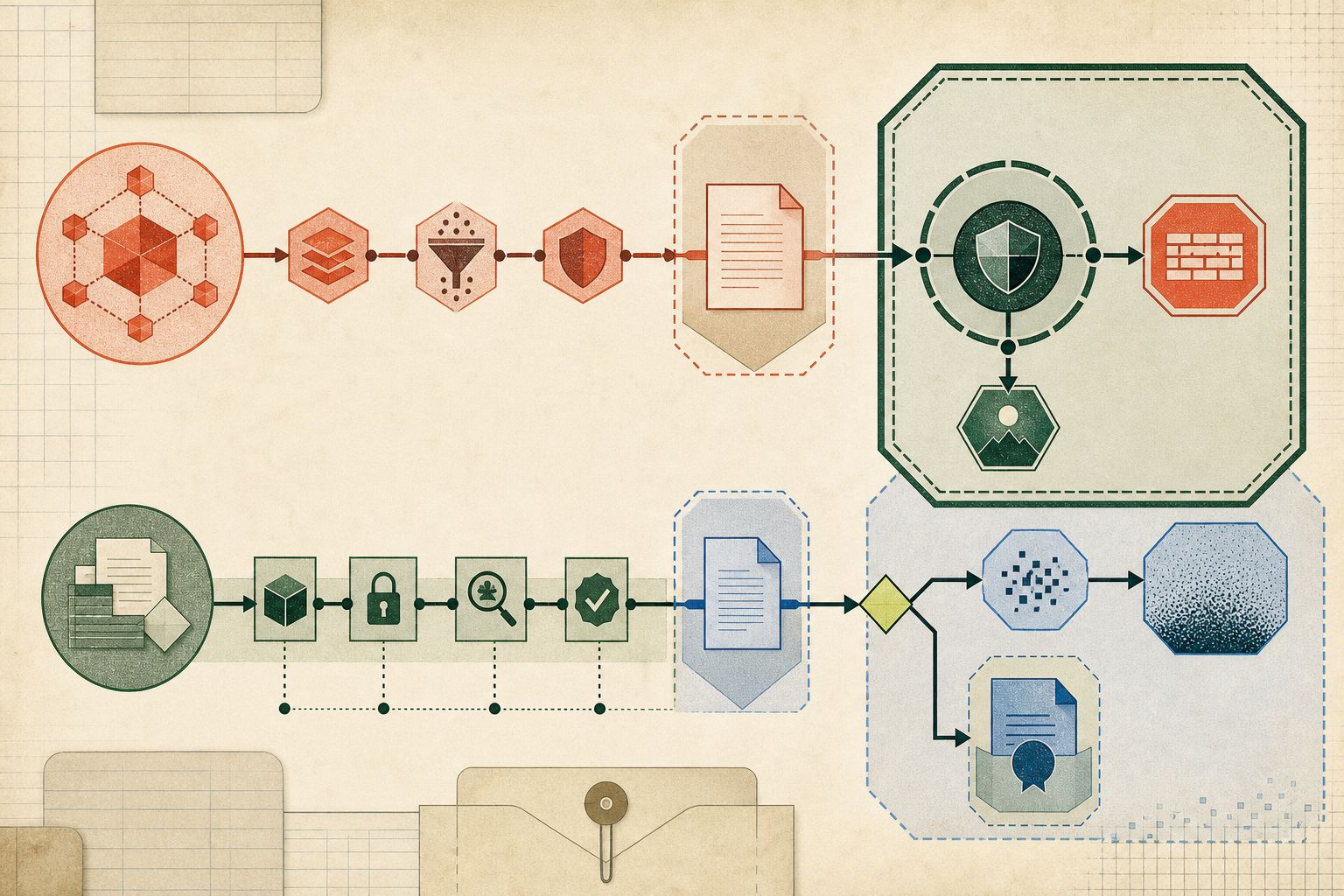
Georgia outsourcing at a glance
| Buyer condition | Stop or release gate | Evidence before production or scale |
|---|---|---|
| An international provider can access personal information or critical systems | Approve an incident command and evidence-preservation runbook before access | Named buyer/provider roles, safe containment limits, forensic contact, secure channel, logs and records list, update cadence, service-provider map, and recovery owner |
| A suspected event occurs outside Georgia working hours | Escalate observed facts immediately through the agreed route; do not wait for a polished conclusion | Discovery timestamp, reporter, affected assets, possible data, preserved evidence, actions taken, blocked authority, next update, and acknowledgment |
| The supplier uses cloud, model, support, analytics, or other services | Review access and remediation responsibilities as part of the incident and change process | Service, entity, purpose, records, privileges, regions, logs, subproviders, contract, incident contact, change notice, and exit evidence |
| The business disposes of covered personal records | Make the information unreadable and prevent unauthorized access using a documented method | Record and media inventory, method, operator, exception, backup treatment, validation, subprovider evidence, and reconciliation |
| The team works outside Eastern time | Protect incident, product, security, release, communications, and acceptance authority | Named people and cities, IANA zones, dated overlap, urgent escalation, written handoff, alternates, and sustainable schedules |
The Georgia Attorney General’s cybersecurity guide is practical guidance, not a project-specific legal determination. The disposal page summarizes Georgia law for specified personal records. Confirm current statutory, sector, contractual, insurance, notification, and destination-country requirements with qualified advisers.
Build an incident evidence lane before access
A remote development relationship creates an evidence problem when accounts, logs, endpoints, cloud services, and people span organizations. If an event begins, routine actions can overwrite logs, rotate credentials without preserving context, destroy a machine image, or generate inconsistent public statements. The buyer needs a lane where responders know what to preserve and who can authorize changes.
The Georgia Department of Law guide tells organizations to assemble the right experts, work with forensics, preserve evidence, keep logs and notes, record response steps, examine service-provider access, and plan communications. Convert those ideas into the supplier work order.
Inventory repositories, build systems, cloud tenants, databases, object storage, model and API providers, identity, endpoints, support tools, tickets, messaging, logs, backups, domains, analytics, and subprocessors. For each, name the buyer owner, supplier role, accounts, logging period, evidence export method, containment action, recovery dependency, and emergency contact.
Define what the provider may do immediately to stop additional loss and what needs buyer or forensic authority. Safety and continued harm can require prompt action, but improvised shutdown can also destroy volatile evidence or interrupt a critical service. The runbook should state principles and escalation rather than blindly repeating one action for every incident.
Separate technical reporting from legal conclusions
The provider should report a suspected event when facts are incomplete. An agreement that requires the supplier to decide whether a statutory “breach” occurred before contacting the buyer creates delay and assigns a legal judgment to the wrong team.
Use an initial report with:
- discovery and observation times, reporter, system, and trigger;
- known and possible affected accounts, services, records, people, and locations;
- access, encryption, export, deletion, alteration, or availability indicators;
- containment performed, evidence preserved, and actions awaiting authority;
- involved cloud, model, analytics, support, or other service providers;
- current scope confidence, gaps, and next update time;
- a link or identifier for the controlled incident record.
Buyer-side qualified owners determine applicable individual, regulator, law-enforcement, contract, insurer, customer, employee, or other notification. The provider supplies timely facts, preserves evidence, and supports communications. Do not ask an offshore engineer to improvise public language or contact affected people without authority.
The Georgia guide describes law-enforcement notification as a good business practice in relevant events while distinguishing it from Georgia-law requirements. Preserve that distinction. The response team should decide contacts from the actual event and current advice, not from a universal checklist.
Preserve systems, logs, notes, and communications
Evidence preservation must survive routine engineering. Log retention may be short; laptops may auto-update; cloud instances may be replaced; chat messages may disappear; backups may rotate; a well-meaning developer may clean an infected environment. Set stop conditions before those controls run.
Create an incident hold mechanism for relevant logs, machine or container images, cloud audit trails, identity events, repository history, build artifacts, tickets, communications, extortion or threat messages, and decision records. Define who can invoke and release the hold, how access is restricted, what integrity evidence is recorded, where artifacts are stored, and how ordinary retention resumes after qualified approval.
Do not collect everything indefinitely. Preservation should be scoped, documented, access-controlled, and reconciled with privacy, legal, security, and contractual obligations. The runbook needs both a “preserve now” path and a later reviewed disposal path.
Test the evidence export before an incident. Ask the named provider responder to obtain identity logs, repository events, cloud audit data, deployment evidence, and a current system map from buyer-controlled accounts. A runbook that assumes unavailable permissions or expired logs is not operational.
Review the service-provider chain during incidents and changes
The Georgia guide specifically directs attention to service providers involved in an event, the personal information they can access, access privileges, and steps to prevent recurrence. International software projects can create a long chain: primary agency, subcontractor, cloud host, code service, monitoring vendor, model provider, annotation tool, support platform, and records-destruction service.
Maintain a service register with legal entity, service, purpose, data and systems, people or role, privilege, region, subproviders, contract owner, security evidence, log access, incident contact, change notice, retention, deletion, and replacement. Require approval before a supplier adds a service that receives sensitive data or critical access.
During an event, record which services were involved, whether access should be suspended or narrowed, who preserves their logs, what remediation is complete, and what evidence supports return to operation. “Our cloud vendor handles security” does not establish the buyer’s recovery path.
After a material provider or architecture change, rehearse the incident lane again. A new model API, deployment platform, support tool, or subcontractor can invalidate evidence collection and communication assumptions without changing the visible product.
Prepare communications without creating misinformation
The Georgia guide recommends a comprehensive communications plan, clear facts, useful actions, and avoiding misleading statements or details that increase risk. Build a communications packet before an event, but leave incident facts blank until verified.
The packet should name approvers and audiences; list known facts, unknowns, actions, and next update; describe information involved without speculation; explain protective actions available to recipients where appropriate; provide a controlled contact route; and keep technical, legal, customer, employee, partner, investor, insurer, and public messages consistent.
Track the source and approval for every material statement. If the provider supplies an estimate, label it and update it when evidence changes. Do not publish forensic details that enable further abuse or expose people. Do not withhold a material fact merely to make the organization look better. Qualified communications and legal owners should balance accuracy, timing, helpfulness, and continuing investigation.
Ask the supplier to prepare an internal technical summary and a plain-language factual summary from the same tabletop. This tests whether the evidence can support real decisions without forcing the buyer to translate an undocumented chat thread under pressure.
Create a separate covered-record disposal lane
The Georgia Attorney General’s disposal page identifies specified types of personal records and describes shredding, erasing, or modifying records so personal information is unreadable, together with reasonable action against unauthorized access. Do not confuse incident evidence preservation with permanent retention of ordinary records.
Map covered records across active systems, paper or scanned documents, databases, tickets, logs, support exports, developer devices, test fixtures, backups, and subprocessors. For each, document the approved method, responsible person, validation, residual period, exception, and evidence.
A cloud backup may expire through a controlled lifecycle rather than an immediate physical action. State that accurately. During the residual period, limit access and prevent restoration into ordinary use except through the approved recovery process. For local exports and devices, require a method appropriate to the media and verify completion.
At project end, reconcile deletion against the service register and incident holds. An active hold needs a qualified owner and release condition. Everything else should follow the approved schedule. A provider should not retain a “just in case” copy or destroy records that the buyer has placed under a valid incident hold.
Design Eastern-time incident and delivery authority
Use the Georgia buyer’s actual city and an IANA identifier, commonly America/New_York, with each supplier city and project date. Daylight changes can shift international overlap. Recalculate rather than treating Eastern time as a permanent UTC offset.
Create distinct windows for product decisions, security review, service-provider approval, release acceptance, communications, and incident command. Latin American cities may provide broad same-day overlap for many Georgia buyers. Europe can align with a Georgia morning. Asia-Pacific teams can extend coverage when written authority and handoffs are strong. Evaluate named people and their sustainable schedules.
After hours, the provider needs an alternate buyer contact and bounded containment authority. A follow-the-sun team can detect and preserve an event sooner, but it should not make irreversible product, legal, or public-communications decisions without the agreed authority.
Each handoff should include current facts, evidence preserved, actions taken, affected services, remaining risk, blocked decision, named owner, next update, and authorized next step. A status message saying “investigating” is not enough for incident command or ordinary delivery.
Choose the engagement and control plane
A freelancer can fit a bounded project when the Georgia buyer can direct and inspect security and delivery. Staff augmentation can fit when the buyer owns product, architecture, evidence, incident command, and release. A managed provider can fit a defined outcome when it supplies named accountable roles and accepts the runbook responsibilities. A sales label does not create command authority.
Write a responsibility matrix for requirements, access, secure development, service approval, logging, detection, initial reporting, evidence preservation, containment, forensics, recovery, legal review, communications, disposal, acceptance, and exit. Include alternates and time-zone coverage.
Keep critical repositories, cloud and identity tenants, package registries, model and analytics accounts, domains, backups, and recovery methods under buyer governance. Use individual least-privilege accounts, protect secrets, review changes, create reproducible releases, and test offboarding.
Only after the control plane is clear should the buyer compare countries. Verify the contracting entity, named people, cities, working relationships, subcontractors, data and tool locations, rights chain, destination requirements, infrastructure, continuity, and complete cost.
Evaluate secure development, recovery, and rights
Ask the named team to demonstrate a relevant change from request through operation: decision record, threat analysis, code or configuration, peer review, tests, secure-development evidence, deployment, monitoring, incident signal, rollback, and handover. NIST’s Secure Software Development Framework can structure the questions; it is not a provider certification.
Exercise recovery from buyer-controlled artifacts. Rebuild or redeploy the accepted version, rotate a credential, revoke one contributor, restore approved data to an isolated environment, and produce the evidence record. Confirm that a provider outage or account dispute does not lock the buyer out of critical systems.
Separate pre-existing buyer and provider materials, new deliverables, open-source and commercial components, data, models, prompts, evaluations, documentation, and response records. Verify contributor assignments or licenses across employees and subcontractors in relevant countries. WIPO’s directory helps locate official national offices, but it does not validate a proposed transfer.
Calculate complete cost and incident downside
Compare proposals for the same accepted outcome and responsibility allocation. Include labor, delivery leadership, buyer coordination, secure-development work, logging, evidence storage, incident rehearsal, qualified legal and forensic support, service-register maintenance, insurance dependencies, recovery, disposal, cloud and model usage, travel, currency, rework, support, transition, and replacement.
Show uncertainty as ranges. A provider that cannot identify its service chain, logging limits, responder schedule, or buyer-controlled recovery will require discovery. Incident readiness has a cost, but the absence of evidence can multiply outage, investigation, communication, and transition costs.
Track accepted outcomes, decision delay, buyer hours, defects, unapproved services, log coverage, event-report latency, evidence gaps, recovery time, communications corrections, schedule sustainability, and exit readiness. Model downside: a supplier laptop is compromised, a model key leaks, a cloud service loses logs, a subprovider goes silent, public statements conflict, or the buyer must replace the delivery team during recovery.
Run a Georgia incident-command pilot
Use a representative nonproduction system and synthetic or approved data. Introduce a suspected credential compromise outside the main overlap window. Require the named supplier responder to invoke the secure route, preserve relevant evidence, identify involved services, take only authorized containment steps, maintain the incident record, and hand command to the Georgia buyer.
Ask the team to produce a technical evidence summary, a plain-language facts summary, a recovery plan, and a service-access review. Then release a test incident hold and execute the documented disposal method for an ordinary record copy. Reconcile what remains and why.
End with a continue, revise, or stop decision. Do not scale if the supplier waits for certainty before reporting, shuts down or deletes evidence without the runbook, cannot obtain logs, omits subprocessors, improvises public statements, keeps critical accounts, or cannot reproduce and hand over the accepted release.
Georgia buyer red flags
- The incident clause has no named people, secure channel, safe containment limits, or next-update cadence.
- The provider must finish root-cause analysis before telling the buyer about a suspected event.
- Routine cleanup can erase logs, messages, machine state, or other potential evidence.
- A cloud, model, support, or analytics provider has access but is absent from the service register.
- The supplier’s account manager is the only after-hours route.
- Public communications are drafted from speculation rather than a controlled fact record.
- Incident evidence is retained indefinitely without scoped access, review, and release.
- Disposal language does not cover local exports, tickets, logs, backups, or subprocessors.
- Critical repositories, deployment accounts, keys, or recovery artifacts remain supplier-owned.
- Country reputation or hourly rate substitutes for evidence from the named team.
Frequently asked questions
Does the Georgia cybersecurity guide create a project-specific legal checklist?
No. It is official practical guidance for organizations and a useful source for operating design. Determine the actual statutory, regulatory, sector, contract, insurance, and notification requirements with qualified advisers using current sources.
Should an international provider turn off an affected machine immediately?
Do not use one universal action. The Georgia guide emphasizes stopping additional loss and preserving forensic evidence. The approved runbook should define safe containment, when isolation or shutdown is appropriate, what evidence to preserve, and who has authority for the actual system and safety context.
Can a Georgia company use an offshore incident-response team?
Geography alone does not decide suitability. Evaluate named responders, permissions, evidence access, secure communications, hours, destination requirements, contract, forensic coordination, service chain, recovery, and buyer authority through a tabletop and paid pilot.
How should incident evidence and routine disposal work together?
Use a scoped incident hold with an owner, access rules, record, and release condition. Records outside that hold follow the approved disposal schedule. After the hold ends, reconcile remaining copies and execute the reviewed method.
What is the best outsourcing country for a Georgia company?
There is no universal best country. Define the outcome, Eastern-time authority, skills, security and data boundaries, engagement model, complete cost, rights chain, continuity, and exit. Then compare named teams in eligible countries using one evidence model.
Is Outsourcing.ai located in Georgia?
No local presence is claimed. This is an online buyer guide, not a Georgia office, local-business listing, or representation of local employees or clients.
Evidence ledger
Sources used on this page
- Cybersecurity in Georgia — Georgia Attorney General Consumer Protection Division. Supports: Official Georgia entry point for the small-business cybersecurity guide covering threats, data and network protection, employee training, breach planning and response, and cyber insurance. Direct source; independently sourced; commercial relationship: none. Verified 8/15/2026 by Outsourcing.ai Editorial Team. Accessed 8/15/2026.
- Cybersecurity in Georgia: A Guide for Small Businesses, Non-Profits and Places of Worship — Georgia Department of Law Consumer Protection Division. Supports: Official guidance on incident teams, forensics, evidence preservation, logs, service-provider access, recovery, stakeholder communications, affected-party information, law enforcement, and post-incident review. Direct source; independently sourced; commercial relationship: none. Verified 8/15/2026 by Outsourcing.ai Editorial Team. Accessed 8/15/2026.
- Disposal of Your Personal Records by a Business — Georgia Attorney General Consumer Protection Division. Supports: Official Georgia guidance on covered personal records, shredding, erasure or modification, unreadability, and reasonable action against unauthorized access during disposal. Direct source; independently sourced; commercial relationship: none. Verified 8/15/2026 by Outsourcing.ai Editorial Team. Accessed 8/15/2026.
- IANA Time Zone Database — Internet Assigned Numbers Authority. Supports: Maintained time-zone identifiers and transitions for calculating actual overlap between Georgia buyer cities and proposed international delivery cities. Direct source; independently sourced; commercial relationship: none. Verified 8/15/2026 by Outsourcing.ai Editorial Team. Accessed 8/15/2026.
- Uniform Time — U.S. Department of Transportation. Supports: Federal oversight of U.S. time zones and daylight-saving observance, supporting date-aware Eastern-time collaboration and incident-command design. Direct source; independently sourced; commercial relationship: none. Verified 8/15/2026 by Outsourcing.ai Editorial Team. Accessed 8/15/2026.
- Secure Software Development Framework — National Institute of Standards and Technology. Supports: A maintained framework for requesting supplier evidence about secure development, provenance, releases, vulnerability response, and software protection. Direct source; independently sourced; commercial relationship: none. Verified 8/15/2026 by Outsourcing.ai Editorial Team. Accessed 8/15/2026.
- Directory of Intellectual Property Offices — World Intellectual Property Organization. Supports: Official destination-country intellectual-property office links for researching contributor and rights-chain questions without assuming one agreement works everywhere. Direct source; independently sourced; commercial relationship: none. Verified 8/15/2026 by Outsourcing.ai Editorial Team. Accessed 8/15/2026.
Next scheduled review: February 15, 2027. Corrections: hello@outsourcing.ai.