
Montana buyer guide
Outsourcing software development from Montana
A Montana buyer guide to international software and AI outsourcing: minors' product duties, genetic and neurotechnology data destinations, processors, incidents, cost, and exit.
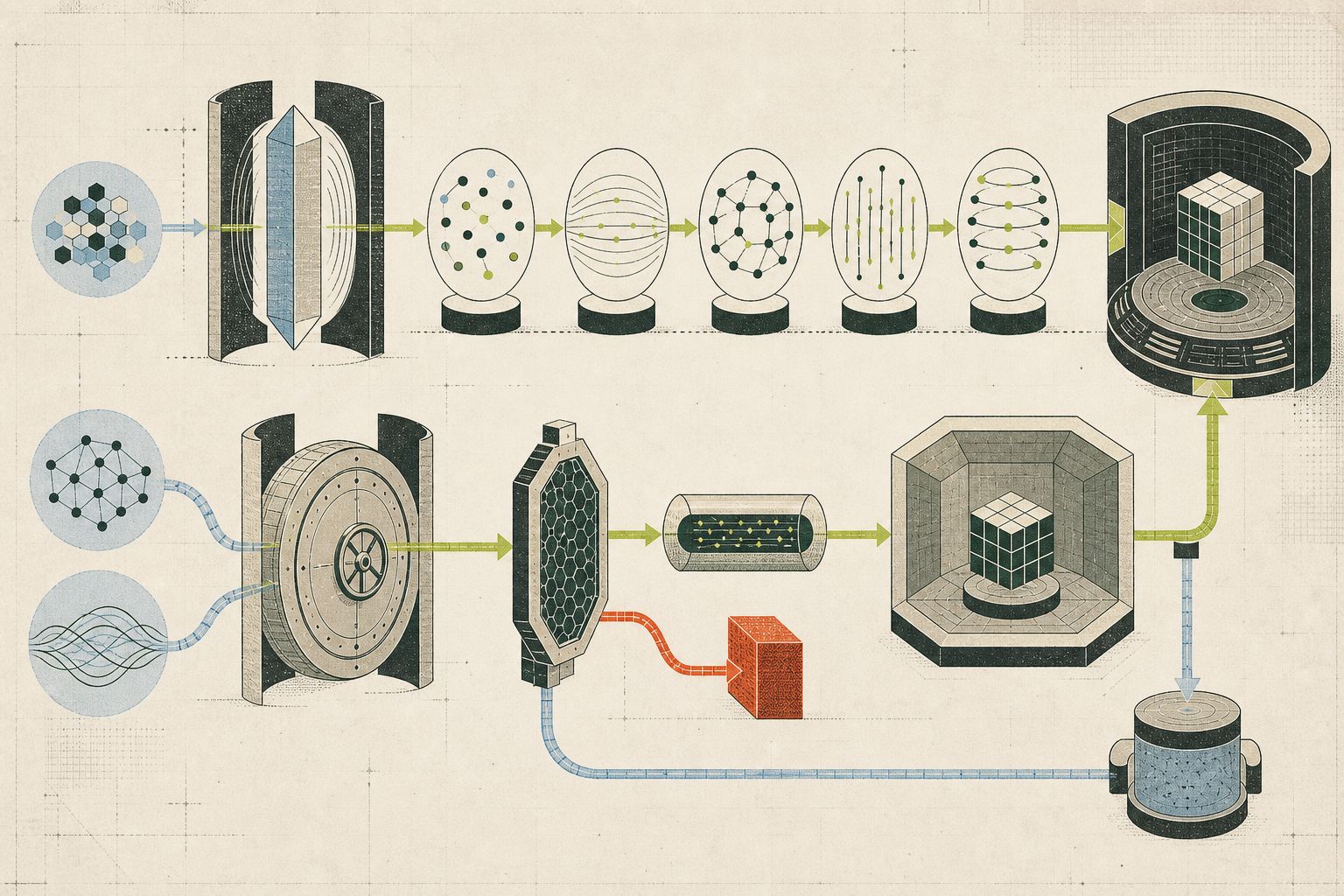
Montana outsourcing at a glance
| Proposed work | First buyer decision | Evidence required before access |
|---|---|---|
| Ordinary product engineering with no personal data | Confirm the boundary rather than assuming every repository is regulated | Work package, environment, identities, cities, accounts, access, dependency policy, release authority, evidence, and exit |
| Consumer-data work within the general Montana privacy perimeter | Determine applicability and operation-level controller or processor roles | Consumer counts, revenue path where relevant, data inventory, purpose, instructions, rights support, sensitive-data and consent decision, subprocessors, assessment, security, deletion or return |
| Online service, product, or feature intentionally targeted to Montana residents and used by known or willfully disregarded minors | Do not stop at the ordinary 25,000/15,000 threshold calculation; evaluate the separately scoped minors provisions | Audience and age signals, feature register, disclosed purpose, retention, profiling, advertising or sale path, engagement design, geolocation signal, messaging safeguards, assessment, mitigation, material-change review |
| Covered genetic or neurotechnology data | Decide whether the organization is an entity, processor, third party, exempt operation, or another role for each operation | Data and sample inventory, collection location, specific purpose, consent version and actor, access categories, processor contract, storage and transfer path, destination screen, rights and destruction workflow, security and exit |
| International storage or transfer of covered Montana genetic or neurotechnology data | Stop the transfer until the current statutory and federal destination questions and resident-consent path are resolved | Resident consent, data lineage, every primary/replica/backup/log/support location, legal entity, country, OFAC and foreign-adversary review, reviewer, timestamp, source snapshot, approval, expiry, re-screen trigger |
| Supplier maintains Montana personal information it does not own | Preserve an immediate owner/licensee relay instead of waiting for final root cause | Discovery time, affected system, acquisition facts, data elements, Montana-resident question, containment, preserved records, updates, owner decision authority, regulator and individual notice support |
These are triage lanes, not conclusions that a particular buyer, user, data item, device, service, supplier, country, consent, exception, or event is covered. Current law, executed contracts, federal restrictions, other states, and destination-country rules may add or change requirements. Qualified owners should decide scope from the actual facts.
The distinct Montana model: an age-and-data destination gate
Montana presents two unusually useful pre-code questions for an outsourcing buyer.
The first asks who the online product is actually for and what the feature does. Current section 30-14-2803 applies the ordinary comprehensive-privacy provisions through numeric consumer and revenue paths, but it separately applies the minors duty-of-care, processor-responsibility, and assessment sections to persons conducting business in the state or delivering commercial products or services intentionally targeted to Montana residents. A team cannot safely compress those paths into “we are under the threshold.”
The second asks what data is moving and where every copy will go. Current section 30-23-104 addresses genetic and neurotechnology data through notice, consent, access, deletion, revocation, sample destruction, security, and destination rules. Subsection (10) says covered Montana-resident data collected in the state may only be transferred or stored outside the United States with resident consent and may not be stored within a country fitting the stated sanctions or foreign-adversary condition. That is not a generic “offshore is prohibited” rule. It is a data-, collection-, consent-, operation-, and destination-specific gate that should be decided with current official inputs.
Build one operating ledger with two independent gates:
- Audience and feature gate: Is this service intentionally targeted to Montana residents? What evidence suggests a user is a minor? Which feature, purpose, retention, geolocation, messaging, advertising, sale, profiling, or engagement behavior is proposed? Does an assessment or material-change review apply?
- Data and destination gate: Is the item genetic data, neurotechnology data, a biological sample, general personal data, de-identified research material, ordinary technical telemetry, or something else? Where was it collected? Is the recipient a processor? What consent covers this specific storage or transfer? Which entity, country, infrastructure region, replica, support path, and backup will receive it? What current screen and qualified decision permit that route?
The gates must stop work, not merely produce a memo after deployment. A product manager cannot approve a new attention-extending feature without the minors review. An engineer cannot change a database region, model host, log sink, support vendor, or backup destination for covered genetic or neurotechnology data without the destination review. A supplier cannot broaden its own purpose and still rely on a processor label that depends on following instructions.
Start with an operation-level perimeter record
Create one row for every collection, input, transformation, inference, model call, storage action, disclosure, support view, export, deletion, and backup. Do not start with the vendor name. Record:
- product, feature, user journey, and intended audience;
- Montana targeting facts and the evidence used to identify or avoid willful disregard of minor use;
- data field, source, collection location, subject, format, sensitivity, and whether it is derived or inferred;
- biological sample, genetic data, neurotechnology data, general personal data, precise geolocation, de-identified data, pseudonymous data, and ordinary engineering artifact classifications;
- buyer legal entity, proposed supplier entity, role for that operation, and accountable human owner;
- exact purpose, disclosed purpose, compatibility decision, prohibited uses, and duration;
- every contributor city, employing or contracting entity, approved person, system, account, region, model, subprocessor, support path, replica, log, and backup;
- consent type, text or version, person providing it, collection event, covered purpose, covered recipient or category, country/storage coverage, revocation, and expiry;
- feature-risk and assessment decision, mitigation, reviewer, review date, and material-change triggers;
- rights, deletion, sample destruction, incident, recovery, and exit path; and
- source, qualified decision, approval, exception, expiry, and re-review event.
“The cloud is in the U.S.” is not a complete record. A managed database may have U.S. primary storage while support access, application logs, model prompts, observability, ticket attachments, developer downloads, backups, or subprocessors exist elsewhere. “The offshore team cannot download” is also incomplete when it can view, query, label, infer, or transmit data through a tool. Trace the operation and every technically possible copy.
Separate ordinary privacy thresholds from the minors lane
Current section 30-14-2803 describes two ordinary applicability paths: at least 25,000 consumers excluding data processed solely to complete a payment transaction, or at least 15,000 consumers plus more than 25% of gross revenue from personal-data sales. The buyer should calculate those paths with current counsel and documented inputs rather than a vendor’s estimate.
The same section separately scopes sections 30-14-2811, 2818, and 2819 by business or intentional targeting facts. That separation matters in procurement. Add distinct fields for:
- ordinary threshold status and calculation period;
- whether the online service, product, or feature is intentionally targeted to Montana residents;
- actual knowledge or willful-disregard evidence regarding minor users;
- which features a minor can reach before and after authentication;
- the controller, processor, and subprocessor for each feature; and
- why a provision is active, inactive, or unresolved.
Do not infer that an educational customer automatically resolves the whole analysis. Section 30-14-2811 contains a particular educational-use treatment for specified subsections and services used by and under the direction of an educational entity. Record the product, feature, direction, data, use, and exact subsection decision. A general “edtech” label is not evidence.
Turn the minors duty into a feature control system
The current minors provisions cover more than a privacy notice. For an online service offered to a user the controller actually knows or willfully disregards is a minor, the buyer needs evidence about reasonable care and heightened risk. Without the applicable consent, section 30-14-2811 addresses targeted advertising, sale, significant-effect profiling, undisclosed or incompatible purposes, retention, certain engagement-extending design, precise geolocation, and direct-messaging safeguards.
Create a feature register with these fields:
| Feature evidence | Buyer question | Pilot proof |
|---|---|---|
| Audience and reach | Is the feature intentionally targeted to Montana residents, and what user evidence reaches the decision system? | Demonstrate the synthetic adult, 13–17, under-13, unknown, and contradictory-signal paths without collecting unnecessary age data |
| Purpose | Is the proposed processing the disclosed purpose, reasonably necessary and compatible, or separately consented? | Change one purpose and verify that the work stops before data or code crosses the gate |
| Retention | What event starts and ends retention for a minor’s data? | Expire a synthetic record and prove deletion across primary, cache, log, model, ticket, and subprocessor paths |
| Advertising, sale, or profiling | Can the feature enter any stated prohibited or consent-dependent path? | Trace the configuration, audience, event, recipient, and model decision; prove the default and consent state |
| Engagement design | Does the system significantly increase, sustain, or extend use, and who reviewed that risk? | Change a ranking, notification, streak, autoplay, reward, or recommendation parameter in a nonproduction experiment and trigger review |
| Precise geolocation | Is collection reasonably necessary, time-limited, and accompanied by the required visible signal when the provision applies? | Exercise collection start, persistent signal, stop, retention expiry, revoked permission, and supplier log behavior |
| Messaging | Can an unconnected adult send unsolicited communications to a minor, and do applicable safeguards work? | Test relationship controls, request state, blocking, reporting, moderation authority, and evidence preservation |
The law’s definition of minor is under 18, while child is under 13. Do not substitute one age flag for every requirement. Preserve which rule, consent actor, data, feature, and operation each state represents. Avoid collecting a date of birth merely because it is convenient; the current compliance section says the part does not itself require an age-verification or age-gating system or affirmative age collection. Obtain qualified product and legal decisions on appropriate age signals and minimization.
Make the assessment executable
Current section 30-14-2819 applies to specified processing activities created or generated after October 1, 2025. It addresses assessments for online services, products, or features with a heightened risk of harm to minors, material-change review, documentation, mitigation, and Attorney General access.
An outsourcing work order should connect the assessment to delivery:
- assessment ID and accountable controller owner;
- product, feature, release, model, audience, and processing operations;
- minor-data categories and purposes;
- foreseeable heightened-risk scenarios and affected user paths;
- supplier facts, systems, countries, subprocessors, and evidence;
- alternatives considered and data-minimizing design;
- mitigation requirements, acceptance tests, residual-risk decision, and prohibited states;
- change triggers covering data, purpose, audience, model, ranking, messaging, location, retention, recipient, country, and subprocessor;
- required documentation period and protected repository; and
- regulator-response owner and privilege-handling process determined by qualified counsel.
A supplier can provide technical facts, tests, and alternatives. It should not quietly make the controller’s legal conclusion. The buyer owns assessment sufficiency, mitigation acceptance, production authority, and communications.
Bind processor identity to instructions
Section 30-14-2813 makes processor status operational. It describes adherence to controller instructions, rights and security assistance, breach support, assessment information, a binding contract, confidentiality, deletion or return, compliance information, subcontractor flow-down, assessment cooperation, and context-specific role determination. Section 30-14-2818 connects processor assistance to the minors provisions.
Give the team an instruction packet that machines and humans can follow:
- allowed data fields and synthetic substitutes;
- exact purpose and prohibited independent purposes;
- approved buyer tenant, repository, environment, account, model, service, and region;
- named people, entity, city, role, access level, start, expiry, and approver;
- approved subprocessors with function, location, data, notice, objection, and flow-down;
- prompt, embedding, output, evaluation, retention, training-use, and deletion controls for AI services;
- rights, revocation, deletion, sample-destruction, export, and assessment assistance;
- immediate incident trigger, facts, preservation, update cadence, and buyer authority;
- evidence format, frequency, exception process, and audit path; and
- return, deletion, access removal, reproducible build, documentation, and transition.
If a coding assistant, model host, analytics provider, or supplier begins using buyer data to improve its own service, choose recipients, or determine a new purpose, stop and reclassify that operation. A contract label does not override actual conduct.
Put genetic and neurotechnology data behind a second gate
The Genetic Information Privacy Act uses its own definitions. Current section 30-23-102 describes an entity, processor, genetic data, neurotechnology, neurotechnology data, biological samples, and third parties. A processor is tied to a contract that prohibits retaining, using, or disclosing the covered data or consumer identity for a purpose beyond the specified service.
Inventory more than raw sequence files. Depending on the current definition and facts, relevant materials can include sequence data, genotypic or phenotypic information, connected self-reported health information, neural measurements, processed features, annotations, derived outputs, model inputs, evaluation sets, and identifiers that reconnect an artifact to a consumer. Keep biological samples in a related but separately controlled custody ledger; software access and physical sample destruction are not the same operation.
For each item, record:
- source device, laboratory, app, study, upload, or user statement;
- whether and where it was collected in Montana;
- original consumer and identity link;
- raw, processed, derived, aggregate, pseudonymous, or de-identified state;
- genetic, neurotechnology, general health, biometric, or other classification;
- entity, processor, third-party, healthcare, research, government, or de-identified-research perimeter decision;
- consent, purpose, access categories, disclosures, storage, transfer, marketing, sale, retention, deletion, revocation, and sample-destruction state; and
- every international person, system, country, copy, and recovery location.
Do not assume HIPAA makes the entire Montana lane disappear. Section 30-23-103 contains specific exception language and conditions. Record why an operation fits an exception and the safeguards or consent facts on which that conclusion depends. The buyer should ask qualified healthcare and research counsel to reconcile Montana, federal research or healthcare rules, other state law, contract commitments, and the proposed international path.
Make consent granular and propagatable
Section 30-23-104 distinguishes initial express consent from separate or informed express consent for specified uses and disclosures. It also addresses access, deletion, revocation, biological-sample destruction, and a security program.
Build a consent ledger that can answer:
- who consented and in what capacity;
- which notice and consent text the person saw;
- date, channel, product, version, and evidence record;
- which collection, use, disclosure, third party, research, marketing, sale, retention, storage, transfer, or destination the consent covers;
- which people or categories may access results;
- whether outside-U.S. storage or transfer is specifically covered;
- effective date, withdrawal method, revocation state, and downstream propagation deadline;
- which copies, outputs, samples, models, logs, backups, and processors must change; and
- unresolved exceptions, retention duties, and qualified decisions.
Consent is not a PDF parked in counsel’s folder. The authorization state should gate infrastructure, dataset, model, ticket, and contributor access. When consent is revoked, the system should find each affected operation and issue bounded actions without erasing records that a qualified owner has determined must lawfully remain. Record completion and exceptions.
Screen the real destination, not the sales region
For covered genetic or neurotechnology data collected in Montana, current section 30-23-104(10) creates a specific outside-U.S. consent and country restriction. Do not publish or purchase from a static “approved country” table. OFAC itself warns that there is no single simple country list: programs differ, targeted persons and entities matter, ownership rules matter, and restrictions change.
Use a versioned destination screen for every proposed access and storage node:
- resolve the supplier’s legal entity, beneficial ownership where relevant, subcontractors, people, and actual work cities;
- resolve infrastructure tenant, provider, physical/logical region, replicas, backups, support access, observability, model services, and disaster recovery;
- identify which covered Montana data each node could store, receive, view, query, transform, or recover;
- verify the resident-consent path for the specific outside-U.S. storage or transfer;
- screen current OFAC programs and relevant parties and obtain a qualified decision on the statute’s “sanctioned in any way” language;
- screen the current foreign-adversary designation referenced by the statute through an authoritative source;
- record reviewer, time, exact official sources, result, scope, conditions, expiry, and evidence snapshot;
- block access until approved; and
- re-screen on sanctions or designation change, supplier ownership change, new country, new person, new provider, region failover, subprocessor change, or consent change.
Country eligibility for one work package does not approve every project. A team may be excellent for ordinary product code and ineligible for a covered dataset. Split the work: use synthetic, generated, or properly de-identified data where possible; keep covered production data in an approved enclosure; allow international contributors to return code, tests, documentation, and evidence through a buyer-controlled bridge.
Treat AI and derived data as new operations
AI can make both gates harder to see. A model may infer age, health, behavior, location, genetic traits, or neural state. A hosted model may retain prompts, send them through safety or observability services, or use human review. A coding assistant may index repositories or tickets that contain data samples. An evaluation dataset may preserve identity after obvious fields are removed.
Maintain an AI service register with:
- provider, model, version, account owner, contract, and environment;
- inputs, outputs, embeddings, prompts, tools, retrieval sources, and human review;
- purpose, audience, minor-access path, feature behavior, and assessment ID;
- genetic, neurotechnology, health, location, identity, and derived-data classification;
- region, support access, subprocessors, retention, training or improvement use, logs, and deletion;
- evaluation dimensions, harmful failure cases, override, monitoring, incident route, and rollback; and
- destination approval, consent state, replacement plan, and exit evidence.
Use synthetic data until the operation passes both gates. If the proposed model needs real covered data, document why, minimize it, restrict identities and fields, isolate the environment, monitor access, and prove deletion or controlled retention. A supplier saying “the API does not train on data” answers only one question.
Preserve an immediate incident relay
Current section 30-14-1704 distinguishes the owner or licensee from a person or business maintaining data it does not own. For the described breach condition, the non-owner path calls for owner or licensee notification immediately following discovery. The buyer should not copy the owner’s outside notice timing into the supplier’s first-alert clause.
Contract and test staged supplier reporting:
- First signal: discovery time, reporter, affected tenant/system, credible indicator, current containment, and safe contact channel.
- First facts: data categories, acquisition question, identities and countries with access, time window, accounts, services, processors, logs, and preserved evidence.
- Decision update: Montana-resident question, covered-personal-information question, known acquisition facts, scope changes, restoration, affected product lanes, and qualified owner decisions.
- Recovery record: containment, access changes, clean restoration, residual risk, communications, lessons, and follow-up controls.
The supplier should have bounded emergency authority to isolate its account or stop a harmful process, but not unilateral authority to notify consumers, regulators, press, or customers in the buyer’s name. Name buyer-side legal, security, executive, and communications owners with backups. The law-enforcement delay and external-notice decisions remain with qualified authorized parties.
For genetic or neurotechnology data and minors-related features, add gate-specific incident fields: consent state, destination, assessment and mitigation impact, feature disablement, minor-user path, sample custody, derived artifacts, model exposure, and deletion or destruction implications.
Design a sustainable Mountain-time operating model
Use the buyer’s actual Montana city, the maintained IANA identifier appropriate to it—commonly America/Denver—each supplier city, and the dates of work. Do not write “nine-hour difference” into a year-long contract. Daylight-saving transitions can temporarily change overlap when another country changes on a different date or not at all.
Separate work into three rhythms:
- Protected overlap: decisions, demonstrations, risk reviews, feature and destination approvals, incidents, and acceptance.
- Asynchronous production: implementation, testing, documentation, assessment evidence, and questions that can wait for the next buyer window.
- Urgent relay: security, consent, destination, minor-safety, production, or data-boundary events that bypass the normal queue.
Publish authority by work type. A supplier may merge an approved low-risk change while a buyer owner retains authority for production, new datasets, new models, audience changes, age-signal logic, geolocation, messaging, destination changes, covered-data access, incidents, and external communications.
Choose the engagement model before the country
Compare the work and control burden before selecting a destination:
| Model | Useful when | Montana-specific test |
|---|---|---|
| Direct specialist | Bounded expert outcome with low continuity risk | Can one person work in buyer-controlled systems without covered production data, and is handover independently reproducible? |
| Staff augmentation | Buyer has strong architecture, product, privacy, and security ownership | Can the buyer administer every identity, instruction, feature gate, destination approval, assessment input, review, and exit? |
| Managed delivery | Supplier owns a measurable workstream and team continuity | Does the proposal identify the actual entity, people, cities, processors, infrastructure, authority, evidence, and replacement plan rather than a sales region? |
| Outcome project | Scope and acceptance are stable enough to price | Are audience, data, consent, destination, model, dependencies, assumptions, and change gates sufficiently explicit to avoid unsafe hidden work? |
| Independent selection | Buyer needs a defensible provider process | Can evidence be normalized without treating country, certification, or low rate as a substitute for the named team’s actual path? |
The best country depends on the work package. Nearshore overlap may help product decisions. A farther time zone may support written relay work. Specialized scientific engineering may require a narrower market. None of those advantages permits covered data to bypass the two gates.
Compare countries through constraints, not rankings
Create a shortlist only after defining:
- outcome, architecture, skills, scale, duration, and engagement model;
- whether real personal, minor, genetic, neurotechnology, health, location, customer, production, or regulated data is necessary;
- Montana and federal destination constraints plus destination-country law;
- working-language needs, required overlap, async maturity, and incident coverage;
- employing or contracting entity, contributor classification, confidentiality, and IP chain;
- infrastructure, model, subprocessor, support, and backup locations;
- complete cost, buyer-retained work, transition, and recovery; and
- a feasible pilot with safe data.
For every proposed country, ask for a named legal entity and delivery roster. Verify the people who will actually work. A multinational provider’s U.S. contract does not prove that a subcontractor, affiliate, support engineer, or model service in another country follows the approved path.
Normalize complete cost
Compare a complete scenario rather than hourly rate:
complete cost = supplier fees + buyer coordination + security/privacy/legal review + data preparation + infrastructure and tools + overlap burden + rework + assessment and destination evidence + transition + risk reserve
Request a work breakdown with role, level, named or representative people, city, hours, rate, utilization, duration, assumptions, exclusions, taxes, currency, payment fees, travel, tools, model usage, infrastructure, support, and change rates. Separate one-time discovery, migration, security, consent, assessment, and environment costs from recurring delivery.
Add buyer-retained work: product decisions, architecture, data classification, Montana applicability, age and audience decisions, consent design, destination screening, assessment acceptance, production approval, incident command, quality acceptance, and vendor management. Those costs do not vanish in a low-rate proposal.
Model downside scenarios: the product reaches minors unexpectedly; a feature creates a new heightened risk; an engineer adds precise geolocation; consent does not cover a new destination; failover creates an unapproved replica; a model host adds a subprocessor; a supplier uses covered data independently; an incident occurs outside overlap; or the buyer cannot reproduce the release. Compare prevention, detection, response, recovery, and exit—not just likely delivery hours.
Write an RFP that exposes the real path
Ask every provider for the same evidence:
- proposed legal entity, parent and affiliates involved, actual team, employment or contracting chain, city, IANA zone, language, tenure, availability, and replacement process;
- responsibility map for product, data, age and audience logic, assessment support, architecture, security, release, incident, acceptance, and handover;
- all tools, accounts, environments, infrastructure regions, models, processors, subprocessors, support locations, replicas, backups, and observability paths;
- instruction adherence, independent-use restrictions, AI training and retention terms, change notification, and evidence;
- experience implementing purpose, retention, geolocation visibility, messaging, consent, revocation, deletion, sample-destruction, and rights workflows without claiming legal authority;
- immediate incident relay, evidence preservation, safe containment, update cadence, recovery, and cooperation;
- IP assignment, confidentiality, open-source and model terms, provenance, acceptance, warranty, and destination-country rights chain;
- complete price, assumptions, exclusions, buyer dependencies, uncertainty ranges, change rates, and exit cost; and
- a representative pilot using synthetic or approved data.
Reject proposals that say only “GDPR compliant,” “HIPAA compliant,” “U.S. cloud,” “no data leaves the region,” “we use AI securely,” or “we have global talent.” Ask for scope, configuration, evidence, exceptions, and the exact delivery team.
Run a representative paid pilot
A credible Montana pilot should exercise the controls most likely to fail. Use a bounded feature and synthetic identities/data. Require the proposed team—not a special presales squad—to:
- create the operation-level perimeter record;
- configure buyer-controlled identities, repository, environments, secrets, and logs;
- implement a small feature with tests, provenance, documentation, and reproducible deployment;
- exercise an adult, minor, child, unknown-age, and conflicting-signal route using synthetic users;
- change a purpose, retention rule, engagement behavior, messaging state, or location field and prove the feature-review gate stops unapproved work;
- assemble assessment evidence and a mitigation update for a material change;
- route synthetic genetic or neural-signal records through the consent and destination gate, including an approved U.S. path, an approved consented international path, and a blocked destination state;
- revoke consent and demonstrate downstream stop, deletion, retained-exception recording, and access removal;
- trigger a simulated supplier discovery and measure immediate first signal, progressive facts, evidence preservation, and buyer authority;
- rotate a team member, remove access, rebuild from buyer-owned records, and hand over the service.
Measure accepted outcome, escaped defects, decision delay, blocked time, buyer review burden, instruction exceptions, feature-gate behavior, assessment evidence completeness, destination-screen accuracy, incident timing, documentation, recovery, and exit. End with a written continue, revise, or stop decision.
Contract for evidence and change
The agreement and work order should address:
- parties, service, outcome, acceptance, authority, dependencies, and change control;
- controller, processor, entity, genetic-data processor, third-party, and subprocessor roles by operation where applicable;
- exact data, purpose, audience, feature, people, countries, systems, models, regions, support, backups, and prohibited uses;
- confidentiality, security, secure development, access, logging, evidence, vulnerabilities, and recovery;
- minors-related feature, assessment, mitigation, and material-change support;
- genetic and neurotechnology notice, consent, access, deletion, revocation, sample-destruction, storage, transfer, and destination controls as applicable;
- country, ownership, subprocessor, infrastructure, model, and sanctions-change notification plus stop-work authority;
- immediate incident alert, preserved evidence, update cadence, buyer-controlled communications, and cooperation;
- IP assignment, contributor flow-down, open-source and model terms, preexisting materials, provenance, and moral-rights treatment where relevant;
- pricing, invoice evidence, taxes, currency, service levels, remedies, insurance, limitation of liability, and termination; and
- buyer ownership of repositories, cloud accounts, domains, deployment, keys, data, consent records, assessment records, logs, documentation, and recovery artifacts.
Contract terms do not replace technical controls. Make the approved path the easiest path and the prohibited path technically unavailable.
Common Montana outsourcing mistakes
- Treating the 25,000/15,000 ordinary threshold calculation as the end of every minors question.
- Using one under-13 flag for all under-18 features and consent decisions.
- Collecting more age data than the product decision needs.
- Calling a service “not for minors” while product design, marketing, or observed use tells a different story.
- Reviewing a product once but not routing material feature, model, purpose, audience, or recipient changes back through the assessment.
- Treating all health, genetic, biometric, neural, and ordinary telemetry as the same data class.
- Assuming HIPAA, research, de-identification, or a processor label automatically resolves the genetic or neurotechnology perimeter.
- Recording a cloud primary region but omitting replicas, backups, support, logs, models, and engineer access.
- Using a static sanctions country spreadsheet or screening only the supplier’s headquarters.
- Obtaining general consent that cannot be linked to a specific outside-U.S. storage or transfer.
- Allowing a supplier to repurpose covered data for its own AI or product improvement.
- Copying an owner’s outside notice timing into the supplier’s first-alert clause instead of preserving immediate relay.
- Buying permanent night work as a substitute for a written Mountain-time authority system.
- Giving a provider ownership of repositories, deployment, keys, consent records, assessment evidence, or recovery material.
- Publishing a local office, client, partner, compliance, or certification claim without evidence and permission.
Frequently asked questions
Can a Montana company outsource software development outside the United States?
Potentially. The answer depends on the work, audience, data, collection location, consent, roles, systems, supplier entities, people, countries, federal restrictions, destination-country law, and contracts. Ordinary code can often be separated from covered production data. Covered genetic or neurotechnology data collected in Montana needs the specific current outside-U.S. storage or transfer analysis described above.
Does being below Montana’s ordinary consumer threshold resolve minors-related product duties?
Not necessarily. Current section 30-14-2803 separately scopes the minors duty-of-care, processor-responsibility, and assessment sections. Record both paths and obtain a qualified applicability decision from the actual targeting, audience, feature, processing, and timeline facts.
Does Montana require every online service to collect a user’s age?
The current compliance provision says the part does not itself require an age-verification or age-gating system or affirmative age collection. That does not erase duties tied to actual knowledge or willful disregard. Design an evidence-based, data-minimizing age and audience approach with qualified review.
Can an international developer see Montana genetic or neurotechnology data if the database stays in the United States?
Do not infer the answer from database location alone. Analyze whether remote viewing, querying, support, model use, logging, or another operation is a transfer or storage under the current law and facts; verify consent, roles, country, federal restrictions, and technical controls with qualified counsel.
Is a processor the same as any service provider?
No. The comprehensive privacy and genetic-information provisions use role and contract concepts tied to actual processing and instructions. Record each operation. A provider that uses data for its own purpose may not fit the intended processor path for that operation.
Should a Montana buyer pick a nearshore or offshore team?
Choose after defining the outcome, data boundary, audience, feature risks, consent and destination constraints, overlap, named team, complete cost, evidence, incident path, and exit. Nearshore overlap can help decisions; offshore relay can help asynchronous production. Neither model overrides the data and feature gates.
What should the pilot prove?
Prove the proposed team’s delivery quality, instruction adherence, age and feature gate, assessment evidence, consent and destination gate, rights and revocation support, immediate incident relay, buyer-controlled release, reproducible recovery, and access-removal and handover path using synthetic or otherwise approved data.
Buyer checklist
- Define the outcome, acceptance evidence, engagement model, budget range, and buyer owner.
- Inventory product audience, Montana targeting, age signals, features, data, samples, systems, models, and every operation.
- Record ordinary threshold and separately scoped minors applicability decisions.
- Build the feature register, assessment links, mitigation plan, and material-change triggers.
- Classify genetic, neurotechnology, general personal, precise-geolocation, de-identified, and ordinary technical data separately.
- Resolve entity, controller, processor, genetic-data processor, third-party, and subprocessor roles by operation.
- Link each consent to the exact purpose, recipient, storage, transfer, country, retention, and revocation path.
- Trace all identities, cities, accounts, regions, replicas, backups, support, logs, model services, and subprocessors.
- Screen current destinations and parties through authoritative sources with reviewer, timestamp, scope, expiry, and re-screen triggers.
- Keep covered production data in an approved enclosure and use synthetic or de-identified data where possible.
- Contract for instructions, confidentiality, evidence, changes, immediate incidents, deletion or return, recovery, and exit.
- Calculate dated Mountain-time overlap and name normal, decision, and urgent authority.
- Compare complete cost and downside scenarios, not rate alone.
- Run the representative pilot with the actual proposed team.
- Obtain current privacy, child-safety, healthcare/research, sanctions/export, tax, employment, security, and IP advice where applicable.
- Record named human content and legal approval before production publication.
Decision
The strongest Montana outsourcing design is not a country ranking. It is a buyer-controlled age-and-data destination gate. The buyer knows which audience and feature path is active, which data is actually covered, what consent and purpose permit, where every copy and person will be, what current destination screen allows, which processor instructions govern, how an incident reaches buyer authority immediately, and how the work returns cleanly.
If a provider can demonstrate that system through a representative paid pilot, international delivery can expand capability without hiding critical Montana decisions inside a supplier label. If the provider cannot name its people and locations, trace its data and models, stop an unapproved feature or destination, preserve immediate incident facts, or hand the service back, do not scale the engagement.
Evidence ledger
Sources used on this page
- 30-14-2802, MCA — Consumer Data Privacy Act definitions — Montana Legislature. Supports: Current adult, child, minor, consent, consumer, de-identified data, heightened-risk, online-service, personal-data, precise-geolocation, processor, profiling, sensitive-data, and targeted-advertising definitions. Direct source; independently sourced; commercial relationship: none. Verified 8/15/2026 by Outsourcing.ai Editorial Team. Accessed 8/15/2026.
- 30-14-2803, MCA — Consumer Data Privacy Act applicability — Montana Legislature. Supports: Current 25,000-consumer and 15,000-consumer-plus-revenue applicability paths and the distinct audience-based reach of sections 30-14-2811, 2818, and 2819. Direct source; independently sourced; commercial relationship: none. Verified 8/15/2026 by Outsourcing.ai Editorial Team. Accessed 8/15/2026.
- 30-14-2811, MCA — Duties of controllers and duty of care — Montana Legislature. Supports: Current minors duty-of-care, purpose, retention, targeted-advertising, sale, profiling, engagement-design, precise-geolocation signal, consent, messaging-safeguard, and educational-use provisions. Direct source; independently sourced; commercial relationship: none. Verified 8/15/2026 by Outsourcing.ai Editorial Team. Accessed 8/15/2026.
- 30-14-2812, MCA — Controller processing limitations — Montana Legislature. Supports: Current data-minimization, security, consent-revocation, compatible-purpose, sensitive-data, discrimination, and teenage targeted-advertising or sale controls. Direct source; independently sourced; commercial relationship: none. Verified 8/15/2026 by Outsourcing.ai Editorial Team. Accessed 8/15/2026.
- 30-14-2813, MCA — Data processor allowances and limitations — Montana Legislature. Supports: Current processor instruction, rights, security, breach, assessment, contract, confidentiality, deletion or return, compliance-evidence, subcontractor, audit, and role-drift provisions. Direct source; independently sourced; commercial relationship: none. Verified 8/15/2026 by Outsourcing.ai Editorial Team. Accessed 8/15/2026.
- 30-14-2818, MCA — Responsibility according to role when processing minors' data — Montana Legislature. Supports: Current processor assistance, contract, context-specific role, instruction adherence, and controller-role consequences for minors-related processing. Direct source; independently sourced; commercial relationship: none. Verified 8/15/2026 by Outsourcing.ai Editorial Team. Accessed 8/15/2026.
- 30-14-2819, MCA — Data protection assessments for heightened risk of harm to minors — Montana Legislature. Supports: Current post-October 1, 2025 assessment, material-change review, documentation duration, comparable-processing, mitigation-plan, confidentiality, Attorney General access, and prospective-operation provisions. Direct source; independently sourced; commercial relationship: none. Verified 8/15/2026 by Outsourcing.ai Editorial Team. Accessed 8/15/2026.
- 30-14-1704, MCA — Computer security breach — Montana Legislature. Supports: Current owner notice, immediate non-owner-to-owner relay, breach and personal-information definitions, delay, notice methods, and Attorney General copy provisions. Direct source; independently sourced; commercial relationship: none. Verified 8/15/2026 by Outsourcing.ai Editorial Team. Accessed 8/15/2026.
- 30-23-102, MCA — Genetic Information Privacy Act definitions — Montana Legislature. Supports: Current biological-sample, consumer, entity, express-consent, genetic-data, genetic-testing, neurotechnology, neurotechnology-data, processor, and third-party definitions. Direct source; independently sourced; commercial relationship: none. Verified 8/15/2026 by Outsourcing.ai Editorial Team. Accessed 8/15/2026.
- 30-23-103, MCA — Genetic Information Privacy Act exceptions — Montana Legislature. Supports: Current health, research, government, and de-identified-research exception language and the associated consent, safeguards, and contractual non-reidentification conditions. Direct source; independently sourced; commercial relationship: none. Verified 8/15/2026 by Outsourcing.ai Editorial Team. Accessed 8/15/2026.
- 30-23-104, MCA — Genetic or neurotechnology data privacy, consent, rights, and destination rules — Montana Legislature. Supports: Current notice, initial and separate consent, access, deletion, revocation, sample destruction, security-program, clinical-research, sanctioned-country, foreign-adversary, and outside-United-States storage or transfer provisions. Direct source; independently sourced; commercial relationship: none. Verified 8/15/2026 by Outsourcing.ai Editorial Team. Accessed 8/15/2026.
- Sanctions Programs and Country Information — U.S. Department of the Treasury, Office of Foreign Assets Control. Supports: Maintained official source for current sanctions programs; used as a live screening input rather than a frozen country list. Direct source; independently sourced; commercial relationship: none. Verified 8/15/2026 by Outsourcing.ai Editorial Team. Accessed 8/15/2026.
- Where is OFAC's country list? — U.S. Department of the Treasury, Office of Foreign Assets Control. Supports: Official warning that OFAC does not maintain one static prohibited-country list and that program scope, persons, entities, ownership, and current restrictions require ongoing review. Direct source; independently sourced; commercial relationship: none. Verified 8/15/2026 by Outsourcing.ai Editorial Team. Accessed 8/15/2026.
- IANA Time Zone Database — Internet Assigned Numbers Authority. Supports: Maintained time-zone identifiers and transition rules for calculating dated overlap between a Montana buyer and every proposed international contributor city. Direct source; independently sourced; commercial relationship: none. Verified 8/15/2026 by Outsourcing.ai Editorial Team. Accessed 8/15/2026.
- Secure Software Development Framework — National Institute of Standards and Technology. Supports: Maintained methodology for secure-development requirements, protected environments, provenance, release integrity, vulnerability response, and buyer-supplier evidence. Direct source; independently sourced; commercial relationship: none. Verified 8/15/2026 by Outsourcing.ai Editorial Team. Accessed 8/15/2026.
- Directory of Intellectual Property Offices — World Intellectual Property Organization. Supports: Official destination-country intellectual-property office links for investigating contributor and assignment questions rather than assuming one Montana contract resolves every jurisdiction. Direct source; independently sourced; commercial relationship: none. Verified 8/15/2026 by Outsourcing.ai Editorial Team. Accessed 8/15/2026.
Next scheduled review: October 15, 2026. Corrections: hello@outsourcing.ai.