
Oklahoma buyer guide
Outsourcing software development from Oklahoma
An Oklahoma guide to international software and AI outsourcing: the 2027 privacy cutover, processor contracts, assessments, breach evidence, cost, pilot, and exit.
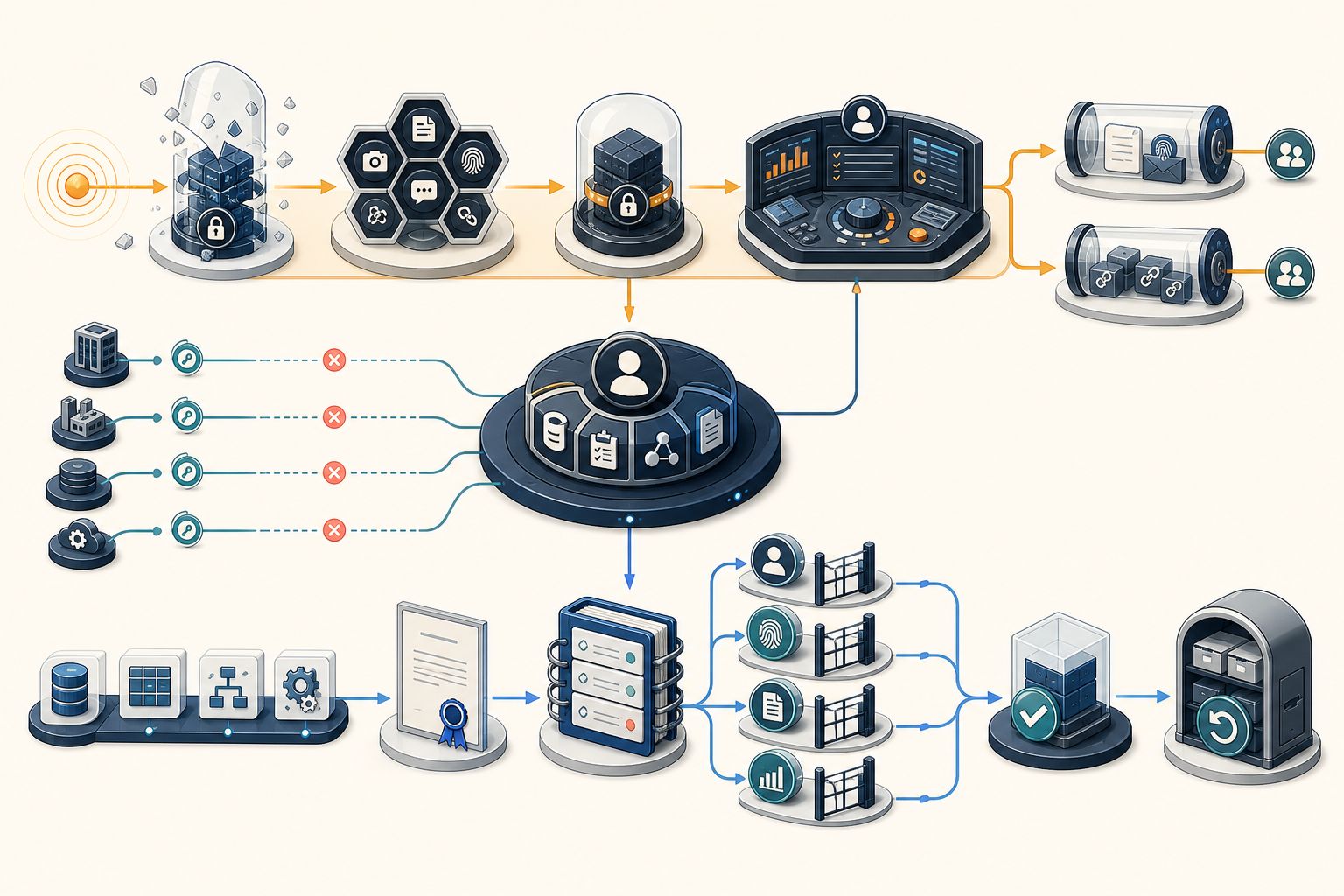
Oklahoma outsourcing at a glance
| Proposed work | First buyer decision | Evidence required before access |
|---|---|---|
| Ordinary software, automation, support, analytics, or AI | Prove why the work remains outside any activated consumer-data, breach, customer-contract, sector, export, or other restricted lane | Work package, entity, named people and locations, system and data boundary, synthetic-data plan, permissions, acceptance, release owner, recovery, and exit |
| Personal data for an operation that may be covered on January 1, 2027 | Determine business targeting, annual consumer volume, sale-derived revenue, exemptions, operation-specific controller or processor role, and the activity’s commencement and change history | Applicability record, volume evidence, purpose, data categories, systems, recipients, instructions, consumer-rights path, sensitive-data decision, and dated legal approval |
| Processing performed for a covered controller | Convert the statutory processor relationship into an executable service schedule, not a generic privacy paragraph | Instructions, nature and purpose, data type, duration, rights and breach assistance, confidentiality, return or deletion, compliance evidence, assessment cooperation, and subcontractor flow-down |
| Targeted advertising, sale, sensitive data, risky profiling, or other heightened-risk processing beginning on or after January 1, 2027 | Decide whether a data protection assessment is required before the operation or material change is released | Benefits, risks, safeguards, deidentification, consumer expectations, context, relationship, test results, residual risk, approver, repository, and review trigger |
| Known-child, biometric-identification, precise-location, health-diagnosis, immigration-status, or other sensitive-data work | Determine whether the data is sensitive under the enacted text and obtain the required consent or child-data treatment before collection or supplier access | Data definition, purpose, consent artifact, revocation path, child-data controls where applicable, minimal fields, approved locations, retention, deletion, and access log |
| Suspected compromise of Oklahoma personal information | Preserve the current owner-or-licensee and non-owner maintainer paths; do not wait for the 2027 privacy program | Discovery and determination times, affected people and records, access-and-acquisition facts, encryption and key facts, fraud analysis, preservation, containment, resident-notice decision, Attorney General threshold and report, and recovery |
| Deidentified or pseudonymous data | Prove the transformation, separation, contractual restrictions, recipient oversight, and prohibition on reidentification rather than relying on a file label | Method, linkage-key custody, access controls, public commitment where required, recipient contract, monitoring, exception analysis, reidentification test, and exit disposition |
These are classification prompts, not conclusions about a particular company or system. Senate Bill 546 has thresholds, entity and information exemptions, definitions, operation-specific roles, and a future effective date. The amended Security Breach Notification Act has different definitions, triggers, parties, and notice paths. Counsel and accountable buyer owners should confirm the current codified text, implementing material, and exact facts before a material decision.
The distinct Oklahoma model: dual-date privacy cutover relay
Oklahoma buyers now have two clocks to operate. The breach-law amendments took effect January 1, 2026. The comprehensive privacy law takes effect January 1, 2027. Its data-protection-assessment section says the assessment requirement applies to processing activities that commence on or after the effective date and is not retroactive.
That prospective language is not a reason to put every current activity in a box marked “legacy” and forget it. The enacted text does not define every possible modernization, repurpose, data expansion, model replacement, or supplier change as a new commencement. A buyer needs a fact record that lets its legal owner decide. It also needs the privacy program ready for covered rights, security, minimization, sensitive-data consent, processor contracts, and other duties when the law becomes effective, regardless of whether one assessment is prospective.
Use a dual-date privacy cutover relay with eight linked records:
- Applicability snapshot: legal entity, product or service, Oklahoma targeting, calendar-year consumer count, sale-derived revenue, affiliate treatment, exemptions, data exemptions, decision owner, source version, and decision date.
- Operation birth certificate: stable operation ID, first production date, original purpose, controller, processors, data, audience, systems, decision effect, approved locations, and contemporaneous evidence.
- Change ledger: every new purpose, data category, source, recipient, model, profiling use, sensitive field, geography, user population, system, processor, subprocessor, or retention rule, with the buyer’s decision about whether the operation remains comparable or has effectively commenced in a new form.
- Rights and consent map: access, correction, deletion, portability, opt-out and appeal routes; authentication; response owner; sensitive-data consent; child-data handling; and regression tests.
- Processor instruction packet: allowed purposes and actions, data types, duration, people, locations, security, breach assistance, return or deletion, evidence access, assessment support, and subprocessor flow-down.
- Protected assessment packet: benefits, reasonably foreseeable risks, safeguards, deidentified-data use, consumer expectations, context, relationship, residual risk, approval, legal handling, and comparison to prior assessments.
- Urgent incident packet: discovery, preservation, determination, owner or licensee, maintainer, affected residents, encryption and key facts, identity-theft or fraud analysis, notice decisions, report fields, containment, and recovery.
- Cutover and exit certificate: inventory completeness, open gaps, accepted remediation, consumer interfaces, contract coverage, access revocation, data return or deletion, downstream disposition, evidence export, and buyer sign-off.
The relay is useful because it preserves different legal questions without creating disconnected compliance projects. The same operation ID connects the product backlog, data map, supplier schedule, assessment, incident register, release, and exit. The dates remain explicit. The buyer can prepare for 2027 while responding to a 2026 incident immediately.
Classify the entity, operation, and data before the supplier
Do not begin with “hire ten offshore developers.” Begin with a work unit. One Oklahoma company can operate a public website, customer application, employee platform, advertising pipeline, support center, fraud model, industrial system, and health-related integration. The 2027 law excludes an individual acting in a commercial or employment context from its consumer definition and contains entity- and information-level exemptions, but those facts must be proved rather than inferred from the company’s industry label.
For each work package, record:
- Entity and targeting: contracting entity, affiliates, Oklahoma business activity, product targeting, regulator, customer requirements, and accountable executives.
- Consumer-volume evidence: unique resident methodology, source systems, deduplication, calendar-year measurement, forecast, threshold margin, owner, and refresh date. Do not let the supplier guess the legal count from event logs.
- Operation: collection, storage, analysis, generation, correction, deletion, sale, targeted advertising, profiling, model training, support, security investigation, or another use.
- Purpose and compatibility: disclosed purpose, proposed supplier purpose, necessity, compatibility, consent dependency, internal-research rationale, and approval.
- People: Oklahoma consumer, employee, business contact, applicant, patient, child, visitor, unknown user, or another subject. Keep context-specific exclusions separate from a person’s identity.
- Data: personal data, sensitive data, pseudonymous data, deidentified data, public information, breach-law personal information, credentials, code, prompts, outputs, logs, and derived features.
- Role by operation: controller, processor, third party, owner, licensee, maintainer, subprocessor, or recipient. A supplier can be a processor for one operation and a controller for another if it determines a separate purpose or means.
- Authority: view, copy, label, combine, infer, train, prompt, retrieve, generate, profile, decide, deploy, export, notify, retain, delete, or approve.
- Locations and systems: every contributor city, employer, service, repository, environment, cloud region, device, integration, administrator, backup, and support path.
- Dates and change: original start, last material change, proposed change, privacy-law cutover readiness, contract renewal, retention period, and exit.
If scope or data facts are incomplete, keep the supplier in a synthetic-data or public-data environment without production credentials. A provider’s general certification, attractive rate, or familiar client list does not answer operation-specific Oklahoma questions.
Determine 2027 coverage with evidence, not impressions
The enacted law applies to a controller or processor that conducts business in Oklahoma or produces a product or service targeted to Oklahoma residents and, during a calendar year, either controls or processes personal data of at least 100,000 consumers, or controls or processes personal data of at least 25,000 consumers while deriving more than 50% of gross revenue from the sale of personal data.
The law also lists excluded entities and information. State agencies, political subdivisions and service providers processing for them are excluded from this act; so are specified financial institutions or data, HIPAA-covered entities and business associates, nonprofit organizations, institutions of higher education, purely personal or household processing, and a narrow controlled-substances-policy category. Separate sections exempt specified health, research, credit-reporting, driver, education, farm-credit, employment-context, emergency-contact, and benefits data.
Those exclusions are not interchangeable. An entity exemption may reach the entity; an information exemption may reach only qualifying information. A service provider should not convert “our customer is regulated” into “all data and every operation are exempt.” Build a coverage workbook with:
- the exact legal entity and affiliate structure;
- the targeting and business facts;
- current and forecast resident counts with deduplication logic;
- sale definition and revenue evidence;
- each asserted entity or information exemption and its supporting facts;
- mixed datasets and whether exempt and nonexempt data are separable;
- who approved the conclusion, when, and against which source version; and
- a trigger for re-review when volume, purpose, product, entity, or data changes.
Treat “not currently covered” as a dated conclusion, not a permanent supplier permission. A growth event, acquisition, new product, data sale, or new audience can change the perimeter.
Build the operation commencement and change ledger
The assessment section’s prospective rule makes evidence of commencement important. Product teams often have only a repository creation date, a ticket, or a vendor invoice. None necessarily proves when a processing activity began. Preserve a more complete birth certificate before the cutover:
| Field | What to record | Why it matters |
|---|---|---|
| Operation ID | Persistent ID shared across systems and contracts | Prevents a renamed service from losing its history |
| First real processing | Date, environment, audience, data, purpose, and release evidence | Supports the factual commencement record |
| Original boundaries | Inputs, outputs, recipients, profiling, sensitive data, model, retention, and locations | Provides the comparison baseline |
| Material changes | Dated changes to any boundary and their approvers | Enables a legal decision about continued or new activity |
| Assessment decision | Required, not required, comparable prior assessment, or unresolved, with reason | Prevents an engineer or supplier from making the legal conclusion silently |
| Release and rollback | Buyer owner, tests, deployment, observation, stop conditions, and rollback | Connects privacy reasoning to operational control |
A model swap may be routine maintenance in one system and a new profiling operation in another. Adding precise geolocation, using support transcripts for training, introducing targeted advertising, or changing from human assistance to solely automated profiling can alter purpose and risk. Do not encode a universal materiality rule in the vendor contract. Require the vendor to identify changes early and give the buyer enough evidence to decide.
Make consumer rights an executable service
The enacted law gives covered consumers rights to confirm and access processing, correct inaccuracies, delete data, obtain certain portable data, and opt out of targeted advertising, sale, or qualifying profiling. It sets a 45-day response period, permits one additional 45-day extension when reasonably necessary with timely explanation, requires an appeal process, and sets a 60-day appeal-response period. It also limits charges and addresses authentication.
An offshore delivery team can help implement the workflow, but it should not receive an unrestricted export of customer data merely to search for requests. Design the rights service as a controlled system:
- Intake assigns a request ID, channel, receipt time, claimed person, requested rights, and authentication state.
- Authentication uses risk-appropriate evidence and keeps identity proof separate from the response packet where practical.
- A system registry maps the consumer to authoritative stores, processors, backups, derived records, and legal holds.
- An instruction manifest specifies which records to retrieve, correct, delete, suppress, or export and identifies exceptions for buyer review.
- The processor returns machine-readable status and evidence, not an informal chat message.
- A buyer owner resolves conflicts, exceptions, identity questions, and the final response.
- Appeal handling is conspicuously available, linked to the original decision, and owned by a separate or sufficiently empowered reviewer.
- Regression tests prove that opt-outs, corrections, deletion markers, and suppression survive releases, restoration, and re-import.
Test at least duplicate identities, household-shared contact details, data obtained from another source, an unauthenticated request, a deleted account, a legal hold, a backup restore, a downstream processor failure, a denied request, and an appeal. The supplier should be able to explain which step failed without seeing more personal data than the task requires.
Turn the processor contract into a control plane
For covered processing, the controller-processor contract must govern the processing procedures. The enacted text calls for clear instructions, nature and purpose, data type, duration, rights and obligations, confidentiality, return or deletion at the controller’s direction after service, compliance information, reasonable assessments, and written subcontracts that carry the processor requirements forward. Processors also assist with rights, security and breach notification, and assessment information.
Put those requirements into the statement of work and technical controls:
| Contract field | Operational implementation | Acceptance evidence |
|---|---|---|
| Instructions and purpose | Allowlisted jobs, APIs, repositories, queries, and environments | Instruction register linked to tickets and service identities |
| Data type and duration | Field-level inventory, approved sources, retention and expiry | Data map, sample schema, automated expiry test |
| Confidentiality | Named workforce, terms, training, and least privilege | Roster, acknowledgement, access review |
| Rights assistance | Request interface, search map, response format, exception escalation | End-to-end test with timestamps |
| Security and breach support | Logging, alert path, evidence preservation, escalation and recovery | Tabletop packet and log sample |
| Return or deletion | Export format, deletion scope, backups, downstream copies and validation | Buyer-accepted export and deletion certificate |
| Compliance information and assessments | Evidence index, assessor access, remediation path | Current report mapped to the actual service boundary |
| Subcontractors | Advance inventory, location, task, flow-down and change control | Executed flow-down and current dependency graph |
The law permits a processor, as an alternative to controller-led reasonable assessments, to arrange a qualified independent assessment using an appropriate accepted control standard or framework and provide the report on request. A report can reduce repeated evidence collection, but it does not prove that the buyer’s specific operation, data flow, instructions, or subprocessor chain is compliant. Map every report to scope, dates, exclusions, exceptions, and remediation.
Gate sensitive data and consequential profiling before access
The enacted definition of sensitive data includes specified trait and diagnosis data, citizenship or immigration status, genetic or biometric data processed for unique identification, personal data from a known child, and precise geolocation. Covered controllers may not process sensitive data without consumer consent; known-child data is tied to the Children’s Online Privacy Protection Act treatment stated in the law.
The law’s definition of precise geolocation uses a radius of 1,750 feet and contains utility-related exclusions. Do not substitute another state’s radius or a provider’s generic “location data” category. Build a field-level decision record and ask:
- Is the field collected directly, inferred, embedded in media, or produced by a device or model?
- Is biometric material used to identify a specific individual, or is it ordinary media not used for identification?
- Is the person known to be a child, and what evidence supports that knowledge?
- Does a diagnosis or protected trait appear in prompts, tickets, labels, model features, or free text?
- What exact purpose was presented to the consumer?
- Where is affirmative consent stored, how is it versioned, and how is revocation propagated?
- Can the work use synthetic, tokenized, coarsened, or buyer-hosted data instead?
For profiling, distinguish decision support from solely automated processing and map the consequence. The law’s defined legal-or-similarly-significant effects include specified financial, housing, insurance, health care, education, employment, criminal-justice, and basic-necessity outcomes. The buyer—not the model supplier—should decide whether the operation belongs in the opt-out and assessment paths.
Keep assessments protected, current, and connected to releases
Covered controllers must conduct and document assessments for targeted advertising, sale, sensitive-data processing, specified risky profiling, and other processing presenting a heightened risk of harm. The assessment weighs direct and indirect benefits against potential consumer-rights risks as mitigated by safeguards and considers deidentified data, reasonable consumer expectations, context, and the controller-consumer relationship.
The Attorney General may request an assessment through a civil investigation demand. The enacted text describes the assessment as confidential, exempt from Oklahoma open-records inspection, and not waiving attorney-client privilege or work-product protection merely because it is disclosed in compliance with that request. That does not mean every engineering artifact becomes privileged or that a supplier should decide legal handling.
Use two connected layers:
- A restricted assessment record contains the legal analysis, benefit-risk reasoning, protected communications where applicable, decision, approval, and regulator-response copy.
- An engineering control record contains the requirements the team must implement: data minimization, consent gate, model threshold, human review, monitoring, rollback, deletion, or another control.
Link both with operation, assessment, control, test, release, and change IDs. Give the supplier only the protected material needed for its task. Require evidence that each control exists and works. If a comparable assessment under another law or framework is reused, document why its scope and effect are reasonably comparable; a matching title is not enough.
Control deidentified and pseudonymous data honestly
Deidentified data is not a casual synonym for data with names removed. Under the enacted law, a controller possessing deidentified data must take reasonable measures to prevent association with an individual, publicly commit to process it only in deidentified form and not attempt reidentification, and contractually require recipients to comply. The text also calls for reasonable oversight of contractual commitments when pseudonymous or deidentified data is disclosed.
Create a transformation and destination packet:
- Source dataset, direct and indirect identifiers, transformation method, date, and operator.
- Reidentification analysis, including rare combinations, free text, images, audio, location, and model outputs.
- Linkage keys, separation, custodians, permissions, and rotation or deletion.
- Permitted purpose, recipient, location, term, onward-transfer rule, and prohibition on reidentification.
- Public commitment owner and canonical publication where required.
- Oversight method, test cadence, breach or misuse escalation, remediation, and termination.
- Return, deletion, derived-output treatment, and verification at exit.
Pseudonymization can reduce exposure while data remains linkable through separate information, but it is not the same as deidentification. Keep the key outside the supplier environment unless there is a documented need and narrow authorization.
Preserve the current breach owner–maintainer relay
The breach lane is already live. The amended Oklahoma Security Breach Notification Act defines a breach around unauthorized access and acquisition of covered computerized personal information, compromise of security or confidentiality, and actual or reasonably believed identity-theft or fraud consequences. It expands covered elements and addresses encryption when keys or means to read altered data are involved. It also defines reasonable safeguards with examples including risk assessment, layered defenses, employee training, and an incident-response plan.
An owner or licensee has the resident-notice analysis. A party maintaining data it does not own or license must notify the owner or licensee as soon as practicable following determination when covered access and acquisition facts are met or reasonably believed. For qualifying owner-or-licensee notices, the amended law adds Attorney General notice without unreasonable delay and no later than 60 days after notice to impacted Oklahoma residents, with an exception from that Attorney General notice when fewer than 500 Oklahoma residents are affected in a single breach and a separate credit-bureau threshold.
Do not turn those statutory outer conditions into the supplier service level. A supplier may not know residency, fraud risk, scope, or whether access and acquisition occurred when the first signal appears. Require immediate operational escalation for credible indicators and preserve:
- first signal, reporter, system, account, and time zone;
- discovery, determination, containment, restoration, and notice-decision times;
- data owner, licensee, maintainer, controller, processor, and subprocessor roles;
- affected data elements, people, residency evidence, record counts, encryption, key access, and redaction state;
- access and acquisition evidence, identity-theft or fraud analysis inputs, and uncertainties;
- logs, images, memory, cloud evidence, tickets, communications, and chain of custody;
- resident-notice content and delivery evidence where required;
- Attorney General report fields, threshold evidence, filing receipt, and updates; and
- safeguards, remediation, validation, recurrence prevention, and recovery.
The buyer’s incident commander and counsel decide legal notices. The supplier preserves facts, contains within authorized limits, supports the investigation, and keeps the urgent channel working outside the ordinary project queue.
Design the Central-time authority window
Oklahoma City and Tulsa operate on Central Time with daylight-saving transitions. Do not describe an overseas team with a fixed “11-hour difference” throughout the year. Store named IANA zones for buyer and contributor cities and calculate dated overlap for the actual delivery period.
Use four operating windows:
- Live decision window: at least two dependable hours for product questions, pairing, assessment-control decisions, incident triage, and release approval.
- Asynchronous build window: supplier work proceeds from accepted specifications, testable outcomes, and explicit authority limits.
- Buyer review window: Oklahoma owners review evidence, resolve exceptions, accept or reject work, and authorize the next package.
- Urgent incident window: a monitored path reaches the buyer’s on-call owner at any hour; it never waits for the next stand-up.
For nearshore locations, test the overlap and labor model rather than assuming convenience. For Europe, Africa, or Asia, make handoff packets complete enough that the second shift is productive without guessing. A time-zone advantage exists only when unanswered decisions, failed releases, and incidents do not accumulate overnight.
Evaluate destination countries and IP custody
Oklahoma law does not replace the law governing each contributor, employer, subcontractor, invention, signature, or data location. Before country selection, investigate:
- who employs or contracts with each individual and can produce the executed agreement;
- present assignment language, pre-existing materials, moral-rights treatment, further assurances, and local formalities;
- open-source, model, dataset, font, media, and third-party code approvals;
- work-device, repository, build, artifact-signing, secret, and production-access custody;
- data-transfer, localization, surveillance, sanctions, export-control, tax, worker-classification, and termination questions with qualified advisers;
- subprocessor countries and the supplier’s ability to notify and control changes; and
- what happens to code, data, credentials, logs, models, prompts, outputs, and derived artifacts at exit.
Use the WIPO directory to reach the relevant national intellectual-property office and then obtain country-specific advice where material. “Worldwide IP” in a master agreement is not proof that every contributor made an effective assignment or that unapproved dependencies can be redistributed.
Keep buyer-controlled repositories and registries for commits, reviews, dependency and license evidence, dataset provenance, model and prompt versions, releases, artifact signatures, credentials, and accepted deliverables. The supplier creates evidence inside the buyer’s custody rather than delivering a final archive after months of opaque work.
Compare complete cost, not hourly rates
The meaningful comparison is expected accepted cost over the decision horizon:
complete cost = supplier fees + buyer management + recruitment and transition + security/privacy/legal work + tools and environments + rework and delay + incident and continuity exposure + exit and replacement cost
Request a scenario model with the same work package, quality bar, timeline, and risk boundary for every option. Include:
- named roles, seniority, allocation, location, employment route, and replacement terms;
- base fees, overtime, minimums, indexation, currency, tax, payment, and termination;
- Oklahoma product, engineering, privacy, security, legal, procurement, and operations time;
- onboarding, access design, contract remediation, data mapping, rights integration, assessment, and tabletop work;
- non-production and production environments, observability, testing, secure build, backup, and recovery;
- expected defect, rework, queue, communication, and acceptance delay;
- travel and onsite requirements;
- breach investigation, restoration, customer support, notice assistance, and evidence preservation;
- transition assistance, data return or deletion, credential rotation, and replacement ramp; and
- uncertainty ranges rather than a single precise forecast.
Model at least expected, adverse, and exit scenarios. A lower rate can be a good choice, but only if adequate accepted output, buyer attention, privacy cutover, incident readiness, and handover cost remain favorable.
Run a six-to-eight-week paid pilot
Use a bounded work package that exposes the real operating system without granting broad production authority.
Week 0: classification and baseline
Approve the entity, operation, purpose, data, audience, roles, locations, systems, authority, commencement record, 2027 applicability hypothesis, incident path, acceptance owner, and exit criteria. Use synthetic or buyer-approved minimized data.
Weeks 1–2: walking skeleton
Deliver a thin, testable path in a controlled environment. Require named contributors, reviewed commits, dependency evidence, automated tests, observability, a current decision log, rights-request touchpoint, and rollback.
Weeks 3–4: privacy and incident evidence
Exercise access, correction, deletion, opt-out, authentication failure, sensitive-data denial, subprocessor change, and data-return flows relevant to the package. Run a breach tabletop from supplier signal through preservation, buyer escalation, scope analysis, resident and Attorney General decision inputs, containment, and recovery.
Weeks 5–6: change and release
Introduce a controlled change to purpose, data, model, or recipient. Require the supplier to update the operation ledger and provide assessment inputs. The buyer decides the impact, reviews security and quality evidence, and approves or rejects the release.
Weeks 7–8: optional resilience and exit
Use these weeks when the work is higher risk. Restore from backup, transfer a service to a second authorized operator, revoke one contributor, export the evidence index, return or delete data, rotate secrets, and have a replacement engineer reproduce the accepted build from buyer-held material.
Score the pilot on accepted outcomes, defect escape, lead time, predictability, evidence completeness, data minimization, rights behavior, incident latency, change disclosure, access hygiene, documentation freshness, and exit success. Do not reward activity volume.
Put the cutover relay into the contract and work order
The agreement should make the operating model enforceable. Include:
- Named parties, services, contributors, employers, work locations, subprocessors, systems, and buyer owners.
- Operation-specific controller, processor, owner, licensee, and maintainer responsibilities without one global role label.
- Purpose, instructions, data types, duration, retention, approved locations, authority, prohibited actions, and change control.
- The statutory processor terms where applicable, plus technical implementation and evidence acceptance.
- Consumer-rights assistance, authentication boundaries, response formats, appeal support, and tested service levels shorter than legal limits.
- Sensitive-data and child-data gates; no access without the recorded buyer approval and required consent path.
- Operation commencement, change, assessment-input, and release records; the supplier must identify relevant changes before implementation.
- Immediate incident escalation, preservation, cooperation, containment authority, communication control, and recovery evidence.
- Security baseline, access expiry, logging, vulnerability handling, secure development, backup, restoration, and continuity.
- Intellectual-property assignment, contributor evidence, pre-existing materials, open-source and AI-use rules, provenance, and further assurances.
- Pricing, acceptance, remediation, service credits where useful, audit or independent-assessment evidence, and order of precedence.
- Suspension, termination, transition assistance, data return or deletion, downstream disposition, access revocation, secret rotation, evidence export, and surviving duties.
Avoid a clause saying the provider “ensures compliance with all laws” as a substitute for allocation. It does not identify who counts consumers, obtains consent, answers appeals, approves assessments, decides notices, or controls production.
Red flags for Oklahoma buyers
- “Oklahoma has no privacy law yet,” with no plan for the enacted January 1, 2027 requirements.
- Every pre-2027 operation is labeled legacy without a commencement record or change history.
- Thresholds are guessed from page views rather than supported resident counts and revenue evidence.
- An industry label is used as a blanket exemption for mixed entities and datasets.
- One controller-or-processor label is applied to every service regardless of actual purpose and instructions.
- The processor contract omits return or deletion, compliance information, assessment cooperation, or subprocessor flow-down.
- Sensitive fields can enter tickets, prompts, analytics, or training before the consent gate runs.
- Rights requests are fulfilled manually from chat messages and cannot survive a backup restore.
- An assessment exists as a slide deck but is not linked to controls, tests, releases, or changes.
- Deidentified data is merely stripped of names, while linkage keys and rare attributes travel with the supplier copy.
- The supplier waits to determine a legal breach before alerting the buyer.
- The incident plan ignores Oklahoma resident count, encryption-key access, fraud analysis, Attorney General fields, or filing evidence.
- The lowest hourly rate is presented without buyer labor, cutover work, incident exposure, rework, or exit.
- Code, model artifacts, prompts, dependencies, logs, or credentials remain in provider-controlled systems at handover.
- Marketing names customers, partnerships, certifications, or Oklahoma presence that the provider cannot substantiate.
Frequently asked questions
Can an Oklahoma company outsource software development overseas?
Yes. Country location alone does not prohibit ordinary international software delivery. The buyer still needs to classify the entity, operation, data, contract, sector, export, sanctions, tax, employment, intellectual-property, and incident facts and place any restricted work in an appropriate environment.
Is Oklahoma’s comprehensive privacy law already effective?
No. Senate Bill 546 was approved by the Governor on March 20, 2026 and states an effective date of January 1, 2027. Preparation should happen before that date because data maps, contracts, consent, rights, assessments, and tested deletion cannot be built reliably at the last minute.
Does the 2027 law apply to every Oklahoma business?
No. The enacted text uses business-or-targeting and annual processing thresholds and contains entity and information exemptions. A buyer should preserve the evidence for its conclusion and recheck it as volume, revenue, products, entities, and data change.
Are all existing processing activities exempt from assessments forever?
The enacted assessment section says its requirement applies to processing activities commencing on or after January 1, 2027 and is not retroactive. Whether a later redesign, repurpose, new dataset, model, recipient, or profiling function is the same activity is fact-specific. Preserve the commencement and change record and have the buyer’s legal owner decide; do not let a supplier assign a permanent “legacy” label.
What must an Oklahoma processor contract contain?
For covered processing, the enacted law specifies instructions, nature and purpose, data type, duration, rights and obligations, confidentiality, return or deletion, compliance information, assessment cooperation, and written subprocessor flow-down. The processor also assists with rights, security and breach duties, and assessment information. Map those terms to actual systems and evidence.
Does the privacy law require consent for sensitive data?
For covered controllers, the enacted text prohibits processing consumer sensitive data without consent and links known-child data to the Children’s Online Privacy Protection Act treatment described in the law. Confirm definitions, exemptions, and the exact operation with counsel.
When should an offshore provider report a suspected incident?
Immediately through the agreed urgent channel when it has a credible indicator, even if legal breach elements are unresolved. Oklahoma’s statute distinguishes owner-or-licensee notice from a maintainer’s notification and uses specific access, acquisition, data, harm, resident, and timing facts. Early escalation preserves the buyer’s ability to investigate and decide.
Does an independent security report replace buyer review?
No. The enacted law provides an independent-assessment alternative for a processor in a particular context, but a report must still be mapped to the actual service, systems, dates, locations, exclusions, exceptions, and remediation. It does not decide the buyer’s scope, consent, assessment, or release questions.
Which countries are best for Oklahoma buyers?
There is no universal winner. Colombia and Mexico can offer workable Central-time overlap; India and the Philippines can support follow-the-sun delivery; Poland and other European locations can offer a partial handoff. Compare the named team, employment route, IP evidence, data restrictions, security, communication, complete cost, continuity, and exit—not country reputation alone.
Should the Oklahoma buyer give the supplier production access during a pilot?
Usually not at the beginning. Start in a controlled environment with synthetic or minimized approved data. Grant narrow, time-limited production authority only when necessary and after the team has passed evidence, security, privacy, recovery, and incident gates.
Is this guide legal advice?
No. It is a buyer operating model derived from cited primary and methodology sources. Qualified advisers and accountable buyer owners should determine applicability, contracts, privacy, notices, employment, tax, export, sanctions, and intellectual-property questions for the actual facts.
Final buyer checklist
- Record the entity, product, Oklahoma targeting, consumer counts, revenue, exemptions, and decision owner.
- Give every processing activity a stable ID, birth certificate, and dated change ledger.
- Separate 2026 breach readiness from the 2027 privacy cutover while connecting both to the same operation map.
- Map purposes, people, personal data, sensitive data, breach-law personal information, systems, recipients, roles, and locations.
- Execute operation-specific processor terms and verify the subprocessor chain.
- Implement and test access, correction, deletion, portability, opt-out, authentication, denial, and appeal paths as applicable.
- Gate sensitive data and known-child data before supplier access.
- Decide and document assessment applicability; connect protected reasoning to engineering controls and release tests.
- Prove deidentification or pseudonymization boundaries, key custody, recipient restrictions, oversight, and exit.
- Test the urgent incident relay, resident analysis inputs, Attorney General threshold and fields, preservation, containment, and recovery.
- Calculate dated Central-time overlap from named contributor cities and keep a 24-hour incident route.
- Verify contributor agreements, IP assignment, dependencies, provenance, repositories, artifacts, and credentials.
- Compare complete cost across expected, adverse, and exit scenarios.
- Run a paid six-to-eight-week pilot with objective evidence and replacement-team handover.
- Keep applicability, consent, assessment, notice, production, recovery, and exit authority with named Oklahoma buyer owners.
The right outcome is not an offshore team that merely appears inexpensive. It is a delivery system that can show what began, what changed, who was authorized, which data and purpose were approved, how consumer controls work, how an incident reaches the right owner, what was accepted, and how every asset and obligation returns to buyer control.
Evidence ledger
Sources used on this page
- Oklahoma Senate Bill 546 — Enrolled final version — Oklahoma Legislature. Supports: Final enacted text for consumer rights, controller duties, processor assistance and contracts, assessments, deidentified data, enforcement, thresholds, exemptions, prospective assessment applicability, and the January 1, 2027 effective date. Direct source; independently sourced; commercial relationship: none. Verified 8/15/2026 by Outsourcing.ai Editorial Team. Accessed 8/15/2026.
- Oklahoma Senate Bill 546 — Legislative history — Oklahoma Legislature. Supports: Official legislative history showing final passage and approval by the Governor on March 20, 2026. Direct source; independently sourced; commercial relationship: none. Verified 8/15/2026 by Outsourcing.ai Editorial Team. Accessed 8/15/2026.
- Oklahoma Senate Bill 626 — Enrolled final version — Oklahoma Legislature. Supports: Current Security Breach Notification Act amendments covering personal information, reasonable safeguards, owner-or-licensee and maintainer duties, resident and Attorney General notice, thresholds, enforcement, and the January 1, 2026 effective date. Direct source; independently sourced; commercial relationship: none. Verified 8/15/2026 by Outsourcing.ai Editorial Team. Accessed 8/15/2026.
- Oklahoma Senate Bill 626 — Legislative history — Oklahoma Legislature. Supports: Official history showing the 2025 breach-law amendments became law without the Governor's signature on May 28, 2025. Direct source; independently sourced; commercial relationship: none. Verified 8/15/2026 by Outsourcing.ai Editorial Team. Accessed 8/15/2026.
- Data Security Breach Reporting Form — Oklahoma Office of the Attorney General. Supports: Current official Attorney General breach-reporting mechanism and the agency's instruction to report qualifying exposure without unreasonable delay. Direct source; independently sourced; commercial relationship: none. Verified 8/15/2026 by Outsourcing.ai Editorial Team. Accessed 8/15/2026.
- Oklahoma Statutes, Title 24 — Security Breach Notification Act — Oklahoma Legislature. Supports: Codified baseline for the Security Breach Notification Act, used together with the enacted 2025 amendments rather than as a substitute for them. Direct source; independently sourced; commercial relationship: none. Verified 8/15/2026 by Outsourcing.ai Editorial Team. Accessed 8/15/2026.
- Privacy Framework — National Institute of Standards and Technology. Supports: Maintained voluntary methodology for identifying and managing privacy risk without treating a framework profile as proof of Oklahoma legal compliance. Direct source; independently sourced; commercial relationship: none. Verified 8/15/2026 by Outsourcing.ai Editorial Team. Accessed 8/15/2026.
- Secure Software Development Framework — National Institute of Standards and Technology. Supports: Maintained secure-development methodology for protected environments, software provenance, release integrity, vulnerability response, and buyer-supplier evidence. Direct source; independently sourced; commercial relationship: none. Verified 8/15/2026 by Outsourcing.ai Editorial Team. Accessed 8/15/2026.
- IANA Time Zone Database — Internet Assigned Numbers Authority. Supports: Maintained time-zone identifiers and transition rules for calculating dated overlap between Oklahoma buyer cities and proposed contributor cities. Direct source; independently sourced; commercial relationship: none. Verified 8/15/2026 by Outsourcing.ai Editorial Team. Accessed 8/15/2026.
- Directory of Intellectual Property Offices — World Intellectual Property Organization. Supports: Official destination-country intellectual-property office links for investigating contributor and assignment questions instead of assuming an Oklahoma contract resolves every jurisdiction. Direct source; independently sourced; commercial relationship: none. Verified 8/15/2026 by Outsourcing.ai Editorial Team. Accessed 8/15/2026.
Next scheduled review: September 30, 2026. Corrections: hello@outsourcing.ai.