
Louisiana buyer guide
Outsourcing software development from Louisiana
A Louisiana buyer guide to international software and AI outsourcing: provider perimeter, public-body contracts, incident relay, severe-weather continuity, evidence, and exit.
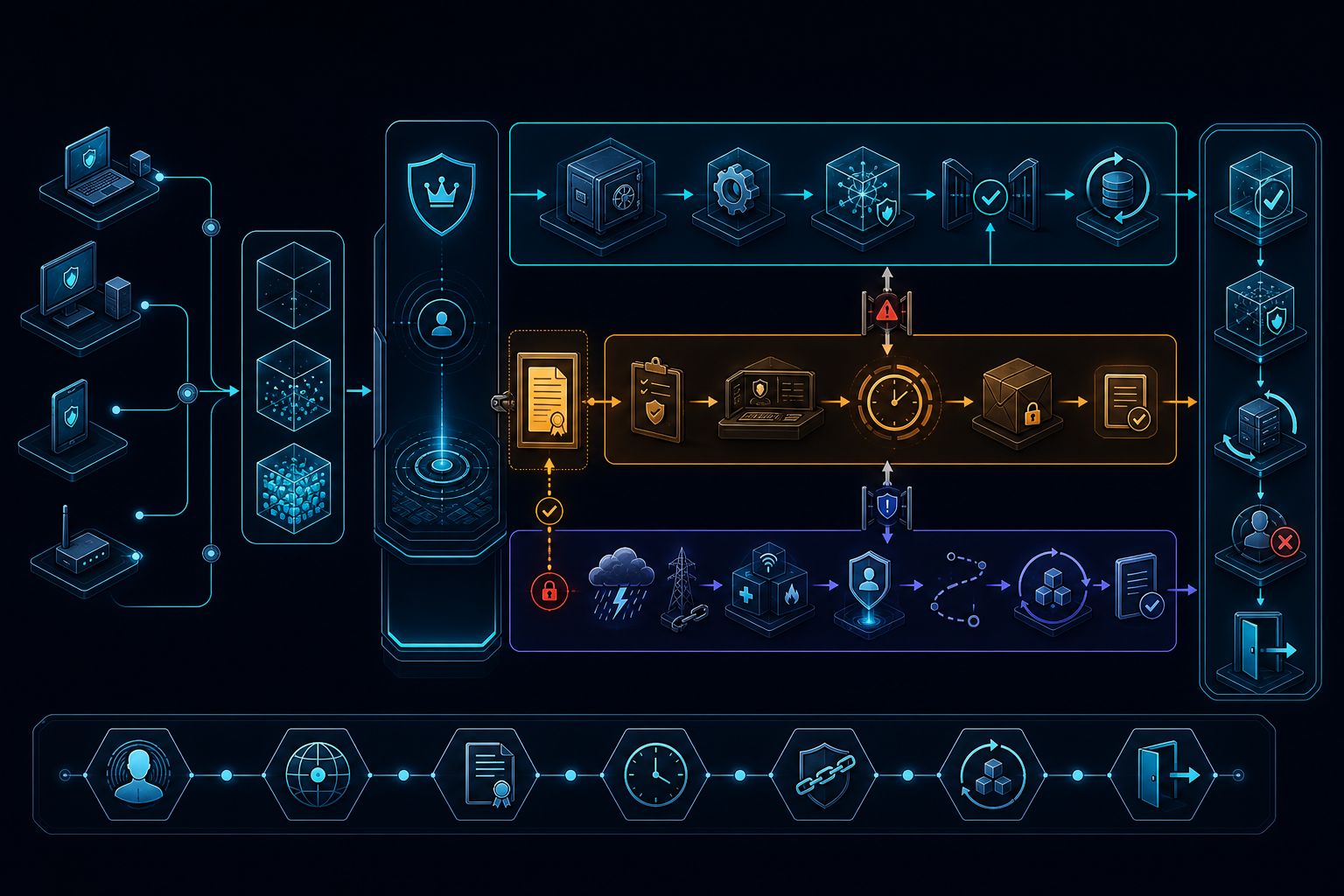
Louisiana outsourcing at a glance
| Buyer condition | Decision before outside-U.S. work | Evidence to retain |
|---|---|---|
| Ordinary private software, automation, data, or AI project | Apply the buyer’s real commercial, customer, data, sector, export, security, IP, incident, and continuity requirements; do not import a public-body chapter merely because the buyer operates in Louisiana | Entity and project perimeter, named team, work locations, systems, data map, access, contract, release authority, incident plan, continuity test, and exit record |
| Supplier maintains computerized data it does not own | Classify the Louisiana personal-information facts and create an immediate owner/licensor alert path that preserves the owner’s decision authority | Owner and maintainer roles, fields, residency hypothesis, chronology, evidence, notification acknowledgment, investigation support, decisions, and retained artifacts |
| Buyer owns or licenses affected computerized data | Preserve facts for the buyer’s qualified breach, harm, law-enforcement, resident, Attorney General, communications, and recovery decisions | Incident chronology, acquisition-and-access facts, affected-person method, reasonable-security evidence, harm analysis, notice artifacts, delay rationale, recovery, and five-year record where applicable |
| Service may manage a Louisiana public body’s IT infrastructure or end-user systems | Test the exact service against the statutory definition before proposal, award, access, subcontracting, or international staffing | Public-body identity, system inventory, service description, remote-management and operational-control facts, exclusions, reviewer decision, registration status, renewal, and material-change owner |
| Provider may assume operational control of public-body cybersecurity monitoring and management | Treat the managed-security-service perimeter and registration status as a stop gate; read the exact contract and do not rely on a generic vendor label | Written agreement, operational-control matrix, registration evidence, good-standing check, contract authority, systems, identities, locations, subcontractors, and approval |
| Public-body contract expressly incorporates the provider chapter | Pre-wire the Louisiana Fusion Center route, a 24-hour incident clock, a ten-calendar-day ransom-payment clock, impacted-body identity, internal approvals, and update cadence | Signed incorporation text, trigger guide, discovery record, actual-knowledge facts, impacted body, contact test, submission receipt, payment decision record, updates, and closeout |
| A tropical system, flood, power loss, evacuation, or telecom failure threatens delivery | Activate continuity by essential function and authority; keep operational disruption, security signal, and legal notification paths distinct but able to cross-escalate | Hazard signal, personnel status, systems, alternate work locations, communications, delegated authority, recovery objectives, immutable artifacts, decision log, and reconciliation |
| Work will be performed outside the United States | Name the entity, every contributor and city, maintained time zone, tool, system, data path, subcontractor, and decision owner; never treat “offshore team” as one undifferentiated actor | Named-team roster, work-location manifest, IANA zones, identity-bound access, tool and subprocessor register, handoff packets, logs, approvals, and changes |
| Engagement or subprocessor ends | Return control and prove that access, data, artifacts, operational authority, and recovery dependency have reached the approved end state | Repository and infrastructure transfer, credentials revoked, secrets rotated, data returned or destroyed, backups aging out, subprocessor evidence, restoration test, and buyer acceptance |
This is an operating triage, not a conclusion that a buyer, supplier, service, system, incident, person, or dataset is covered. Louisiana’s general breach chapter and its public-body managed-provider chapter use different defined terms, roles, triggers, and authorities. The signed contract can add obligations or activate the public-body reporting chapter. A qualified reviewer should decide the applicable perimeter from the actual facts; the delivery system should make those facts available quickly.
The distinct Louisiana model: a three-lane incident and continuity relay
Louisiana creates a useful outsourcing lesson: one supplier signal may need to enter several decision systems, but those systems should not be collapsed into one universal “breach clock.” Build a relay with three independent lanes.
- Commercial and private-data lane. The buyer and supplier follow the project contract and incident plan. When Louisiana personal information may be involved, preserve the owner/licensor and maintainer roles, investigation facts, statutory definitions, and decision record under the general database-security chapter.
- Public-body managed-provider lane. Determine whether the buyer is a statutory public body, the supplier is a statutory provider, the service is within the chapter, registration and good standing are current, and the signed contract expressly incorporates the chapter’s reporting requirements. If activated, test the Louisiana Fusion Center route and the stated clocks before production.
- Continuity lane. A weather or infrastructure disruption activates essential-function, personnel-safety, alternate-work, communications, authority, recovery, and reconciliation procedures. A disruption may expose a security event, and a cyber incident may disrupt service, but neither label should be assumed without evidence.
The buyer needs one authority console that can receive a common evidence capsule and route it without erasing the distinctions. The console is a documented responsibility system, not necessarily a new software product.
| Lane | Entry signal | Primary decision owner | Supplier action | Completion evidence |
|---|---|---|---|---|
| Commercial/private data | Suspicious access, disclosure, loss, integrity failure, credential compromise, or other agreed event | Buyer incident commander with qualified security, privacy, legal, customer, insurer, and executive owners | Alert immediately, preserve, contain within authority, provide scheduled facts, and avoid unauthorized notice or public statements | Timeline, custody, scope, decisions, notices where required, recovery, customer actions, after-action work, and retained record |
| Public-body managed provider | Potential statutory cyber incident affecting the public body, or ransom-payment fact, within an expressly incorporating contract | Named provider and public-body incident authorities, with the Louisiana Fusion Center path defined by the statute and contract | Preserve actual-knowledge and discovery facts, identify the impacted body, submit through the tested route within the applicable activated period, and retain receipts | Contract text, perimeter decision, clock record, submission, receipt, updates, payment record if any, recovery, and closeout |
| Continuity | Forecast, warning, evacuation, facility loss, staffing disruption, network or power failure, supplier-region event, or other approved activation threshold | Buyer continuity lead and essential-function owners | Account for people, protect systems, shift only authorized work, use alternate communications, preserve artifacts, and reconcile when normal operations resume | Activation and stand-down decision, resource status, alternate-operation log, essential-function results, recovery objectives, reconciled changes, and lessons |
The relay should work in both directions. A continuity team that finds suspicious encryption must reach incident command immediately. An incident commander who isolates an environment must tell continuity owners which essential functions are unavailable and which alternatives are authorized. Neither team should make the other’s legal or operational decisions by accident.
Classify the service before classifying the provider
Labels such as “software agency,” “cloud consultant,” “security partner,” “staff augmentation,” “MSP,” or “offshore developer” do not decide the Louisiana public-body perimeter. Start with the actual buyer, agreement, functions, control, and systems.
The current definition section describes a managed service provider as an entity that manages a public body’s IT infrastructure or end-user systems, subject to the stated communications-service exclusion. It describes a managed security service as outsourced network and system security under a written agreement in which the third party assumes operational control of cybersecurity monitoring and management. The text excludes cybersecurity consulting and a customer-managed service purchased from the provider. A “provider” for the chapter is a managed service provider or managed security service provider requiring remote management or operational control of a public body’s network or end-user systems.
That language makes control design more important than marketing terminology. Create a service-perimeter record with:
- the exact public body, contracting entity, signatory, procurement authority, systems, owners, and users;
- each service, deliverable, environment, identity, privilege, management interface, and support channel;
- whether the supplier recommends, builds, configures, monitors, administers, remotely manages, or assumes operational control;
- who approves alerts, policy, detection logic, configuration, identity changes, containment, release, restoration, and exceptions;
- whether the service is customer-managed, provider-managed, jointly operated, consulting-only, development-only, or changing over time;
- every parent, affiliate, subcontractor, model provider, cloud provider, support provider, and outside-U.S. contributor touching the service;
- the written agreement, order, statement of work, amendments, incorporated documents, definitions, and order of precedence; and
- the qualified perimeter owner, decision, date, assumptions, unresolved questions, and change triggers.
Do not structure a service to evade a classification. Structure it so authority and evidence are accurate. If a project begins as consulting and later adds remote administration, the buyer and provider should stop, reclassify the service, address registration and contract consequences where applicable, approve the changed system boundary, and update incident and continuity routes before the new control starts.
Separate advisory work from operational control
An international engineering team can produce architecture options, detection content, automation, tested infrastructure code, documentation, synthetic test results, or remediation proposals without necessarily receiving production operational control. Whether that model is suitable depends on the actual procurement, contract, data, export, security, access, and service facts.
Use a modular boundary:
| Work package | Possible international contribution | Buyer-controlled gate |
|---|---|---|
| Architecture or threat-model work | Options, assumptions, diagrams, abuse cases, control recommendations, and implementation plan using approved inputs | Buyer security and architecture owners decide policy and approve the protected implementation path |
| Software or infrastructure module | Code, tests, dependency record, build recipe, configuration proposal, and provenance produced without prohibited production access | Buyer-controlled repository, scanning, review, signing, deployment, observation, and rollback |
| Detection-content development | Queries, rules, parsers, dashboards, test fixtures, and false-positive analysis against synthetic or approved data | Authorized owner validates data exposure, tuning, production activation, alert routing, and ongoing maintenance |
| Incident-support preparation | Runbooks, evidence-capsule template, contact test, tabletop scenario, and recovery scripts | Buyer and qualified incident owners retain incident classification, notice, law-enforcement, ransom, public statement, and restoration authority |
| Production managed service | Only if the procurement, registration, signed contract, system and location approvals, identities, subcontractors, and controls expressly permit it | Named public-body and provider authorities continuously verify the activated perimeter and evidence |
Artifact delivery is not a loophole. Source data, prompts, logs, screenshots, test fixtures, repositories, build services, remote support, and model tools can expose protected information or create operational influence. Record the real path.
Make registration a lifecycle control
The current Louisiana registration provision addresses providers performing the stated public-body work. It describes an initial filing with entity, contact, service-of-process, ownership, officer, director, and organizational-document information; a two-year registration term; a renewal application ninety days before expiration; and material-change notice within sixty days. The Secretary of State maintains a provider page and filing form. The statute limits public disclosure of certain registration information, while allowing the stated public-body request path.
Do not reduce this to “vendor uploaded a certificate once.” Build a lifecycle record:
| Control | Owner question | Evidence |
|---|---|---|
| Initial classification | Does the exact service and control model fit a statutory provider category? | Perimeter memo, systems, functions, control matrix, written agreement, reviewer, and decision |
| Filing | Is the correct legal entity registered with complete current information? | Filed form, organizational documents, acknowledgment, effective and expiration dates, and controlled evidence location |
| Good standing | Is the registration current at proposal, award, access, renewal, service change, and material incident? | Dated check, source, checker, result, exceptions, and follow-up |
| Renewal | Is the ninety-day lead time in the operational calendar? | Renewal owner, early reminders, filing, receipt, expiration buffer, and service-continuity plan |
| Material change | Did ownership, officers, directors, entity, contact, process agent, service, or another filed fact change? | Change signal, applicability review, supporting documents, filing date, acceptance, contract impact, and public-body notice |
| Subcontractor change | Does the added party perform a covered service, change remote management or operational control, or invalidate an approved system/location boundary? | Subcontractor entity, work, locations, access, registration decision, contract approval, security review, and updated incident path |
| Exit or lapse | What happens before registration expires, is revoked, or no longer supports the service? | Stop conditions, access removal, alternate operator, artifact transfer, data return, restoration test, and public-body acceptance |
For managed security services, the current § 2115 says a public body shall not enter a contract with a provider that has not registered or renewed and states that such a contract is null and void. That is not a risk to hide in a renewal spreadsheet. Treat registration as a pre-contract and pre-continuation gate with qualified procurement and legal ownership.
Activate the public-body reporting route from signed text
The current § 2114 says that, to the extent a provider has actual knowledge of a cyber incident impacting a public body, it shall notify the Louisiana Fusion Center within 24 hours of discovery. It separately addresses reporting a cyber-ransom or ransomware payment within ten calendar days when the stated facts and actual knowledge exist. The notification includes the impacted body’s name.
The same section says a public body shall include these requirements in its provider contracts and that the provider is required to comply only to the extent the contract explicitly incorporates the chapter. Preserve both halves. Do not claim every supplier incident in Louisiana has a 24-hour Fusion Center clock, and do not omit the clock because a sales summary never mentioned it. Read the executed contract.
Create a contract-activation card containing:
- public body and covered provider entities;
- exact agreement, order, amendment, incorporation language, effective dates, definitions, and order of precedence;
- systems, services, identities, remote-management and operational-control boundary;
- statutory cyber-incident and ransomware concepts as reviewed for the service;
- what records discovery and actual knowledge, by whom, and in which authoritative timeline;
- Louisiana Fusion Center channel, verified contact date, backup method, approved submitters, and receipt location;
- impacted-body name and approved identifying text;
- internal alert threshold that is faster than the outside limit and does not wait for a completed legal analysis;
- buyer, provider, counsel, insurance, forensics, communications, law-enforcement, payment, restoration, and executive authority;
- time-zone, outage, alternate-communications, and after-hours behavior;
- initial fact minimum, uncertainty marking, next-update time, corrections, supplements, and closeout; and
- tabletop date, failures, remediation owner, and retest.
Use one progressive evidence capsule
The first alert will be incomplete. Require a small truthful capsule that becomes richer without rewriting history:
- earliest observed signal and who observed it;
- detection and escalation timestamps with maintained zones;
- affected or possibly affected public body, service, systems, identities, data, and locations;
- discovery and actual-knowledge facts, clearly separated from conclusions;
- suspected exfiltration, modification, deletion, acquisition, access, encryption, or operational impact;
- containment already taken and the authority for it;
- evidence locations, integrity controls, log gaps, and preservation owner;
- supplier, subcontractor, cloud, model, support, and outside-U.S. contributor involvement;
- ransom demand or payment facts, decision owner, and uncertainty;
- help needed, next update, communications restriction, and safe callback route.
Keep every version. A changed understanding should appear as a timestamped correction or supplement, not a silently edited initial record. The purpose is fast decision support, not premature certainty.
Keep the general Louisiana data path separate
Louisiana’s general database-security chapter applies its own definitions and facts. The current § 3074 addresses reasonable security procedures appropriate to the information and reasonable destruction steps for records no longer retained. It separates the owner/licensor path from the path for a person or agency maintaining computerized data it does not own.
For an outsourced product, preserve that role separation operationally:
| Role | Operational responsibility | Evidence returned to the decision owner |
|---|---|---|
| Buyer that owns or licenses data | Maintains the authoritative data inventory, resident and field logic, qualified legal decision, notice authority, customer relationship, and recovery acceptance | Supplier facts, system records, population method, evidence custody, containment, restoration tests, and residual-risk statement |
| Supplier maintaining buyer data | Alerts the owner/licensor immediately under the contract’s credible-event threshold, preserves facts, maps systems and subprocessors, supports investigation, and acts only within response authority | Earliest signal, acquisition-and-access evidence, affected fields and people hypothesis, identities, locations, logs, changes, copies, backups, and updates |
| Supplier using its own operational data | Determines its own role and applicable duties for its systems while coordinating contractual and shared-event facts | Service telemetry, identity data, support records, subprocessor events, notices and decisions that can affect the buyer, and remediation |
The statute’s outer timing language is not a recommended supplier alert SLA. The supplier should alert the buyer as soon as an agreed credible signal is reached, even when no one yet knows whether the statutory definition, unauthorized acquisition and access, Louisiana residency, personal-information combination, harm analysis, law-enforcement delay, or notice requirement is satisfied.
The current text also addresses a written no-reasonable-likelihood-of-harm determination and supporting documentation retained for five years when that path is used. The Louisiana Attorney General maintains guidance describing Attorney General notice when resident notice is required, including its administrative timing and affected-resident information. Those decisions belong to qualified owners. The provider’s system must preserve the facts and deliver them securely; it should not declare “no notice required” in an incident ticket without authority and supporting analysis.
Design continuity for Louisiana disruptions
Louisiana’s official emergency-operations materials emphasize continuity plans, essential functions, alternate arrangements, resource status, key personnel, records, communications, and sustained emergency operations for state agencies. A private company should not misrepresent that state plan as a universal legal mandate. It can still use the underlying continuity discipline because a named, exercised operating plan is more useful than a vendor promise to be “distributed.”
Build continuity around failure domains, not around country labels. A U.S. team and an international team can share the same cloud region, identity provider, repository, model account, telecom dependency, manager, payroll operator, or decision bottleneck. Geographic separation without system and authority separation may add no resilience.
Map essential functions and minimum authority
For each essential function, record:
- service and customer outcome;
- maximum tolerable interruption, recovery time objective, recovery point objective, and evidence basis;
- people, roles, skills, decision authority, backup authority, sustainable hours, and contact methods;
- facilities, devices, power, telecom, identity, repositories, cloud, data, models, vendors, payment, and physical dependencies;
- approved alternate locations and whether data, customer, public-body, export, or contract rules permit them;
- minimum safe operating mode, prohibited shortcuts, manual workaround, and backlog handling;
- immutable or independently accessible artifacts needed to recover;
- supplier and buyer changes that may proceed during degraded operation and those that must stop;
- status cadence, customer and public-body communications authority, reconciliation owner, and stand-down criteria; and
- last exercise, measured results, open gaps, remediation, and next test.
Do not improvise offshore access during an evacuation. If a contributor’s normal location is unavailable, the alternate location, device, network, identity, data path, hours, and authority need prior approval. Otherwise the safe fallback may be artifact-only work, synthetic data, documentation, a temporary stop, or a different pre-approved team.
Exercise combined but distinct scenarios
Run at least these scenarios:
- A Gulf weather warning closes the buyer’s office while the international team can still work, but no Louisiana release owner is available.
- A supplier location loses power and connectivity after receiving approved work but before returning a signed artifact and test record.
- The buyer loses its identity provider while the code host remains reachable through cached sessions.
- A weather-driven failover changes cloud region or support personnel and may violate an approved data or contract boundary.
- Ransomware symptoms appear during an outage, making it unclear whether files are inaccessible because of infrastructure loss or malicious encryption.
- A public-body provider’s normal reporting channel is unavailable while an expressly incorporated clock may be running.
- A provider manager is unreachable and a backup must prove delegated authority rather than merely possessing credentials.
- Normal operations resume, but changes made in alternate systems must be reconciled, scanned, reviewed, accepted, and logged before release.
Score detection, people safety, authority, evidence preservation, essential-function performance, secure degraded operation, clock handling, communications, recovery, and reconciliation. A quick demo recovery that bypasses identities, data boundaries, approvals, or audit evidence is a failed test.
Schedule the named international team
Most Louisiana buyers use the America/Chicago IANA zone. Calculate overlap for the actual buyer and contributor cities and the project dates; daylight-saving transitions and local holidays can differ. A schedule should distinguish routine collaboration, decision coverage, incident coverage, and continuity coverage.
| Work | Live overlap | Asynchronous packet | Authority |
|---|---|---|---|
| Discovery and architecture | Enough overlap for product, risk, and tradeoff decisions | User evidence, assumptions, options, diagram, recommendation, unresolved questions, and decision request | Buyer product and technical owners |
| Modular implementation | Short unblock, review, and acceptance windows | Scope, interfaces, code, tests, provenance, dependencies, risks, demo, and next authorized step | Buyer accepts through its controlled repository and release process |
| Public-body perimeter question | Official procurement, contract, and security channels | Exact document, service, control fact, registration question, location, proposed resolution, and impact | Named authorized public-body and provider owners |
| Production release | Louisiana-side or otherwise approved consequential coverage | Immutable artifact, scans, tests, migration, observation, rollback, and ownership record | Named release authority |
| Incident | Immediate out-of-band path with tested backups | Progressive evidence capsule, acknowledgement, decision record, scheduled updates, and corrections | Buyer/provider incident authority; statutory and contract routes stay explicit |
| Continuity | Activation-specific coverage, not an assumption of unlimited availability | People and resource status, essential-function priorities, approved alternate path, changes, risks, and reconciliation plan | Continuity lead and function owners within delegated authority |
Nearshore teams in Mexico or Colombia may offer broad Central-time overlap for discovery, operations, and incident collaboration. Teams in Europe can provide an early-day handoff; teams in India or the Philippines can support follow-the-sun engineering when decision packets and morning acceptance are strong. These are operating hypotheses, not universal rankings or assurances about a provider. Public-body, customer, data, export, insurance, sector, and contract requirements can narrow the eligible tasks, people, systems, and locations.
Select a provider using evidence
Outsourcing.ai can directly deliver commercial software, automation, data, and AI projects. For Louisiana public-body work or systems that may enter the managed-provider perimeter, we would first require the exact procurement and contract facts, the qualified service classification, registration and location decisions where applicable, and an approved access design. We will not imply state registration, eligibility, authorization, or completed government work.
Compare every provider on the same named-team record:
- exact provider entity, signatory, registration status where applicable, ownership and subcontract chain, contributors, cities, zones, availability, and change process;
- service-perimeter understanding, including recommendations, implementation, remote management, operational control, customer-managed services, production support, and exclusions;
- public-body, private-data, customer, sector, export, and contract boundaries;
- repositories, cloud, model, data, logging, backup, support, identity, build, release, and recovery architecture;
- secure-development practices, dependency and provenance evidence, vulnerability response, artifact integrity, and buyer-controlled release;
- incident detection, immediate relay, preservation, actual-knowledge and discovery records, contact testing, clock behavior, recovery, and after-action improvement;
- continuity across people, authority, systems, facilities, telecom, locations, vendors, and correlated failure domains;
- IP and confidentiality chain for every employee, contractor, subcontractor, model, dataset, and reused component;
- complete cost including buyer coordination, security, domestic protected work, international eligible work, tools, travel, standby coverage, exercises, recovery, transition, and uncertainty; and
- handover without provider-controlled domains, repositories, production accounts, secrets, model accounts, backups, observability, documentation, or recovery paths.
Do not publish customer, software-company, model-provider, or platform names as clients, partners, employers, certifications, or endorsements without evidence and written naming permission. A provider can truthfully describe its tool stack and implementation experience without borrowing another company’s brand credibility.
Build the contract as an operating specification
Have qualified counsel and procurement owners review the actual facts. The operating documents should connect:
- entities, authorized signers, public-body status, service classification, registration, term, renewal, and material-change controls;
- scope, deliverables, acceptance, service levels, priority, maintenance, support, remote management, operational control, and exclusions;
- named people, work locations, hours, substitutions, subcontractors, travel, remote access, and alternate locations;
- systems, data, models, tools, source code, build services, credentials, logs, backups, support, telemetry, and approved uses;
- privacy, security, confidentiality, export, sector, customer, public records, insurance, and public-body requirements;
- IP ownership, background materials, third-party components, open source, model outputs, training use, moral-rights questions, assignment evidence, and infringement process;
- incident definitions, immediate internal signal, preservation, roles, activated statutory and contractual paths, communications, recovery, liability, and cooperation;
- continuity, essential functions, recovery objectives, degraded-operation rules, alternate work, exercises, correlated dependencies, and reconciliation;
- price, currency, tax allocation, tools, cloud and model consumption, expenses, change control, invoicing evidence, suspension, termination, and transition; and
- repositories, accounts, documentation, data return or destruction, backup expiry, credential removal, restoration, knowledge transfer, and exit acceptance.
A link to standard provider terms should not silently add a new data use, foreign support path, renewal, liability rule, model-training right, or subcontractor inconsistent with the signed documents. Record every incorporated document and its version.
Run a representative paid pilot
Select a bounded vertical slice. Use synthetic or specifically approved data and a buyer-controlled repository. A public-body pilot must itself be authorized; a “free proof of concept” is not a workaround for procurement, registration, contract incorporation, data, system, or location controls.
The pilot should test:
- service classification from actual functions and control, not the proposal label;
- one international artifact moving through buyer scanning, review, signing, deployment, observation, and rollback;
- rejection of an unapproved person, location, device, model, subprocessor, data field, or management action;
- registration-status and contract-incorporation checks before a simulated public-body production task;
- a supplier security signal becoming a versioned evidence capsule and reaching the correct private and public-body decision owners;
- the tested Louisiana Fusion Center route in a tabletop without sending a false real incident report;
- a weather disruption that removes the primary Louisiana decision owner and forces the team to use bounded delegated authority;
- recovery from independent artifacts without relying on the provider’s account or unavailable manager; and
- full exit: repository, infrastructure, model and cloud accounts, documentation, data, evidence, credentials, backups, and restoration.
Weight authority, classification, data and system boundary, technical quality, evidence, incident response, continuity, secure collaboration, release, and exit as minimum gates. A polished feature cannot average out unregistered covered work, an unauthorized production action, missed escalation, prohibited access, or unrecoverable dependency.
Red flags
- “Louisiana compliant” with no named statute, service perimeter, contract, system, evidence, reviewer, or date.
- Treating every software developer as a statutory managed provider—or assuming an “MSP” marketing label automatically resolves the definition.
- Entering a covered managed-security-services contract without a current registration and good-standing gate.
- Assuming the 24-hour Fusion Center route applies to every Louisiana supplier incident without the public-body, provider, cyber-incident, actual-knowledge, discovery, and express-incorporation facts.
- Ignoring an expressly incorporated route because the master agreement or sales deck omits it.
- Copying a statutory outer notification period into the supplier’s first-alert SLA.
- Waiting for final breach confirmation before telling the data owner or buyer about a credible event.
- Equating U.S. cloud hosting with U.S.-only access while outside-U.S. developers, support staff, model providers, logs, backups, or management interfaces remain in the path.
- Moving work to an unapproved hotel, home, state, or country during a storm without rechecking device, network, data, contract, and authority boundaries.
- Calling geographic distribution resilient when every team depends on the same identity provider, repository, release owner, or cloud account.
- Allowing continuity staff to suppress a security escalation or incident staff to improvise an unapproved continuity path.
- Shared credentials, unverifiable contributor locations, mutable incident records, missing contact tests, or no receipt custody.
- Provider-owned domains, repositories, infrastructure, observability, model accounts, or backups that the buyer cannot independently recover.
- Customer or technology-company logos used as proof without evidence and written naming permission.
- A generic hurricane checklist with no essential functions, authority, systems, recovery objectives, secure alternate operations, or reconciliation test.
Frequently asked questions
Can a private Louisiana company outsource software development overseas?
Yes, subject to the actual contract, data, customer, sector, export, security, IP, insurance, tax, employment, and other facts. The Louisiana public-body managed-provider chapter should not be imported into an unrelated private engagement solely because the buyer is in Louisiana. A private buyer still needs a named-team, data, system, incident, continuity, and exit design.
Does every vendor working for a Louisiana public body have to register as an MSP?
Do not decide that from “vendor” or “IT work.” The current chapter uses defined public-body, managed-service-provider, managed-security-service-provider, managed-security-service, provider, remote-management, and operational-control concepts and states exclusions. Review the exact service and written agreement with qualified owners before proposal, contract, or access.
Can an overseas team support a Louisiana public body?
The state chapter discussed here does not by itself answer whether a particular international person, task, system, or location is permitted. The procurement, solicitation, executed contract, registration, agency policy, data, security, public-record, export, federal-flowdown, sector, insurance, and other facts may control. Split work only after the responsible public body authorizes the actual boundary.
Is a cybersecurity consultant a managed security service provider?
The current definition expressly distinguishes the stated managed security service from cybersecurity consulting and customer-managed services. But actual functions can change. A consultant that later assumes operational control or remote management requires a fresh perimeter decision before that work begins.
Does Louisiana require every cyber incident to be reported within 24 hours?
No universal claim is supported by the public-body provider section. The current text addresses a provider’s actual knowledge of a defined cyber incident impacting a public body and requires the public-body contract to explicitly incorporate the chapter for the provider obligation. Other contracts, laws, regulators, insurers, or customers may create different paths. Operationally, alert the buyer immediately at the agreed credible-signal threshold so qualified owners can decide.
Who reports to the Louisiana Fusion Center?
For an activated public-body provider path, identify the approved submitter from the contract and response plan, test the current channels shown by the Secretary of State, preserve the impacted-body name, and retain submission receipts. Do not send a false report during a tabletop. Use a clearly labeled simulation and validate contacts through an approved administrative method.
What is the ten-day ransomware rule?
The current § 2114 separately addresses reporting a cyber-ransom or ransomware payment within ten calendar days when a provider has the stated actual knowledge and the incident impacts a public body. Ransom decisions can implicate many other legal, law-enforcement, sanctions, insurance, safety, operational, and executive questions. The delivery team should preserve facts and follow named authority; it should not improvise payment or notification.
How fast should an overseas supplier alert a Louisiana buyer?
Immediately under the contract’s credible-event threshold, using a tested out-of-band route and a progressive evidence capsule. That is deliberately faster than waiting for a completed statutory classification. The buyer needs time to preserve evidence, control the system, investigate, coordinate, and decide which private, public-body, contractual, regulatory, customer, insurer, or law-enforcement paths apply.
Does a storm justify emergency production access from anywhere?
No. Continuity should preserve essential functions within pre-approved identity, device, network, location, data, system, and authority boundaries. If those conditions cannot be met, the safe mode may narrow work, use synthetic data, deliver artifacts only, pause releases, or activate another approved provider. Exercise the decision before hurricane season rather than improvising during an outage.
Which outsourcing country is best for a Louisiana company?
There is no universal best country. Mexico or Colombia may offer useful Central-time overlap; India or the Philippines may support follow-the-sun work; Poland or another European location may fit an early-day handoff. Compare named people and actual cities against the work, system access, data, contract, continuity, IP, communication, and full-cost requirements. Use the nearshore-versus-offshore guide to frame the operating choice.
Can Outsourcing.ai deliver the project directly?
Yes. We can scope and deliver suitable commercial software, automation, data, and AI work directly. For sensitive or public-body systems, we first classify the work, protect the boundary, and obtain the required decisions. We will not claim registration, government approval, local staff, or customer relationships that are not documented and authorized for publication.
What should the first paid pilot prove?
It should prove that the named team can deliver one useful vertical slice while obeying service classification, access, data, location, evidence, release, incident, continuity, and exit rules. Include at least one rejected unauthorized request, one after-hours incident relay, one disruption with delegated authority, and one independent restoration. Use the project brief generator and provider scorecard to structure comparable evidence.
Decision checklist
- Identify the exact buyer, public-body status, contracting authority, provider entity, service, systems, data, users, and deliverables.
- Classify advisory, development, customer-managed, remote-management, and operational-control functions separately.
- Determine whether Louisiana provider registration and good standing apply to the actual service; record renewal and material-change owners.
- Read the signed contract for express incorporation, definitions, amendments, order of precedence, and additional incident obligations.
- Build separate private-data, public-body provider, and continuity lanes with a shared evidence capsule and named authority console.
- Test the current Louisiana Fusion Center administrative contact path without submitting a false incident report.
- Define immediate supplier alert, discovery and actual-knowledge records, affected-body identity, clock ownership, updates, correction, receipt, and closeout.
- Map Louisiana personal-information custody, owner/licensor and maintainer roles, reasonable-security and destruction evidence, qualified decision authority, and record retention.
- Record every contributor, city, IANA zone, employer or contract chain, tool, model, system, access, subprocessor, and alternate location.
- Split protected production control from internationally eligible modular work and prove the artifact bridge.
- Define essential functions, recovery objectives, people and authority backups, correlated dependencies, secure degraded operation, and reconciliation.
- Exercise a combined weather-and-security scenario, score it, remediate failures, and retest.
- Compare providers on named evidence, complete cost, secure development, incident behavior, continuity, and handover—not logos or generic certifications.
- Put repositories, infrastructure, production domains, identity, cloud and model accounts, observability, backups, and recovery under buyer control.
- Obtain factual, editorial, procurement, security, and qualified legal review for the exact release where required.
Pause when the team relies on a provider label, a weather slogan, a generic compliance certificate, a U.S. hosting statement, or an incident clock copied without its perimeter. The strongest Louisiana outsourcing model is the one that can show who controls each system, which signed text activates each route, how incomplete facts reach the correct authority, how essential work continues without unsafe improvisation, and how the buyer restores and exits without the provider.
Evidence ledger
Sources used on this page
- La. R.S. 51:2112 — Managed provider definitions — Louisiana State Legislature. Supports: Current definitions of cyber incident, Louisiana Fusion Center, managed security service, managed service provider, provider, public body, remote management, operational control, and the consulting or customer-managed exclusions stated in the chapter. Direct source; independently sourced; commercial relationship: none. Verified 8/15/2026 by Outsourcing.ai Editorial Team. Accessed 8/15/2026.
- La. R.S. 51:2113 — Requirements for doing business — Louisiana State Legislature. Supports: Current registration and good-standing requirement, registration contents, two-year term, renewal timing, material-change path, and limited disclosure of registration information. Direct source; independently sourced; commercial relationship: none. Verified 8/15/2026 by Outsourcing.ai Editorial Team. Accessed 8/15/2026.
- La. R.S. 51:2114 — Cyber-incident and ransom-payment notification — Louisiana State Legislature. Supports: Current 24-hour cyber-incident and ten-calendar-day ransom-payment reporting text, required impacted-body identity, and express-contract-incorporation condition. Direct source; independently sourced; commercial relationship: none. Verified 8/15/2026 by Outsourcing.ai Editorial Team. Accessed 8/15/2026.
- La. R.S. 51:2115 — Prohibition on contracting with a provider — Louisiana State Legislature. Supports: Current prohibition on a public body's managed-security-services contract with a provider that has not registered or renewed and the statute's null-and-void language. Direct source; independently sourced; commercial relationship: none. Verified 8/15/2026 by Outsourcing.ai Editorial Team. Accessed 8/15/2026.
- Managed Service Providers — Louisiana Secretary of State. Supports: Maintained registration page, filing and renewal directions, material-change process, and current Louisiana Fusion Center reporting channels for the statutory provider program. Direct source; independently sourced; commercial relationship: none. Verified 8/15/2026 by Outsourcing.ai Editorial Team. Accessed 8/15/2026.
- La. R.S. 51:3073 — Database Security Breach Notification Law definitions — Louisiana State Legislature. Supports: Current definitions used by Louisiana's general database-security-breach chapter, including the fact-specific breach and personal-information concepts. Direct source; independently sourced; commercial relationship: none. Verified 8/15/2026 by Outsourcing.ai Editorial Team. Accessed 8/15/2026.
- La. R.S. 51:3074 — Protection and breach notification — Louisiana State Legislature. Supports: Current reasonable-security and destruction duties, owner and non-owner notification paths, timing and delay provisions, harm determination and five-year retention, and enforcement classification. Direct source; independently sourced; commercial relationship: none. Verified 8/15/2026 by Outsourcing.ai Editorial Team. Accessed 8/15/2026.
- Data Security Breach Notification — Louisiana Office of the Attorney General. Supports: Maintained Attorney General reporting guidance, current ten-day-after-resident-notice administrative reporting statement, required affected-resident names, and online reporting route. Direct source; independently sourced; commercial relationship: none. Verified 8/15/2026 by Outsourcing.ai Editorial Team. Accessed 8/15/2026.
- State of Louisiana Emergency Operations Plan — Louisiana Governor's Office of Homeland Security and Emergency Preparedness. Supports: Official continuity methodology for state agencies, including continuity plans, essential records, resource status, alternate operations, key-person notification, and sustained emergency staffing; used as a public-work reference rather than a universal private-company mandate. Direct source; independently sourced; commercial relationship: none. Verified 8/15/2026 by Outsourcing.ai Editorial Team. Accessed 8/15/2026.
- IANA Time Zone Database — Internet Assigned Numbers Authority. Supports: Maintained time-zone identifiers and transition rules for calculating dated overlap between Louisiana buyers and each outside-U.S. contributor city. Direct source; independently sourced; commercial relationship: none. Verified 8/15/2026 by Outsourcing.ai Editorial Team. Accessed 8/15/2026.
- Secure Software Development Framework — National Institute of Standards and Technology. Supports: Maintained secure-development methodology for supplier requirements, protected environments, software provenance, release integrity, vulnerability response, and buyer-supplier evidence. Direct source; independently sourced; commercial relationship: none. Verified 8/15/2026 by Outsourcing.ai Editorial Team. Accessed 8/15/2026.
- Incident Response Recommendations and Considerations for Cybersecurity Risk Management — National Institute of Standards and Technology. Supports: Current incident-response methodology for preparation, detection, response, recovery, improvement, and communications without replacing Louisiana law, an executed contract, or qualified incident advice. Direct source; independently sourced; commercial relationship: none. Verified 8/15/2026 by Outsourcing.ai Editorial Team. Accessed 8/15/2026.
- Directory of Intellectual Property Offices — World Intellectual Property Organization. Supports: Official destination-country intellectual-property office links for investigating contributor and assignment questions rather than assuming one Louisiana agreement resolves every jurisdiction. Direct source; independently sourced; commercial relationship: none. Verified 8/15/2026 by Outsourcing.ai Editorial Team. Accessed 8/15/2026.
Next scheduled review: October 15, 2026. Corrections: hello@outsourcing.ai.