
Hawaii buyer guide
Outsourcing software development from Hawaii
A Hawaii buyer guide to international software and AI outsourcing: expiring authority, overnight handoffs, incident relay, records disposal, and tested exit.
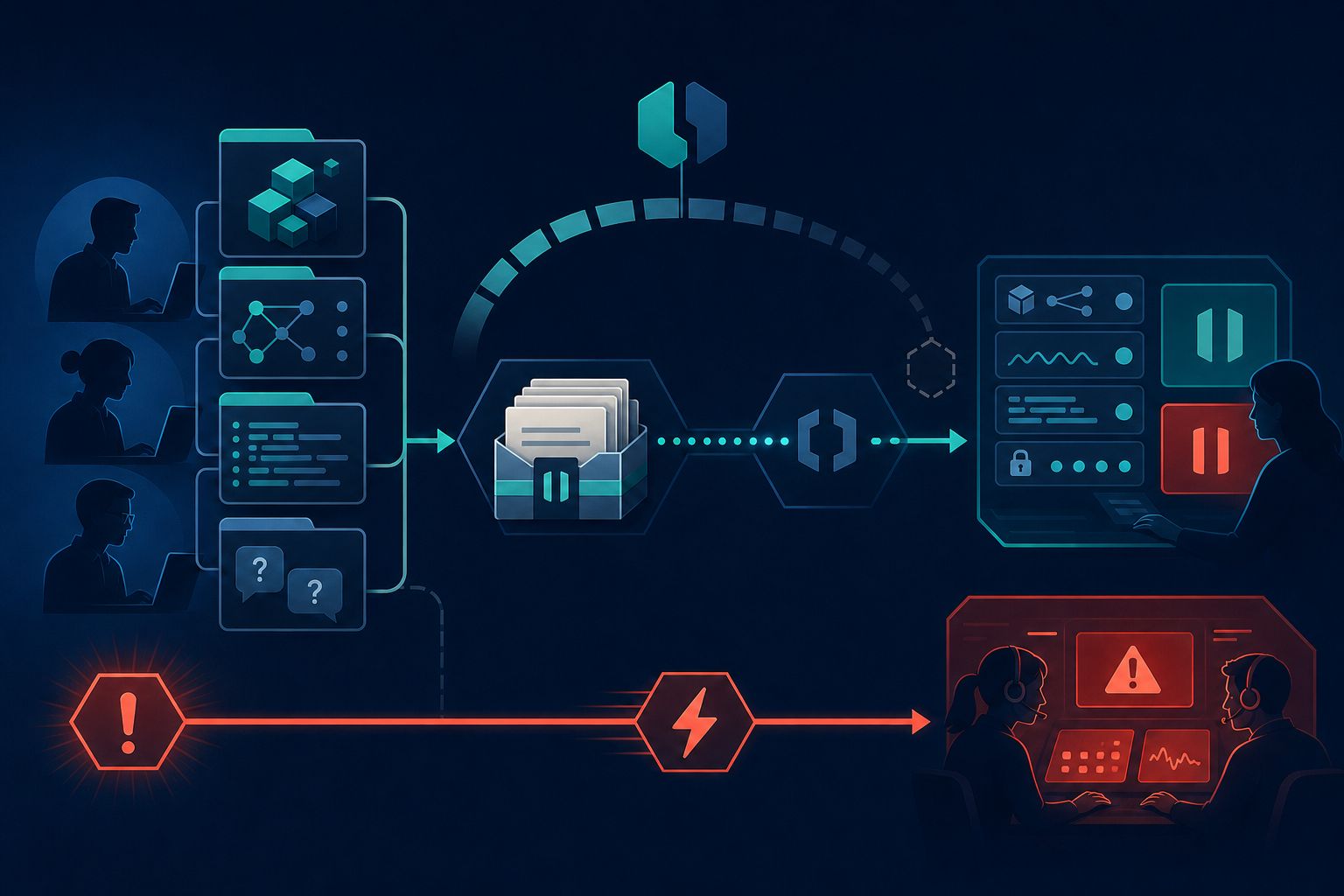
Hawaii outsourcing at a glance
| Buyer condition | Decision before outside-U.S. work | Evidence to retain |
|---|---|---|
| A bounded software feature uses synthetic or properly approved non-sensitive data | Define the outcome, acceptance tests, buyer repository, named team, tools, release boundary, and exit without manufacturing a regulated-data label | Work package, entity and contributor roster, country and city, architecture, data classification, pull request, tests, build provenance, acceptance, and handover |
| A provider will work while the Hawaii decision owner is unavailable | Issue an expiring authority capsule; do not rely on “use good judgment” or a perpetual chat message | Authorized action, prerequisites, maximum change, forbidden actions, evidence, rollback, owner, backup, start, expiry, acknowledgement, and closure |
| A release might become ready during Hawaii’s dark hours | Separate technical readiness from production authorization and define a safe default when approval expires or prerequisites change | Release candidate, immutable digest, test and security evidence, dependency record, environment, approver, validity window, deploy log, rollback result, and exception |
| A supplier sees a credible security signal | Bypass the ordinary handoff immediately, preserve facts, and act only within pre-approved containment authority | Earliest observation, system, account, data, tenant, access and acquisition indicators, evidence locations, containment, limitations, contacts, acknowledgement, and update schedule |
| The buyer owns or licenses Hawaii-resident personal information | Determine whether the facts enter chapter 487N and reserve affected-person, law-enforcement-delay, regulator, consumer-reporting-agency, and communications decisions for authorized owners | Role and data map, definition analysis, scope and restoration facts, population method, notice decision, approval, delivery record, OCP/CRA workstream, and supplements |
| A qualifying maintainer or possessor does not own or license the Hawaii-resident information | Build an immediate maintainer-to-owner incident interface; do not wait for a complete forensic report | Discovery time, owner/licensee directory, secure alert, acknowledgment, preserved artifacts, initial facts, known gaps, recurring updates, and cooperation log |
| A Hawaii government agency is the buyer or relevant data owner | Open the agency-specific privacy, reporting, procurement, records, security, and authority lane; do not apply it to private companies | Designated owners, governing contract and policies, system/data inventory, event report, notice copy, affected counts, delay record, corrective procedures, submission, and retention |
| A records-destruction business will dispose of covered records | Apply the specific due-diligence, written-contract, and monitoring analysis to that provider; do not substitute a generic deletion promise | Independent audit or other diligence, references, policies and procedures, contract, custody transfer, transport, destruction method, monitoring, exceptions, and completion evidence |
| A software or cloud supplier must delete project data at exit | Build a system-specific deletion and residual-copy test while separately deciding whether the records-destruction-provider path applies | Source inventory, replicas, backups, logs, tickets, exports, model artifacts, devices, subprocessors, legal holds, deletion jobs, expiry schedule, restore test, and buyer sign-off |
| The proposed provider, subprovider, tool, model host, or contributor country changes | Stop the affected access and rerun entity, data, rights, system, sanctions/export, clock, continuity, and authority review | Change request, old and new facts, risk delta, rights instruments, approvals, access changes, updated calendar, test result, effective date, and rollback |
This is operating triage, not a statement that every Hawaii buyer or international provider has the same legal role. The current statutory breach definition, applicability language, federal or sector overlays, contracts, and facts matter. Use qualified owners for legal conclusions. The buyer can still choose a faster, broader internal alert rule so that suspicious activity reaches the right people before anyone knows whether it is a statutory breach.
The distinct Hawaii model: put authority in escrow
Hawaii does not observe daylight saving time. That makes the buyer’s local clock stable, but it does not make the relationship stable. A mainland customer, continental-U.S. executive, or international delivery city may change clocks on a different date—or not change them at all. The interval between the people who build, approve, support, notify, and pay can therefore change while the Hawaii office hours stay fixed.
The weak response is to add meetings. That can create chronic after-hours work, hide missing documentation, and make one person the permanent bridge. The stronger response is asynchronous authority escrow: the buyer places a narrowly bounded decision right into the work system before it goes offline, and the system releases that right only while its conditions remain true.
An authority capsule should contain at least:
- Object: the exact issue, change, release candidate, environment, tenant, data set, or incident action covered.
- Purpose: the buyer outcome the action serves and the assumptions on which that purpose depends.
- Actor: the named person and legal entity allowed to act, plus whether another person may substitute.
- Permitted action: the smallest useful change, test, rollback, containment step, or recommendation.
- Prerequisites: accepted design, current branch, passing test set, approved data, dependency state, peer review, environment health, and any security or cost threshold.
- Prohibited action: new data recipients, unapproved tools, destructive remediation, architecture changes, customer communications, production deployment, training-data reuse, or another action the buyer retains.
- Evidence: the artifacts that must be attached before the permission becomes usable and after it is exercised.
- Blast radius: affected service, users, records, spend, duration, permissions, and recovery objective.
- Safe default: pause, preserve, roll back, isolate, queue, or continue a previously accepted operation when a condition fails.
- Time window: explicit start and expiry as machine-readable timestamps plus human-readable renderings in the buyer and actor zones.
- Revocation: the event, owner, and channel that can withdraw the capsule before expiry.
- Closure: result, deviations, evidence, next decision, and buyer acceptance.
This is not an electronic signature theory or a legal escrow product. It is a delivery control. The buyer is converting a vague instruction into a permission that software, people, and reviewers can inspect. The provider does not gain general authority merely because the buyer is asleep.
Use four capsule classes
| Capsule | Suitable use | Default at expiry | Never implied |
|---|---|---|---|
| Explore | Research a bounded question, produce alternatives, or test with synthetic data | Stop new exploration and return findings | Permission to change production, add a service, or reuse buyer data |
| Build | Implement an accepted design inside a named repository and environment | Preserve the branch and queue the decision packet | Permission to merge, release, change architecture, or exceed the data budget |
| Recover | Execute a pre-tested rollback, isolate a credential, scale a safe dependency, or restore from a named point | Hold the safest known state and escalate | Permission for destructive remediation, public statements, or evidence deletion |
| Release | Promote one immutable candidate after every listed prerequisite passes | Do not deploy; produce a fresh packet for reauthorization | Continuing deployment authority, a substitute artifact, or acceptance of changed facts |
The release capsule should be rare. Many teams can keep delivery moving overnight by granting explore and build authority while reserving production. If a genuine follow-the-sun release is valuable, require dual control: the provider demonstrates technical readiness and a separately authorized person releases the exact artifact. Do not make the same administrator the only builder, approver, deployer, and evidence custodian.
Add an expiry sentinel
An expiry timestamp in a document is easy to ignore. Connect it to the operating system. A lightweight sentinel can block a merge, disable a deployment job, mark a ticket as decision-required, revoke a temporary role, or alert the buyer when a capsule approaches expiry. It should also invalidate authority when a prerequisite changes: new commit, failed test, dependency update, environment drift, data-scope change, unapproved subprocessor, elevated cost, unresolved vulnerability, or altered customer condition.
The sentinel does not decide whether work is good. It prevents yesterday’s approval from silently governing today’s facts. Log the capsule identifier, artifact digest, actor, evaluated conditions, result, and timestamp. Keep the override path buyer-owned and review every override.
Design a decision-ready overnight handoff
An offshore handoff fails when the receiving team must reconstruct the question from chat, locate an unreviewed branch, and guess why the sender stopped. A Hawaii buyer should define the packet that must arrive before the supplier’s work window ends. The packet is evidence for a decision, not a daily activity diary.
Use a stable structure:
- Outcome state: what changed relative to the accepted baseline and which acceptance condition it advances.
- Artifact state: exact repository, branch, commit or immutable object, build, environment, data version, model version, and reproducibility instructions.
- Evidence state: tests, evaluation cases, security checks, review, provenance, performance observations, screenshots where useful, logs, and known limitations.
- Decision state: the smallest question the Hawaii owner must answer, available options, provider recommendation, consequences, and decision deadline.
- Risk state: new or changed data, services, access, dependencies, costs, threats, assumptions, incidents, or customer constraints.
- Authority state: capsule used, remaining permission, expiry, prohibited actions, safe default, owner, and backup.
- Queue state: work ready now, work blocked, work safely continuing, and work discarded or rolled back.
- Next receipt: who must acknowledge the packet, by when, and what happens if no receipt arrives.
Aim for small accepted increments. A large overnight batch increases review burden and makes rollback ambiguous. The provider should surface the highest-value uncertainty early enough for the buyer to decide during its own day, then use the capsule for bounded work. Measure accepted outcomes and decision latency rather than keystrokes or online presence.
Create three handoff lanes
- Normal lane. Planned work with a current capsule and no material change follows the ordinary evidence packet and next-window receipt.
- Decision lane. A changed assumption, failed prerequisite, design fork, cost threshold, data question, or expired capsule stops the affected action and queues a compact decision.
- Emergency lane. A credible security, safety, availability, fraud, privacy, or destructive-integrity signal bypasses both queues and reaches the on-call owners through the tested secure route.
Do not use severity labels as a reason to delay the first emergency fact. The provider may not yet know severity. The route can begin with “credible signal, classification pending” and then supply scheduled updates. The buyer should define what the provider may safely contain before acknowledgement: preserve volatile logs, suspend a suspected credential, isolate a workload, disable a compromised integration, or roll back a known release within stated conditions. Destructive reimaging, public notice, customer statements, broad data deletion, or another irreversible action should require the appropriate authority unless immediate safety demands otherwise and the contract addresses it.
Calculate Hawaii overlap from places, dates, and work types
Use Pacific/Honolulu for a Hawaii buyer location when it is correct for the actual people and system. Do not use a fixed manual offset in a recurring calendar or assume the provider’s country has one clock. Record every participating city and maintained IANA identifier. Calculate the project start, milestone, clock-transition, holiday, support, release, and incident dates.
The U.S. Department of Transportation says Hawaii does not observe daylight saving time. That stability creates a useful anchor, but relative overlap can still move when another U.S. or international location changes. Test dates on both sides of every relevant transition. Recalculate when a contributor travels, a subprovider changes, a customer authority joins, or a jurisdiction changes its rule.
Different work requires different live time:
| Work type | Live-overlap need | Asynchronous substitute | Buyer control |
|---|---|---|---|
| Discovery and ambiguous product decisions | Focused overlap with the actual product authority | Structured question, examples, constraints, decision record, and prototype artifact | Product owner chooses scope and acceptance |
| Bounded implementation | Often low after design acceptance | Small branch, tests, traceable decisions, and next-window packet | Architecture and data changes stop for review |
| Code or model review | Short targeted windows can help | Reviewable diff, evaluation set, provenance, threat notes, and reproducible commands | Buyer or independent reviewer accepts evidence |
| Production release | May be asynchronous only with mature gates | Immutable candidate, automated checks, capsule, dual control, monitoring, and rollback | Buyer retains release policy and override |
| Support | Depends on customer promise and service criticality | Queue, severity rubric, runbook, safe repair scope, and receipt | Buyer owns service promise and exception authority |
| Incident response | Immediate route plus deliberate decision windows | Secure signal, preserved evidence, known/unknown fields, update cadence, and backup roster | Authorized incident, legal, privacy, and communications owners decide |
Protect sustainable hours. A provider that promises universal Hawaii overlap may be assigning chronic night work to the delivery team. Ask for each named person’s local schedule, planned rotation, maximum on-call load, rest rule, backup, holiday coverage, and attrition protection. Test the actual roster. A polished account manager is not proof that the engineers, reviewers, data specialists, and responders can operate the model.
Separate operational alerts from Hawaii’s statutory breach path
Hawaii Revised Statutes § 487N-1 defines a security breach using specified facts, including unauthorized access to and acquisition of unencrypted or unredacted records or data containing the defined personal information, illegal use that occurred or is reasonably likely, and a risk of harm. Encrypted information can enter the definition when the confidential process or key is also involved. Those elements require fact-specific review.
Do not force the provider to complete that legal analysis before alerting the buyer. Define an operational incident more broadly: a credible event affecting confidentiality, integrity, availability, identity, provenance, privacy, safety, or a contractual boundary. The first packet can be incomplete. Its job is to preserve decision time.
Maintainer-to-owner lane
Section 487N-2(b) describes businesses located in or conducting business in Hawaii that maintain or possess Hawaii-resident information they do not own or license, and requires notice to the owner or licensee immediately following discovery of the breach, subject to the law-enforcement provision. Whether a particular international supplier falls within that text is a legal question. The buyer should not wait for the answer to build a fast contract interface.
Require the provider to supply:
- earliest observed, discovered, escalated, and contained timestamps in UTC and relevant local renderings;
- reporter and currently accountable incident lead;
- contracting and operating entities, systems, environments, tenants, repositories, devices, and countries involved;
- data stores, fields, encryption state, key exposure, resident indicators, retention, replicas, exports, and subprocessors;
- access and acquisition evidence, including identity, object, query, network, export, publication, and device facts;
- evidence preserved, retention time, chain of custody, missing logs, time synchronization, and actions that could destroy evidence;
- containment taken, authority used, service impact, integrity risk, recovery state, and rollback possibility;
- current population estimates with reproducible queries, excluded records, duplicates, uncertainty, and version history;
- next investigative actions, owner, expected update time, and buyer decisions needed.
“No evidence of exfiltration” is not enough unless the provider states what was logged, for how long, what queries were run, what was not observable, and why the conclusion is proportionate. Distinguish no evidence found from evidence that the event did not occur.
Owner/licensee lane
Section 487N-2(a) describes the owner/licensee and certain government-agency notice path. It uses a without-unreasonable-delay standard while allowing measures needed to determine contact information and scope and restore reasonable integrity, security, and confidentiality, along with the stated law-enforcement condition. The authorized owner should decide whether the facts trigger that path and what other federal, state, sector, contractual, insurer, or customer obligations apply.
The provider should not independently contact affected people, the Office of Consumer Protection, consumer reporting agencies, customers, journalists, or another outside audience merely because it controls a technical system. It supplies facts and assistance. The relevant legal entity acts through its authorized owners unless the contract and applicable law assign a different obligation to the provider in its own role.
If more than 1,000 people are notified at one time under the section, subsection (f) adds written notice, without unreasonable delay, to Hawaii’s Office of Consumer Protection and nationwide consumer reporting agencies about the timing, distribution, and content of the notice. The current Office of Consumer Protection page explains the 1,000-or-more-Hawaii-resident route and publishes reported notices. Build that workstream before an event:
| Workstream | Buyer question | Supplier evidence |
|---|---|---|
| Affected people | Who is within the confirmed or reasonably possible population, and what contact path is supportable? | Reproducible data query, versions, residency logic, duplicates, contact fields, returned mail or delivery limits |
| Notice content | What incident, information type, protective acts, assistance contact, and vigilance language belongs in the authorized notice? | Technical facts in plain language, confirmed data elements, remediation, service/contact capability, limitations |
| OCP | Does the subsection (f) threshold and timing path apply, and who submits the written notice? | Hawaii count, total count, notice timing/distribution/content, entity details, authorized contact, copy, updates |
| Consumer reporting agencies | Is the separate nationwide-agency route activated? | Same controlled count and notice record, submission owner, recipients, proof, follow-up |
| Law enforcement | Has an agency requested delay in the form described by subsection (c)? | Written request or contemporaneous written record, officer and agency, scope, decision changes, release from delay |
The contract should require prompt supplements when facts change. It should not promise that the first count or root cause is final.
Keep the government-agency lane separate
Hawaii Revised Statutes § 487N-4 is not a general private-company twenty-day breach deadline. It states a reporting path for a government agency: a written report to the legislature within twenty days after discovery, with specified information, and a law-enforcement-delay route. The report includes the nature of the breach, affected count, a copy of the issued notice, recipients, delay information, and procedures implemented to prevent recurrence.
If the buyer is a Hawaii government agency or the provider supports an agency-owned system, create a separate public-agency packet. Start it at discovery rather than trying to reconstruct the event near the reporting date. Preserve:
- the agency and system ownership boundary;
- the designated privacy/security and incident owners;
- discovery facts and an event timeline;
- affected people, data, and count methods;
- the notice version, recipients, distribution proof, and any delay record;
- containment, restoration, corrective procedures, and recurrence-prevention evidence;
- review, approval, submission, retention, and public-record treatment;
- contract, procurement, security, records, and other agency-specific requirements.
Section 487J-5 separately addresses a government agency’s designated policy and oversight employee and coordination responsibilities. That supports named ownership; it does not authorize a private supplier to act as the agency’s legal or communications authority. The relevant agency officials must resolve procurement, security, records, reporting, and approval requirements for the actual system before access is proposed.
The public lane should fail closed. A salesperson’s statement that the company “works with government” is not authorization. Require the exact contract, data/system classification, approved countries and people, access method, tool boundary, reporting interface, subcontractor treatment, and qualified review. If approval does not permit outside-U.S. access, isolate eligible development with synthetic, public, or properly transformed data and keep restricted operations inside the authorized environment—or do not use the international team for that work.
Treat disposal as custody evidence, not a certificate
Hawaii Revised Statutes § 487R-2 describes reasonable measures for protecting personal information in connection with or after disposal. It lists measures for paper and electronic or nonpaper media and written policy. It also describes a path under which a business or government agency may satisfy its obligation by exercising due diligence, entering a written contract with, and thereafter monitoring compliance by another party engaged in the business of records destruction. The listed diligence examples include an independent audit, reliable references and recognized certification, policy or procedure review, or other appropriate competency and integrity measures.
Do not generalize that narrow records-destruction-provider route into a rule that every software developer needs a disposal-industry certificate. Classify the provider and operation. A records-destruction company transporting media presents a different custody path from a SaaS subprocessor expiring database backups or a development team deleting a repository export.
For a destruction provider, trace custody end to end:
| Stage | Required control | Evidence |
|---|---|---|
| Selection | Verify identity, competence, integrity, operations, incident history, insurance where relevant, and the applicable diligence path | Entity records, audit/references/policies, review notes, exceptions, approval |
| Contract | Define covered records, custody, method, transport, subcontractors, safeguards, event reporting, monitoring, evidence, and remedy | Signed terms, service locations, named downstream parties, change control |
| Collection | Reconcile each container, device, volume, or media item to the authorized transfer | Manifest, identifier, source, owner, seal/tamper record where appropriate, time, courier |
| Transport and staging | Protect access and preserve location, handoffs, exceptions, and incident escalation | Custody events, approved route/facility, identity, timestamps, exception and alert record |
| Destruction | Use the authorized method so the information cannot practicably be read or reconstructed | Method, equipment/process, date, operator, batch, sampled verification, failed-item treatment |
| Closure | Reconcile intake to outcome and investigate every mismatch | Completion record, unresolved items, corrective action, buyer review, retention, monitoring result |
For a software or AI supplier, build a different exit ledger. Inventory source code, issues, documents, object stores, databases, analytics, observability, support tools, model prompts and outputs, embeddings, evaluation sets, fine-tuning or training artifacts, local caches, devices, backups, snapshots, exports, email, chat attachments, subprocessors, and derived data. Decide what returns, transfers, deletes immediately, expires on a tested schedule, or remains under a documented legal hold. Revoke access and prove the buyer can build, operate, recover, and change providers without the departing team.
A deletion certificate can summarize the result, but it does not prove coverage. Compare it with the original data-flow and system inventories, access logs, retention configuration, backup lifecycle, subprocessor confirmations, restore tests, and exceptions. If a backup cannot be selectively deleted, document its isolation, non-restoration rule, expiry, and monitoring. Test whether a restored environment reintroduces deleted data.
Choose the engagement model before the destination
The right international destination cannot repair a mismatched operating model. Decide who owns product, architecture, data, security, review, release, customer commitments, incidents, and continuity.
- Bounded project delivery can fit a well-defined outcome with acceptance criteria and buyer-controlled assets. Outsourcing.ai can directly scope and deliver eligible software, automation, data, and AI work under its own reviewed boundary, coordinate disclosed specialists where needed, or help the buyer run an independent selection. Those are distinct delivery modes and should be stated in the proposal.
- Managed service can fit an ongoing, measurable operation when service levels, change authority, evidence, staffing, incident response, continuity, and exit are explicit.
- Staff augmentation can fit when qualified buyer-side owners can direct and accept work. It does not outsource missing product or architecture authority.
- Specialist freelancer can fit a small, separable task when identity, confidentiality, rights, review, continuity, and buyer custody are proportionate.
- Direct employment or employer-of-record arrangements are different legal and operating structures. Do not treat them as interchangeable with buying a defined service.
Ask who will actually perform the work. Record each legal entity, named lead, contributors, city, country, schedule, employment or subcontract relationship, tool access, data access, replacement process, and background or qualification evidence appropriate to the role. Prohibit silent subproviders and personal accounts. A provider headquarters or marketplace profile does not disclose the delivery chain.
Compare outside-U.S. regions by relay shape
A Hawaii buyer may evaluate Latin American, Asian, European, African, Pacific, or other delivery locations. Do not publish a universal country ranking. Compare named teams and dates against the work:
- Same-day overlap can support discovery, customer operations, pairing, or frequent decision work.
- Limited overlap can support an overnight build-and-review relay when packets and authority are mature.
- Follow-the-sun support can improve coverage only if responsibility transfers cleanly and no queue loses ownership.
- Language, domain knowledge, talent depth, travel, resilience, cost, and culture vary within countries and providers.
- Destination-country employment, tax, data-transfer, professional, sanctions, export, and intellectual-property questions require the actual entity, people, contract, data, technology, and location.
- A secondary delivery location can improve continuity only if its people, access, knowledge, systems, and authority are real and tested.
Use WIPO’s official directory as one starting point for destination intellectual-property institutions, then obtain qualified advice for the rights instruments and enforcement context. Put repositories, domains, cloud tenants, package registries, model and data assets, deployment pipelines, credentials, and documentation under buyer-governed or contractually controlled custody from the beginning. Do not wait for final payment to discover that the provider’s personal account is the only recoverable source.
Demand evidence from the named provider and team
Marketing claims are hypotheses. Request evidence proportionate to the system and independently verify what matters:
| Claim | Evidence request | Verification question |
|---|---|---|
| “We have a Hawaii-friendly schedule” | Named roster, city and zone, local hours, rotation, holidays, transitions, on-call load, backup | Does the schedule remain sustainable on actual milestone and transition dates? |
| “We deliver overnight” | Redacted sample handoff, accepted increments, rework data, decision queue, receipt record | Can the Hawaii owner decide without rebuilding context? |
| “We are secure” | Scope-specific controls, access review, secure-development practices, vulnerability handling, logs, incident exercise, exceptions | Does the evidence cover the exact entity, team, system, period, and proposed tools? |
| “We use AI productively” | Service/model register, data path, retention and training settings, evaluation, human review, cost and failure controls | Can the provider prove what leaves the boundary and stop an unapproved service change? |
| “We can deploy while you sleep” | Release policy, separation, immutable artifacts, capsule enforcement, monitoring, rollback, override review | Does production stop when evidence or authority expires? |
| “We notify immediately” | Monitored contacts, trigger examples, secure channel, acknowledgement, packet schema, update cadence, exercise | Does a credible signal reach the buyer before classification is complete? |
| “We delete everything” | System inventory, retention, deletion jobs, backups, subprocessors, restore test, exceptions | Does the claimed scope match every original and derived copy? |
| “We work with leading companies” | Claim owner, exact relationship, written naming permission, current approval, locked wording | Is the public claim authorized, current, relevant, and not implying endorsement? |
Do not publish or rely on named-client or partner logos without permission. Product use is not a partnership. Prior individual experience is not automatically the experience of the current provider. Outsourcing.ai’s public relationship-claim gate remains empty until evidence, written naming permission, current named review, exact wording, and exact-release approval exist.
Use NIST’s Secure Software Development Framework to organize supplier questions when appropriate, but do not turn a framework reference into a certification claim. Ask the team to demonstrate one comparable artifact through requirements, design, protected development, review, testing, provenance, release, vulnerability response, recovery, and transfer. Record gaps and compensating controls.
Price the complete operating system
Hourly rate is only one input. Compare the complete expected cost of accepted, recoverable outcomes:
- discovery, architecture, product ownership, data preparation, and environment setup;
- provider management, buyer review, written decisions, and handoff acceptance;
- security, privacy, legal, procurement, export, tax, employment, insurance, and sector review appropriate to the facts;
- tools, cloud, model usage, data services, devices, connectivity, and exchange or payment costs;
- tests, evaluations, accessibility, performance, observability, provenance, and documentation;
- after-hours coverage, sustainable rotations, backup roles, travel, and transition rehearsal;
- rework, decision wait, defects, change requests, incidents, recovery, and customer support;
- source, data, model, credential, domain, repository, pipeline, and documentation transfer;
- transition assistance, residual retention, deletion verification, replacement, and contingency.
Use one scenario model across providers. Define expected accepted units, buyer hours, defect and rework assumptions, service costs, risk controls, and exit. Show ranges where facts are uncertain. Reject a comparison that includes a full managed service on one side and a developer-only rate on the other.
Track leading operating measures:
- percentage of packets accepted without clarification;
- median decision-ready-to-receipt and decision-ready-to-decision time;
- work hours blocked by absent authority;
- actions attempted after capsule expiry or prerequisite change;
- percentage of releases with reproducible artifacts and independent approval;
- rework caused by missing context, requirements, or data assumptions;
- credible-signal-to-buyer-alert and buyer-acknowledgement time;
- emergency packets with preserved required fields;
- after-hours and sustainable-hours exceptions by role;
- open access, custody, deletion, documentation, or continuity exceptions;
- time for a buyer-controlled person to build, release, roll back, and recover without the provider’s primary administrator.
These measures diagnose the system; they should not become surveillance of individual activity. Focus on accepted artifacts, queues, decisions, controls, and service outcomes.
Put the controls into the contract and work order
The master agreement should allocate legal entities, confidentiality, intellectual-property rights, security, privacy, subcontracting, audit or assurance, insurance where appropriate, incidents, liability, termination, dispute terms, and governing-law questions with qualified review. The work order should make the operating boundary observable.
Include:
- outcome, non-goals, acceptance, milestones, dependencies, and buyer responsibilities;
- named provider entity, team, roles, cities, countries, schedules, backups, and replacement approval;
- system, environment, repository, tenant, data, model, service, device, and credential boundaries;
- approved tools and AI services, prohibited uses, retention/training settings, recipient and subprocessor changes;
- authority capsule classes, maximum scope, prerequisites, expiry, revocation, safe defaults, and override review;
- handoff schema, receipt expectations, decision queue, escalation, sustainable hours, and clock recalculation;
- development, review, testing, accessibility, performance, security, provenance, release, monitoring, rollback, and recovery evidence;
- broader operational event trigger, immediate secure route, safe containment, preservation, packet fields, acknowledgement, update cadence, cooperation, and external-communications authority;
- applicable owner/licensee, maintainer, government-agency, OCP, consumer-reporting-agency, records, and sector interfaces after qualified classification;
- source, data, model, documentation, access, record, retention, return, deletion, backup, and subprovider exit;
- pricing units, assumptions, pass-through costs, thresholds, invoices, change control, remedies, and termination assistance.
Avoid “comply with all laws” as the only control. It neither tells the provider how to alert the buyer nor identifies who decides. Avoid a clause that lets a provider change subprocessors by merely editing a web page. Require notice, evidence, buyer review, and a stop or exit path proportionate to the risk.
Run a paid Hawaii authority-escrow pilot
Use a two-to-four-week paid pilot that resembles the intended delivery but does not expose unapproved sensitive, customer, production, export-controlled, government, safety-critical, or other restricted data. Good candidates include an integration adapter, evaluation harness, internal workflow, synthetic-data migration rehearsal, observability component, accessibility remediation, buyer-owned release pipeline, or a bounded automation.
Before the pilot
Approve the outcome, acceptance scorecard, buyer owner and backup, named delivery team, legal entities, cities and zones, actual dated calendar, work and data boundary, tools, repository, authority classes, incident route, evidence schema, complete cost, change triggers, and exit. Resolve any government or regulated perimeter before access.
During the pilot
Run the hard cases deliberately:
- Issue an explore capsule and a build capsule with different evidence and expiry conditions.
- Let one prerequisite change after the buyer becomes unavailable; verify that the affected action stops.
- Complete at least three overnight packets and measure whether the buyer can decide without a meeting.
- Prepare one immutable release candidate, allow the release capsule to expire, and verify the deployment remains blocked.
- Reauthorize a fresh artifact through the proper owner rather than extending an old chat instruction.
- Simulate a delivery-city or customer clock transition and recalculate the relay while Hawaii remains on standard time.
- Remove the primary buyer owner and use the documented backup without granting broader provider authority.
- Trigger a credible incident signal with incomplete severity; verify immediate routing, preservation, acknowledgement, updates, and the boundary between provider containment and buyer decisions.
- Add a proposed tool, AI service, subprovider, or contributor country; verify that access stops until review.
- Revoke one person, export the work, rebuild from buyer-controlled assets, restore a known state, and execute the deletion/retention checklist.
Score the result
| Dimension | Pass evidence | Stop or revise signal |
|---|---|---|
| Outcome | Representative accepted artifact meets observable criteria | Demo avoids the difficult production behavior or cannot be reproduced |
| Authority | Capsules are narrow, enforced, attributable, revocable, and expire safely | Chat creates perpetual permission or provider guesses after conditions change |
| Handoff | Buyer decides from packet; questions and limitations are visible | Receiving team reconstructs context or waits for the sender to wake |
| Quality and security | Review, tests, provenance, vulnerabilities, release, and rollback are evidenced | Evidence is generic, unverifiable, or belongs to another team/system |
| Incident relay | Credible signal bypasses the queue and preserves decision time | Provider waits for root cause, severity, account management, or legal conclusion |
| Clock resilience | Actual zones/dates, transitions, backups, and sustainable hours work | Schedule depends on manual offsets, one person, or chronic night work |
| Custody and exit | Buyer builds, operates, recovers, transfers, revokes, and verifies residual handling | Provider-controlled account or undocumented copy is indispensable |
| Complete cost | Buyer effort, services, controls, rework, coverage, and exit are visible | Low rate hides coordination, risk, service, or transition cost |
End with continue, revise, or stop. A compelling demo does not pass if the named team was absent, the data or tool path changed silently, an expired instruction was used, incident facts waited in a normal queue, or the buyer cannot recover the accepted result.
Hawaii outsourcing red flags
- “Hawaii time” appears without an actual city, maintained zone, project dates, and every relevant participant.
- The provider promises total overlap but will not disclose the named team’s local hours, rotation, or after-hours burden.
- One account manager is the only bridge between the Hawaii owner and the people performing or approving work.
- “Use your judgment” grants broad authority without object, prerequisites, prohibited actions, evidence, expiry, or revocation.
- A past approval remains valid after the artifact, dependency, data, environment, provider, or customer condition changes.
- A release-ready message is treated as production authorization.
- Work continues after authority expires because “the buyer was asleep.”
- Incident alerts use the normal ticket queue or wait for severity, root cause, a weekly meeting, or a statutory conclusion.
- The supplier can alter or delete the only evidence while investigating itself.
- The provider contacts residents, regulators, consumer reporting agencies, customers, or media without the relevant authority.
- A private company is told it has the government-agency twenty-day legislative-report duty merely because it is in Hawaii.
- A generic deletion certificate substitutes for a system, backup, derived-data, and subprovider inventory.
- A records-destruction certification is presented as proof that an unrelated software-development control is effective.
- A provider country, office, or famous customer logo substitutes for verification of the named entity, team, systems, and period.
- “AI-assisted” delivery has no model/service register, data path, retention setting, evaluation, human authority, or cost control.
- Source, cloud, domains, package registries, model artifacts, credentials, documentation, or pipelines live only in a provider-controlled account.
- The lowest rate excludes buyer coordination, after-hours coverage, services, review, rework, security, compliance, incident, and exit cost.
- A new contributor, country, tool, or subprocessor receives access before the change record is approved.
Frequently asked questions
Can a Hawaii company outsource software development overseas?
Yes. Start with a bounded outcome, named legal entities and people, actual work locations, data and system boundaries, intellectual-property chain, security evidence, complete cost, incident interface, buyer-controlled assets, and tested exit. Obtain qualified advice for legal, tax, employment, privacy, export, sector, and destination-country questions created by the facts.
What is the best country for outsourcing from Hawaii?
There is no universal best country. Compare named teams by skill, evidence, entity, city, dated overlap, sustainable hours, language, work style, data and tool path, rights chain, security, continuity, complete cost, travel, destination constraints, and exit. Same-day overlap and overnight progress solve different problems.
Does Hawaii observe daylight saving time?
No. The U.S. Department of Transportation identifies Hawaii among the jurisdictions that do not observe daylight saving time. The interval to another U.S. or international city can still change when that place changes clocks. Use Pacific/Honolulu when correct for the buyer and maintained IANA identifiers for every participating location and date.
How much overlap should a Hawaii buyer require?
Require the overlap the work needs, not a universal number. Discovery and incidents may need focused live time. Bounded implementation and review can work with less when artifacts, authority, packets, and receipts are strong. Test actual people, dates, transitions, holidays, backups, and sustainable hours.
What is an authority capsule?
It is an operating record that gives a named actor narrow permission over an exact object while prerequisites remain true and before an explicit expiry. It states the permitted and prohibited actions, evidence, blast radius, safe default, revocation, and closure. It is not a claim about legal signatures or a substitute for the contract.
Should an international provider deploy production while the Hawaii owner is offline?
Only if the buyer intentionally designs and tests that path. Separate readiness from authorization, use an immutable candidate, automated prerequisites, narrow release capsule, independent control, monitoring, rollback, expiry enforcement, and backup authority. Otherwise the safe default is to queue the release.
How quickly should a provider report a suspected incident?
The contract should route a credible operational signal immediately or within another deliberately short target appropriate to the system, without waiting for final severity or root cause. Hawaii’s current statute uses “immediately following discovery” in the described maintainer-to-owner path, but whether it applies is fact-specific. A fast operational route preserves time for the authorized party’s legal analysis.
Does every Hawaii breach have a twenty-day reporting deadline?
No. Hawaii Revised Statutes § 487N-4 describes a twenty-day written report to the legislature for a government agency, subject to its law-enforcement-delay path. It is not a general private-business deadline. Other sections and other laws may govern affected-person, owner, regulator, sector, customer, or contractual actions.
When is Hawaii’s Office of Consumer Protection notified?
The current official Office of Consumer Protection page says a business or government agency that owns or licenses Hawaii-resident personal information must give written OCP notice when 1,000 or more Hawaii residents are affected. Section 487N-2(f) also addresses notice to nationwide consumer reporting agencies when more than 1,000 people are notified at one time. Authorized owners should analyze the actual facts and current text.
Does a software provider need to be a certified records-destruction company?
Not merely because it deletes project data. Section 487R-2’s due-diligence, contract, monitoring, and listed certification example concerns another party engaged in the business of records destruction. Classify the provider and operation. Software and cloud deletion still needs a complete system, copy, retention, backup, derived-data, subprovider, and restore test.
Can Outsourcing.ai deliver the project directly?
For an eligible, bounded engagement, Outsourcing.ai can scope and deliver software, automation, data, and AI work directly under the Outsourcing.ai brand, coordinate disclosed specialists when the proposal requires them, or help the buyer evaluate independent providers. The proposal should state the delivery mode, performing entities and people, locations, systems, data, authority, evidence, acceptance, price, and exit before access.
Does Outsourcing.ai have a Hawaii office or named Hawaii clients?
This page makes no such claim. Outsourcing.ai is an online research and delivery platform, and the guide targets Hawaii buyer decisions. Named customer, partner, or prior-team claims remain unpublished unless the relationship, written naming permission, exact wording, current review, and exact-release approval are documented.
What belongs in a first Hawaii outsourcing brief?
Record the buyer city and zone, outcome, non-goals, product and technical owners, backup authority, acceptance tests, named provider entity and team, work cities and zones, systems, data, tools and AI services, capsule classes, handoff packet, emergency route, release boundary, complete cost, change triggers, source and IP custody, continuity, and exit. Flag government, regulated, customer, export-controlled, safety-critical, and personal-information boundaries for qualified review before access.
Build the first decision packet
Start with one representative work package and one hard handoff. Use the project brief generator to structure the outcome, the provider scorecard to compare named evidence, the outsourcing RFP guide to expose team and work locations, the contract checklist to translate roles into terms, and the offshore-team guide to design the daily relay.
Then choose one of three explicit paths: ask Outsourcing.ai to scope and deliver the bounded pilot, ask it to coordinate disclosed specialists under the approved work package, or use the evidence model to select an independent provider. In every path, keep the buyer’s product purpose, restricted data, legal conclusions, public communications, production policy, and final acceptance with the properly authorized owners.
Evidence ledger
Sources used on this page
- Hawaii Revised Statutes § 487N-1 — Definitions — Hawaii State Legislature. Supports: Current definitions of business, personal information, encryption, records, redaction, and security breach used to keep the statutory incident path narrower than the buyer's operational alert path. Direct source; independently sourced; commercial relationship: none. Verified 8/15/2026 by Outsourcing.ai Editorial Team. Accessed 8/15/2026.
- Hawaii Revised Statutes § 487N-2 — Notice of Security Breach — Hawaii State Legislature. Supports: Current owner/licensee notice path, immediate maintainer-to-owner handoff, written law-enforcement-delay record, notice contents and methods, and the more-than-1,000-person Office of Consumer Protection and consumer-reporting-agency route. Direct source; independently sourced; commercial relationship: none. Verified 8/15/2026 by Outsourcing.ai Editorial Team. Accessed 8/15/2026.
- Hawaii Revised Statutes § 487N-4 — Reporting Requirements — Hawaii State Legislature. Supports: Current government-agency-only requirement for a written legislative report within twenty days after discovery, subject to the section's law-enforcement-delay path. Direct source; independently sourced; commercial relationship: none. Verified 8/15/2026 by Outsourcing.ai Editorial Team. Accessed 8/15/2026.
- Hawaii Revised Statutes § 487R-2 — Destruction of Personal Information Records — Hawaii State Legislature. Supports: Current reasonable-disposal measures and the due-diligence, written-contract, and monitoring path for a party engaged in the business of records destruction. Direct source; independently sourced; commercial relationship: none. Verified 8/15/2026 by Outsourcing.ai Editorial Team. Accessed 8/15/2026.
- Hawaii Revised Statutes § 487J-5 — Policy and Oversight Responsibility — Hawaii State Legislature. Supports: Current government-agency designation and privacy/security coordination duties used only in the separate public-agency lane. Direct source; independently sourced; commercial relationship: none. Verified 8/15/2026 by Outsourcing.ai Editorial Team. Accessed 8/15/2026.
- Security Breach Notices — Hawaii Department of Commerce and Consumer Affairs, Office of Consumer Protection. Supports: Current official explanation that written Office of Consumer Protection notice is required when 1,000 or more Hawaii residents are affected, plus the public notice repository. Direct source; independently sourced; commercial relationship: none. Verified 8/15/2026 by Outsourcing.ai Editorial Team. Accessed 8/15/2026.
- Daylight Saving Time — U.S. Department of Transportation. Supports: Current federal overview of the Uniform Time Act and confirmation that Hawaii does not observe daylight saving time. Direct source; independently sourced; commercial relationship: none. Verified 8/15/2026 by Outsourcing.ai Editorial Team. Accessed 8/15/2026.
- IANA Time Zone Database — Internet Assigned Numbers Authority. Supports: Maintained time-zone identifiers and transition rules for calculating dated overlap between a Hawaii buyer and every delivery, customer, and authority location. Direct source; independently sourced; commercial relationship: none. Verified 8/15/2026 by Outsourcing.ai Editorial Team. Accessed 8/15/2026.
- Secure Software Development Framework — National Institute of Standards and Technology. Supports: Maintained secure-development methodology for supplier requirements, protected environments, provenance, release integrity, vulnerability response, and buyer-supplier evidence. Direct source; independently sourced; commercial relationship: none. Verified 8/15/2026 by Outsourcing.ai Editorial Team. Accessed 8/15/2026.
- Incident Response Recommendations and Considerations for Cybersecurity Risk Management — National Institute of Standards and Technology. Supports: Current incident-response methodology for integrating preparation, detection, response, recovery, improvement, and communications without confusing a framework with Hawaii legal advice. Direct source; independently sourced; commercial relationship: none. Verified 8/15/2026 by Outsourcing.ai Editorial Team. Accessed 8/15/2026.
- Directory of Intellectual Property Offices — World Intellectual Property Organization. Supports: Official destination-country intellectual-property office links for researching contributor and rights-chain questions without assuming one U.S. agreement resolves every jurisdiction. Direct source; independently sourced; commercial relationship: none. Verified 8/15/2026 by Outsourcing.ai Editorial Team. Accessed 8/15/2026.
Next scheduled review: October 15, 2026. Corrections: hello@outsourcing.ai.