
Nevada buyer guide
Outsourcing software development from Nevada
A Nevada buyer guide to international software and AI outsourcing: gaming-system access, independent evidence, incident clocks, continuity, cost, and exit.
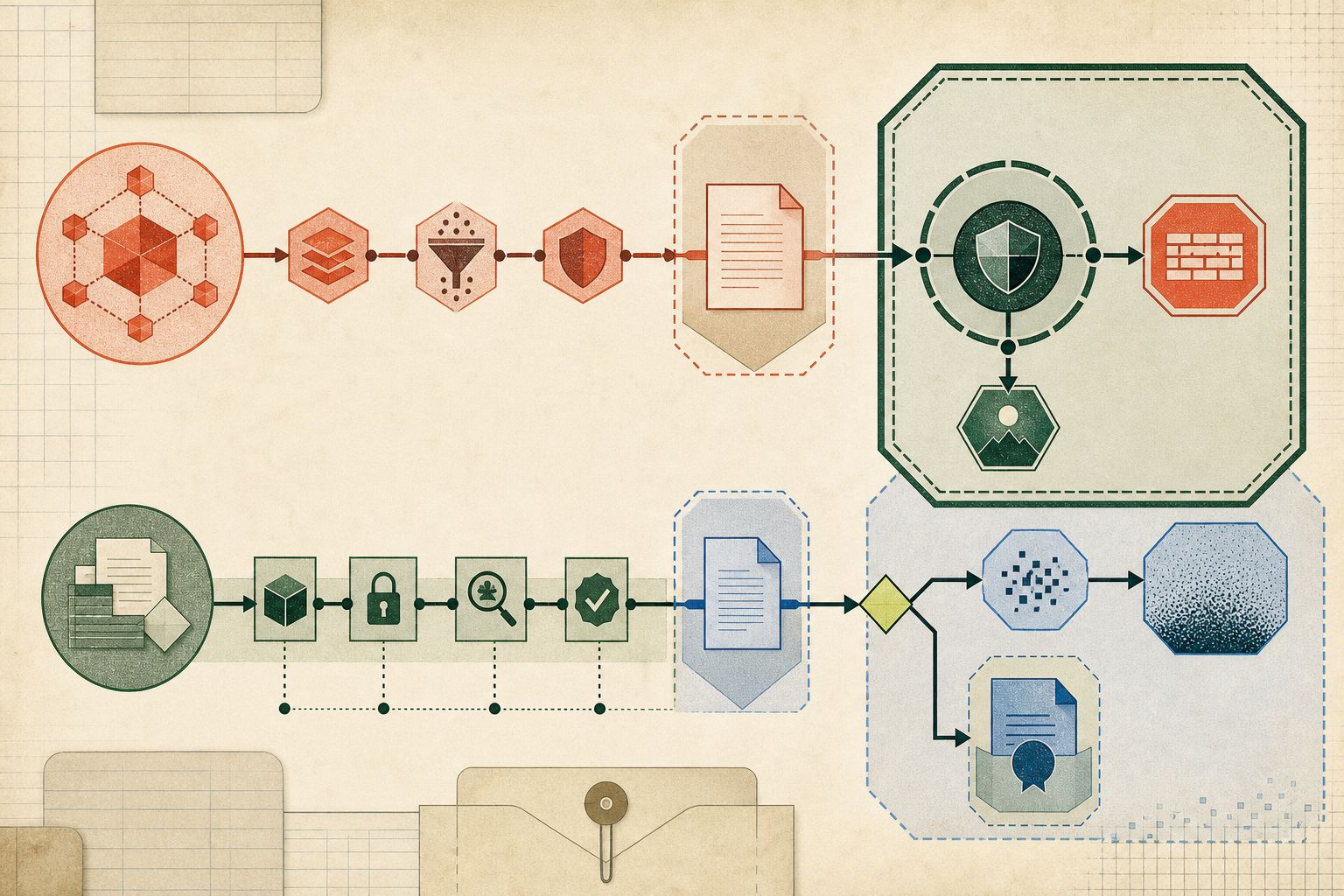
Nevada outsourcing at a glance
| Nevada buyer condition | Pre-access decision | Evidence to retain |
|---|---|---|
| The supplier builds ordinary commercial software with no regulated or production access | Define the outcome, accounts, data, delivery model, acceptance, and handover without importing irrelevant gaming controls | Brief, responsibility matrix, named team, buyer-owned repository, release evidence, cost model, support, and exit test |
| The supplier receives personal information maintained by a Nevada data collector | Determine the current NRS Chapter 603A perimeter and applicable contract, security, incident, and owner-notification path | Data map, scope decision, written safeguards, identities, systems, encryption, event trigger, immediate owner escalation, retention, deletion, and qualified review |
| The service processes consumer-health data | Treat purpose, consent, access, processor instructions, security, rights, and deletion as a separate stop gate | Field-and-inference inventory, requested product or consent basis, processing contract, authorized actions, people, subprocessors, rights test, and exit evidence |
| The buyer is or supports a Regulation 5.260 covered entity | Connect every supplier dependency to the licensee’s current risk assessment, response plan, independent review, records, and regulatory authority | Coverage decision, system inventory, criticality, provider access list, independent log review, control evidence, incident clock, investigation record, updates, recovery, and retained documentation |
| The Nevada buyer or supplier location creates an unusual time relationship | Use named cities and IANA identifiers; do not assume every Nevada office follows one static “Nevada time” label | Exact locations, project dates, daylight transitions, sustainable schedules, decision windows, incident coverage, and tested handoff |
This guide converts current official sources into procurement and operating questions. It does not decide whether a buyer, affiliate, vendor, system, incident, or dataset is covered or whether a notification, consent, license, registration, control, or report is required.
Separate the service perimeters first
“Nevada software project” is not a useful control category. Start with the actual legal entity, system, data, function, access, and operating consequence. A public website refresh may need ordinary secure-development and privacy diligence. A loyalty integration may touch patron personal information. A wellness feature may infer consumer-health data. A remote administrator supporting a covered gaming information system may enter a much stronger operational and regulatory perimeter.
Create a dated classification record for every workstream:
- Entity and authority: Which buyer entity owns the system, data, license, product decision, and regulator relationship?
- System and function: What does the system do, which operations depend on it, and what happens if it becomes unavailable or untrustworthy?
- Data: Which personal, consumer-health, payment, patron, employee, security, financial, operational, or public records enter it?
- Provider: Which legal entity, named people, countries, subcontractors, hosting services, models, and support tools can access it?
- Role: Is the supplier building, hosting, administering, monitoring, investigating, analyzing, or deciding?
- Perimeter: Which current Nevada, federal, contractual, gaming, payment, or other sector requirements have qualified reviewers mapped to the facts?
- Evidence and change: What proves the current state, and which change forces review before work continues?
Keep the lanes separate. Do not market an ordinary agency as “gaming compliant” because it once built a hospitality interface. Do not apply gaming controls to an unrelated Nevada startup simply to sound rigorous. The buyer should be able to explain why each requirement exists and which system, person, and evidence satisfies it.
Build a system-to-service criticality register
For any material operation, map business service to technology and people. Start with guest or patron interaction, reservations, payment, loyalty, identity, wagering, accounting, reporting, access control, surveillance integration, employee operations, incident response, and recovery only where relevant to the buyer. Then trace each service to applications, APIs, databases, networks, devices, cloud accounts, keys, providers, and named owners.
Assign a criticality tier using consequences rather than vendor prestige:
| Consequence | Buyer question |
|---|---|
| Safety and physical operations | Can a software or access failure affect people, facilities, or on-site response? |
| Gaming or financial integrity | Can a defect or unauthorized change affect a regulated game, account, transaction, report, or required record? |
| Data and privacy | Can the service expose, alter, infer, export, or prevent access to protected information? |
| Availability and revenue | How long can the operation continue without the service, and what manual or alternate path exists? |
| Detection and investigation | Which logs, clocks, identities, and artifacts are necessary to recognize and reconstruct an event? |
| Recovery and exit | Can the buyer restore a trusted state and replace the supplier without the supplier’s sole administrator? |
For each tier, set access, change approval, monitoring, release, backup, recovery-time, recovery-point, incident, evidence, and replacement requirements. A critical service should not inherit the same lightweight onboarding used for a marketing microsite.
Keep buyer authority independent from outsourced administration
Official Nevada Gaming Control Board IT guidance says that when a gaming licensee or operator uses an IT service provider, licensee or operator personnel—not the service provider’s personnel—retain responsibility for independent log review. The same guidance addresses service-provider user accounts and current access lists. This is a useful operating principle even outside that exact perimeter: a supplier should not be the only party capable of observing or approving its own privileged behavior.
Build a separation matrix:
- Supplier administration: named people may perform only approved changes through individual identities and recorded methods.
- Buyer approval: a buyer owner authorizes high-risk access, releases, exceptions, new integrations, and destructive actions.
- Independent monitoring: buyer-controlled or independently operated logs can identify privileged access, changes, failures, and suspicious behavior.
- Evidence custody: logs, configurations, builds, tickets, and investigation artifacts are retained somewhere the supplier cannot silently alter or delete.
- Recovery authority: the buyer controls break-glass access, backups, signing or deployment keys, and the decision to restore or isolate.
List every service-provider account across the application, database, operating system, cloud, network, identity provider, model host, source-control system, ticketing tool, backup, and monitoring platform. Include system and generic accounts. Record owner, purpose, privilege, authentication, approval, last review, activity source, and removal trigger.
Test removal. Disable a project contributor, rotate a credential, identify recent administrative actions, and confirm that the provider cannot regain access through a shared account or unmanaged recovery method. Record exceptions with owner and expiration.
Connect the supplier to the current risk assessment
Regulation 5.260’s current official text describes ongoing risk assessment and adjustment of cybersecurity practices for its covered entities. The supplier work order should therefore connect to the risks the buyer actually identified; a generic security exhibit is not enough.
For each supplier dependency, record:
- the business operation and information system;
- threat or failure scenario;
- data, availability, integrity, safety, and regulatory consequence;
- preventive, detective, responsive, and recovery controls;
- control owner and evidence;
- supplier role and access;
- test result, exception, residual risk, and acceptance authority; and
- monitoring or system change that triggers reassessment.
NIST’s Cybersecurity Framework can organize governance, identification, protection, detection, response, and recovery questions. Use it as a structure, not a claim that a provider or project is certified. Match evidence to the named service and current risk.
Reassess when the team, country, hosting architecture, cloud service, model, source of data, privileged access, system criticality, recovery path, incident pattern, or relevant regulation changes. Make the provider contract require notice and cooperation soon enough for the buyer to update its own program.
Design the incident clock backward from buyer duties
The current Regulation 5.260 text uses activation of the covered entity’s response procedures as a key reference for its regulator-facing timeline. It describes prompt notice, a short initial-report period, continuing updates, investigation, final evidence, and retained records. The current Board reporting page and form make the operational expectation concrete. A supplier contract should deliver facts before the buyer’s earliest decision point; repeating an outside deadline in the provider agreement may leave no time for validation or authority.
Create two clocks:
- Supplier-to-buyer clock: immediate escalation of a suspected event, even when scope and root cause remain unknown.
- Buyer decision clock: qualified owners decide response-plan activation, containment, regulator or individual notice, operational continuity, investigation, communications, and updates under the requirements that apply.
The first supplier notice should include discovery time, reporter, affected system and environment, service status, suspected access or disruption, identities, data categories, provider and subprocessor involvement, preservation taken, containment performed, buyer decisions needed, and next update time. Unknown is acceptable; silence is not.
Preserve authentication, administrative, application, database, network, endpoint, build, deployment, cloud-control-plane, model-service, support, and backup evidence as relevant. Normalize clocks. Prevent the supplier from wiping or rebuilding a system before evidence and business authority are considered, unless immediate safety or containment requires action and the decision is recorded.
For a covered gaming entity, maintain a regulator-ready fact record without letting the supplier communicate externally unless authorized. The buyer or designated qualified response owner controls reportability and official communications. For other Nevada data paths, map the current NRS Chapter 603A owner/maintainer and breach requirements separately with qualified counsel.
Test availability without sacrificing integrity
Nevada buyers in hospitality, entertainment, gaming, and other continuous operations may value uptime, but “always available” is not a plan. Define which business service must continue, how long it can be unavailable, which data can be lost, what degraded operation is safe, and who can authorize it.
Build recovery from trusted assets:
- buyer-controlled source and infrastructure definitions;
- reproducible builds and dependency records;
- protected deployment and signing paths;
- backed-up configuration, data, keys, and runbooks as appropriate;
- isolated recovery accounts and tested restoration;
- known-good data and software validation;
- supplier and internal contacts with backup owners;
- manual or degraded-operation procedures; and
- criteria for reconnecting systems and resuming normal service.
Exercise a failure caused by a compromised supplier identity, not only an ordinary outage. Determine whether the buyer can isolate the provider, preserve evidence, operate safely, restore a trusted release, and continue while the provider is unavailable. Availability achieved by reconnecting an untrusted administrator is not recovery.
Apply Nevada personal-information controls to the actual data
NRS Chapter 603A is the current official source for Nevada personal-information security, contracts, breach paths, online privacy, and consumer-health provisions. The chapter contains different definitions and scopes for different parts. Do not call every customer record “603A data” or assume one privacy policy answers every section.
Create a field-level map with person, source, purpose, system, owner, recipient, supplier, access, encryption, retention, deletion, and event path. Where current requirements apply, translate them into the service contract and technical controls. The official text includes reasonable-security and contract concepts for specified personal information and an immediate owner-notification path for a maintainer that discovers certain breaches. Qualified reviewers should determine the actual trigger and response.
Use individual least-privilege identities, approved encrypted transport and storage where applicable, managed devices, protected secrets, logging, vulnerability handling, change control, and verified deletion. Avoid production data in development when synthetic or purpose-built data can test the outcome.
Do not let a provider choose what it reports based solely on whether it believes an event is legally reportable. Define technical and operational triggers broadly enough for the buyer to make that decision.
Treat consumer-health processing as its own stop gate
Nevada’s current consumer-health provisions address collection, sharing, purpose, consent, access, security, processor instructions, rights, and other specific practices. A travel, wellness, accessibility, location, loyalty, AI, or personalization feature can create health-related inputs or inferences even when the buyer is not a healthcare provider.
Inventory raw data and derived signals: searches, purchases, locations, symptoms, accommodations, biometrics, device data, scores, classifications, embeddings, model outputs, and support notes. Determine whether the product or supplier uses them to identify a past, present, or future health status under the current definitions.
Before supplier access, record the requested product or consent basis, disclosed purpose, authorized processor actions, data and consumer, employees and providers who need access, security, rights support, subprocessors, retention, and deletion. Stop unapproved purpose or sharing changes. Test a synthetic rights request, access removal, and deletion through the complete supplier chain.
Govern AI, automation, and cloud changes
Maintain a register for hosted models, agents, coding assistants, analytics, identity tools, support platforms, cloud services, and infrastructure providers. Record legal entity, service and model version, account owner, region, data categories, purpose, prompts, outputs, embeddings, training or improvement use, retention, human review, subprocessors, access, logs, incident route, evaluation, deletion, and replacement.
Require review before a supplier:
- connects a regulated or critical system to a new service;
- sends personal, patron, consumer-health, employee, operational, or security data to a model;
- adds an agent capable of changing accounts, code, configuration, transactions, or records;
- changes hosting country, region, entity, or subprocessor;
- uses project material for training, service improvement, or another customer; or
- removes logs, independent review, recovery, or buyer approval from the workflow.
Use synthetic data and non-production environments for discovery. Evaluation should include expected behavior, misuse, authorization boundaries, data exposure, hallucination or erroneous action, monitoring, cost, rollback, and human authority. A successful demo does not justify production access.
Calculate location-specific collaboration time
Use named buyer and provider cities with maintained IANA identifiers and the actual project dates. Most familiar Nevada business centers use Pacific time, but official federal material documents West Wendover’s move to Mountain time. A statewide “Nevada time” promise can therefore be wrong. Daylight-saving transitions in the provider country may also differ.
Protect overlap for production authority, security decisions, incident command, and accepted releases. A provider may deliver routine work asynchronously, but critical escalation needs a named, sustainable path at all times the service operates.
Latin American teams may provide broad same-day overlap with Nevada depending on the cities. Europe may align with an early Nevada window. Asia-Pacific teams may support a follow-the-sun pattern when the handoff is precise and decision authority is available. Compare the named team and tested schedule, not the region.
Exercise a Nevada daylight transition, a supplier transition on a different date, and a West Wendover or other location-specific calendar if relevant. Verify monitoring, escalation, and recurring meetings rather than trusting a static offset in a proposal.
Choose the engagement model and provider
For managed delivery, define the accepted result, delivery lead, team, countries, systems, access, service levels, evidence, changes, support, and handover. The provider owns the agreed delivery system; the buyer retains legal, regulatory, security, production, and acceptance authority that the agreement does not delegate.
For staff augmentation, the buyer normally carries more daily management, architecture, integration, and continuity work. Identify named people, allocation, contributor entity, actual supervision, replacement, privileged access, evidence, hours, and offboarding. Obtain qualified employment, classification, tax, and permanent-establishment advice for the real relationship.
For a specialist, constrain the work to a bounded outcome and least privilege. Protect continuity through buyer-owned accounts and review. Do not give one consultant sole control of a critical system because procurement is faster.
Evaluate providers using the proposed people and systems. Ask for legal identity, ownership, financial and insurance evidence, relevant delivery references that may be verified and named, security and continuity evidence, subcontractors, countries, conflicts, commercial terms, and a paid pilot. No company name or client relationship should appear publicly without evidence and naming permission.
Outsourcing.ai can deliver a defined software or AI project directly, coordinate disclosed specialists, or support an independent provider selection. The proposal identifies the contracting entity, relationship, countries, responsibilities, data path, commercial connections, intellectual-property terms, acceptance, and exit.
Protect source, accounts, and contributor rights
Separate buyer background materials, provider background tools, new deliverables, open-source components, third-party services, data, prompts, models, evaluation sets, documentation, configurations, and operational evidence. Identify every contributor and the entity responsible for confidentiality and rights.
WIPO’s national-office directory can support destination-country research, but it does not prove that a supplier owns or can assign a deliverable. Obtain advice for the actual countries, contributors, and work.
Keep source control, cloud organizations, domains, package registries, model accounts, signing keys, monitoring, backups, and recovery under buyer governance. Require protected branches, individual identities, review, automated tests, provenance, repeatable releases, runbooks, and export. Test continuation after provider access is revoked.
Normalize complete cost and operational downside
Compare proposals for the same accepted outcome, service perimeter, access model, evidence, support, and recovery. Include labor, leadership, buyer management, security and privacy review, independent monitoring, model and cloud usage, testing, shifted hours, travel, licensing, currency, payment, insurance, incident assistance, regulatory records, rework, rate changes, replacement, and exit.
Show uncertainty as a range with a validation step. Integration with legacy gaming or hospitality systems, access cleanup, missing logs, data classification, a consumer-health path, 24-hour support, independent evidence, and recovery testing can materially change effort.
Model downside: loss of a privileged identity, corrupted configuration, unavailable reservation or patron system, untrusted deployment, missed buyer escalation, incomplete regulator evidence, unavailable delivery lead, or inaccessible backup. A lower rate is not cheaper when the buyer cannot detect, respond, recover, or replace.
Run a Nevada independent-evidence pilot
Choose a paid milestone that resembles the intended work but minimizes real regulated data and production exposure. Include one integration, one approved change, peer review, security evidence, automated tests, documentation, acceptance, and buyer-controlled handover.
Ask the named team to demonstrate identities, access, environments, logs, release evidence, backups, and escalation. Then exercise:
- an administrative action that buyer-side monitoring must identify independently;
- removal of one provider account across the complete system path;
- a suspected cybersecurity event with immediate preliminary facts and preserved evidence;
- restoration of a trusted release without the provider’s primary administrator;
- a location or schedule transition that tests incident authority; and
- a consumer-data or health-data request and deletion path when relevant.
If the buyer determines Regulation 5.260 applies, connect the pilot to the current risk assessment, response plan, qualified individual or responsible owner, independent review, reporting decision, investigation, updates, recovery, and required records. End with a written continue, revise, or stop decision. Do not scale when the provider reviews its own privileged logs, critical accounts are supplier-owned, reporting waits for root cause, or recovery depends on the compromised path.
Nevada buyer red flags
- A provider calls itself “Nevada gaming compliant” without naming the entity, system, licensee perimeter, current requirement, control, and evidence.
- Gaming controls are applied to every Nevada project regardless of scope.
- The outsourced administrator also performs the only review of its privileged activity.
- Shared, default, generic, or recovery accounts are omitted from the access inventory.
- Incident escalation waits for final root cause or the supplier’s next business day.
- The buyer cannot activate response, isolate access, communicate, restore, or continue without the provider.
- Production availability is measured without trusted-recovery or degraded-operation tests.
- AI tools, prompts, derived data, and model subprocessors are missing from the system map.
- “Nevada time” is promised without a buyer city, IANA zone, project dates, and supplier location.
- Source, cloud, monitoring, signing, backup, or recovery accounts remain supplier-owned.
Frequently asked questions
Does Nevada gaming cybersecurity regulation apply to every Nevada company?
No. Regulation 5.260 defines covered entities. A buyer should obtain a current perimeter decision for the exact entity, license, system, and service. Ordinary companies still need appropriate security, privacy, contract, and incident controls, but should not claim a gaming-regulatory status they do not have.
Can a Nevada gaming licensee outsource IT administration overseas?
This guide does not determine whether a particular service or location is permitted. The buyer should map licensing, registration, suitability, system, data, access, cloud, service-provider, internal-control, security, evidence, incident, and continuity requirements with the Nevada Gaming Control Board materials and qualified advisers before access.
Who should review an outsourced gaming-system administrator’s logs?
The Board’s current IT FAQ states that, for licensees or operators using an IT service provider, independent review responsibility remains with licensee or operator personnel rather than the service provider’s personnel. Apply the exact current MICS and qualified interpretation to the system.
How fast should an overseas provider report an incident?
Fast enough for the buyer to make its earliest applicable response, containment, regulator, consumer, and continuity decisions. Require immediate preliminary facts and frequent updates. The buyer determines applicable legal or regulatory reporting with qualified advisers; the provider should not wait for a final investigation.
Is all of Nevada in Pacific time?
Do not make that operating assumption. Official DOT material documents West Wendover’s move to Mountain time. Record the exact Nevada and provider locations, use maintained IANA identifiers, and test project dates and daylight transitions.
What is the best outsourcing country for a Nevada company?
There is no universal best country. Define the service perimeter, skills, live authority, security, data, licensing, engagement model, complete cost, incident path, and recovery. Then compare named teams in eligible countries through the same evidence model.
What should a Nevada outsourcing pilot test?
Test the proposed people, buyer-controlled accounts, independent observation, provider removal, immediate event handoff, trusted restoration, sustainable schedule, accepted delivery, and exit. Add gaming or consumer-health exercises only where the perimeter applies.
Is Outsourcing.ai located or licensed in Nevada?
No Nevada office, local workforce, gaming license, or local-client history is claimed. This is an online buyer guide and delivery service, not a Nevada local-business listing or regulated gaming operator.
Evidence ledger
Sources used on this page
- IANA Time Zone Database — Internet Assigned Numbers Authority. Supports: Maintained time-zone identifiers and transition data for calculating actual overlap between Nevada buyer locations and proposed international delivery cities. Direct source; independently sourced; commercial relationship: none. Verified 8/15/2026 by Outsourcing.ai Editorial Team. Accessed 8/15/2026.
- DOT time-zone process audit — U.S. Department of Transportation, Office of Inspector General. Supports: Official federal audit documenting the West Wendover time-zone change and supporting location-specific Nevada scheduling rather than a single statewide clock assumption. Direct source; independently sourced; commercial relationship: none. Verified 8/15/2026 by Outsourcing.ai Editorial Team. Accessed 8/15/2026.
- NRS Chapter 603A — Security and Privacy of Personal Information — Nevada Legislature. Supports: Current official statutory source for personal-information safeguards and contracts, owner notification by data maintainers, online privacy provisions, and consumer-health-data processor instructions. Direct source; independently sourced; commercial relationship: none. Verified 8/15/2026 by Outsourcing.ai Editorial Team. Accessed 8/15/2026.
- Nevada gaming statutes and regulations — Nevada Gaming Control Board. Supports: Maintained official index for current gaming regulations, technical standards, internal controls, and the dated consolidated regulation publication. Direct source; independently sourced; commercial relationship: none. Verified 8/15/2026 by Outsourcing.ai Editorial Team. Accessed 8/15/2026.
- All Nevada gaming regulations as of March 2026 — Nevada Gaming Control Board. Supports: Official consolidated text for Regulation 5.260 coverage, risk assessment, incident response and reporting, independent review, documentation, retention, and due diligence. Direct source; independently sourced; commercial relationship: none. Verified 8/15/2026 by Outsourcing.ai Editorial Team. Accessed 8/15/2026.
- Information Technology MICS frequently asked questions — Nevada Gaming Control Board. Supports: Official guidance on service-provider accounts, licensee-side independent log review, access-list maintenance, electronic records, and sensitive patron information. Direct source; independently sourced; commercial relationship: none. Verified 8/15/2026 by Outsourcing.ai Editorial Team. Accessed 8/15/2026.
- Report a cybersecurity incident — Nevada Gaming Control Board. Supports: Current official incident-reporting destination and response form for entities that determine Regulation 5.260 notification applies. Direct source; independently sourced; commercial relationship: none. Verified 8/15/2026 by Outsourcing.ai Editorial Team. Accessed 8/15/2026.
- NIST Cybersecurity Framework — National Institute of Standards and Technology. Supports: A maintained risk-management framework for connecting supplier access, protective controls, detection, response, recovery, and governance evidence. Direct source; independently sourced; commercial relationship: none. Verified 8/15/2026 by Outsourcing.ai Editorial Team. Accessed 8/15/2026.
- Directory of Intellectual Property Offices — World Intellectual Property Organization. Supports: Official destination-country intellectual-property office links for researching contributor and rights-chain questions without assuming one contract works in every jurisdiction. Direct source; independently sourced; commercial relationship: none. Verified 8/15/2026 by Outsourcing.ai Editorial Team. Accessed 8/15/2026.
Next scheduled review: October 15, 2026. Corrections: hello@outsourcing.ai.