
Hire a virtual assistant
How to hire an offshore virtual assistant
Define an access-bounded virtual-assistant role, choose direct or managed delivery, run a paid pilot, and build secure delegation, continuity, and handover.
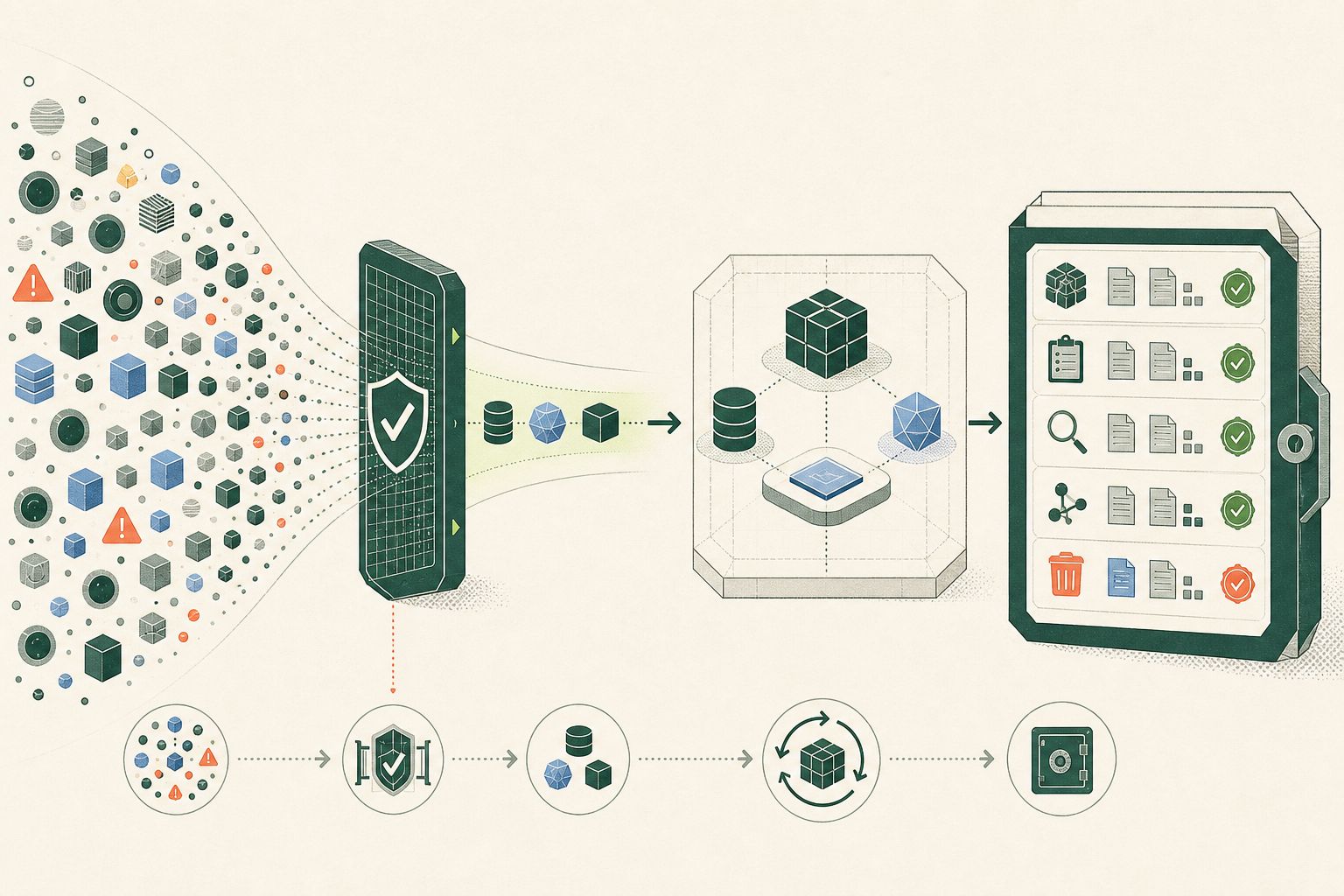
A virtual assistant can remove recurring coordination and administrative work from a U.S. founder or operating team. The role can also become a security, classification, continuity, or quality problem when “help with everything” replaces a real scope. Location and hourly price do not repair an ambiguous operating model.
This guide covers virtual assistants working from any suitable country outside the United States. It does not rank countries or publish a universal rate. Employment, contractor classification, tax, privacy, labor, intellectual-property, and cross-border obligations depend on the actual relationship and jurisdictions. Obtain qualified advice for the facts of the engagement.
Define the result before listing tasks
Write the result that should improve when the role works. “Help me stay organized” is difficult to accept, coach, or forecast. “Every qualified inbound request is logged, checked for missing information, assigned an owner, and acknowledged within the agreed business window” has an observable workflow.
Start with work that is recurring, teachable, reviewable, and reversible. Examples may include calendar coordination, travel research, meeting preparation, inbox triage under explicit rules, CRM hygiene, contact-record enrichment from approved sources, document formatting, invoice follow-up without payment authority, expense preparation, research packets, content operations, customer-support triage, recruiting coordination, and status reporting. The exact boundary matters more than the title.
For each workflow, record:
- the trigger that starts the work;
- the expected output and deadline;
- approved sources and systems;
- information the assistant may view, change, export, or send;
- decisions the assistant may make independently;
- decisions that require review;
- an example of acceptable work and a known bad result;
- escalation conditions and the responsible person;
- the record that proves completion;
- what happens during absence, error, or termination.
If the buyer cannot explain the workflow, the assistant will learn through interruptions and guesswork. That turns a capacity purchase into an unmanaged discovery project.
Separate delegation from authority
Administrative work often sits beside high-impact authority. Drafting an invoice is different from changing bank details or releasing payment. Preparing a customer response is different from making a refund promise. Scheduling an interview is different from rejecting a candidate. Organizing credentials is different from holding the only recovery method.
Use an authority matrix rather than a vague instruction to “use judgment.”
| Action | Assistant may prepare | Assistant may execute | Buyer approval required | Evidence retained |
|---|---|---|---|---|
| Calendar coordination | Proposed times and conflicts | Confirm within written rules | Exceptions and priority conflicts | Calendar record and exception note |
| Customer support | Draft and classify response | Send approved low-risk templates | Refund, legal, security, or public escalation | Ticket history and escalation record |
| Invoicing support | Prepare invoice and reconcile fields | Send approved invoice | Bank detail, credit, tax, or write-off change | Approved invoice and change history |
| Research | Gather approved-source evidence | Produce a cited brief | Material decision or external representation | Source list and dated brief |
| Account administration | Prepare access request | Use assigned account | Privileged access or permission change | Access ticket and system log |
The matrix should be narrower during the pilot. Expand authority after accuracy, escalation, and access discipline are demonstrated—not merely because the relationship feels friendly.
Choose direct, agency, or managed service deliberately
The engagement model determines who recruits, supervises, replaces, reviews, and absorbs coordination work.
| Model | Buyer responsibility | Supplier responsibility | Likely fit | Main failure mode |
|---|---|---|---|---|
| Direct independent professional | Role definition, recruitment, direction, review, continuity, access, and classification diligence | The individual performs the agreed service | Stable bounded work and a buyer with management capacity | The buyer expects agency-level coverage from one person |
| Staff-augmentation supplier | Day-to-day direction, task system, acceptance, access, and often role management | Candidate supply, employment or contract administration, and agreed replacement | A buyer with an operating system that needs capacity | Supplier coordination is mistaken for outcome ownership |
| Managed assistant service or agency | Outcome, policy, approval, and acceptance | Recruitment, supervision, workflow quality, coverage, and replacement when contractually included | Multiple workflows or continuity needs the buyer cannot manage alone | “Managed” is only marketing and the buyer still directs every detail |
| Direct international employment | Role leadership, employment obligations, performance, access, and continuity | Employee performs work; an EOR may administer defined local responsibilities | Durable, integrated work under buyer control | An employment-like role is labeled as contracting without reviewing the facts |
Ask who the assistant reports to each day, who checks quality, who covers leave, who can replace the person, who retains the process knowledge, and who is accountable when work is missed. A supplier logo does not answer those questions.
The freelancer-versus-agency guide and decision tool help test management capacity. If you want Outsourcing.ai to scope the workflow or assemble a delivery route, see software and AI outsourcing services.
Build a role scorecard that can survive recruitment
Create a short scorecard before reviewing profiles. It should contain outcomes, recurring workflows, tools, time-zone requirements, communication mode, language demands, data categories, access level, escalation, schedule, duration, and the buyer manager.
Separate required capability from teachable context. A person coordinating a complex executive calendar may need conflict resolution, written judgment, confidentiality, and reliable escalation. Familiarity with one scheduling tool is easier to teach. A person doing CRM operations may need data-quality discipline and auditability more than a long list of software logos.
Use work evidence rather than adjectives. “Detail-oriented” is not directly testable. Ask the candidate to review a deliberately imperfect workflow, identify ambiguity, propose a checklist, and explain where approval is required. “Excellent communication” becomes a short written update that distinguishes status, evidence, blocker, decision, and next action.
The scorecard should also state non-fit conditions. If the role requires constant executive availability, privileged financial control, unsupervised legal interpretation, clinical judgment, or emergency response, a generic VA arrangement may be the wrong design.
Map data and access before onboarding
The FTC advises businesses to understand what personal information they hold, how it moves, who can access it, what is necessary, and how it will be protected or disposed of. That is a practical foundation for virtual-assistant delegation, because the role often crosses inboxes, calendars, customer systems, documents, and payment workflows.
Classify each workflow before creating accounts:
- Public: information already approved for public use.
- Internal: ordinary operating information with limited impact if disclosed.
- Confidential: customer, employee, commercial, financial, security, or proprietary information requiring explicit purpose and access.
- Restricted: credentials, payment authority, sensitive personal data, regulated records, security administration, or other assets needing heightened approval and controls.
Do not give access to an entire inbox, drive, CRM, password vault, or financial account because one task touches a small part of it. Use a separate named account, the least permission that supports the workflow, an approved device and storage rule, and a defined expiration or review date. CISA recommends MFA for business email, file storage, remote access, administrative accounts, and people handling sensitive data. Shared credentials weaken attribution and make offboarding harder.
For sensitive workflows, document whether copying, local download, printing, browser extensions, generative-AI tools, personal devices, removable media, forwarding, or external storage are allowed. “Keep it confidential” is not an operating control.
Create a delegation packet, not a folder of old recordings
A useful delegation packet makes correct work possible without requiring the buyer to answer the same questions repeatedly. For each workflow include:
- the purpose and desired outcome;
- the trigger and service window;
- approved inputs and authoritative sources;
- the ordered process with decision points;
- templates and examples;
- quality checks before completion;
- authority and escalation rules;
- where the completion record belongs;
- error correction and rollback;
- access and data-handling rules;
- owner and review date.
Recordings can demonstrate context, but they are difficult to search, update, and audit. Convert them into a maintained procedure. Ask the assistant to improve the packet during the pilot by marking ambiguity, missing examples, unnecessary steps, and decisions that should be automated or retained by the buyer.
Documentation should not become bureaucracy. The depth should match consequence and frequency. A low-risk monthly formatting task may need a checklist and example. A daily customer-data workflow needs a stronger procedure, access boundary, exception path, and evidence record.
Recruit through evidence, not generic profile signals
Use a structured process that gives comparable evidence:
- a short written application tied to the real outcome;
- a discussion of prior analogous workflows without requesting confidential client material;
- a scenario that contains ambiguity and requires escalation;
- a small paid work sample using synthetic or minimized data;
- reference checks appropriate to the relationship and permitted by applicable rules;
- confirmation of schedule, overlap, equipment, connectivity, backup plan, and communication expectations;
- explicit discussion of data handling and prohibited tools.
Do not use an unpaid “test” that resembles production work or extracts free labor. Do not ask candidates to reveal former clients’ confidential data, credentials, or proprietary documents; willingness to violate someone else’s boundary is not evidence of trustworthiness.
Interview for reasoning. Ask what the candidate would do when instructions conflict, a customer requests an exception, a payment detail changes unexpectedly, access fails, a deadline will be missed, or an apparent security incident occurs. A strong answer identifies the boundary, preserves evidence, and escalates instead of improvising beyond authority.
Run a paid pilot with limited consequence
The pilot should test the actual operating system while limiting irreversible risk. Choose one or two recurring workflows with enough variation to reveal judgment. Use synthetic, redacted, or low-sensitivity data where possible. Provide the delegation packet, named manager, service window, access boundary, and acceptance rubric.
Evaluate more than speed:
- Was the output complete and accurate?
- Were sources and changes traceable?
- Did the assistant follow authority limits?
- Were unclear or risky situations escalated early?
- Did updates distinguish fact, assumption, blocker, and decision?
- Could another person continue from the record?
- Did the workflow reduce buyer effort after review and correction?
- What access or data was unnecessary?
- What procedure should change before expansion?
End with a continue, revise, or stop decision. Do not convert automatically because onboarding consumed time. If the work is accurate but the buyer still spends more time specifying and correcting than the workflow saves, the scope or management system needs revision.
Measure relief and reliability, not online presence
A virtual assistant is valuable when the delegated system produces reliable outcomes with appropriate control. Activity screenshots, mouse movement, message count, and constant online status are weak proxies and may create privacy, trust, and legal problems.
Use measures connected to the workflow:
- accepted items completed in the service window;
- error and rework patterns by cause;
- exceptions escalated before consequence;
- buyer review time per accepted output;
- stale or missing records;
- decision latency caused by the buyer;
- customer or stakeholder corrections;
- access exceptions and security events;
- knowledge concentration and coverage readiness.
Review trends in context. A higher escalation count during onboarding may show appropriate caution, not poor performance. Faster completion is not better when it comes from skipping verification. Avoid turning every workflow into an individual productivity ranking.
Design the time-zone operating system
Do not choose a country and then discover the working hours. Name the exact time zone, normal local schedule, daylight-saving behavior where applicable, overlap window, response expectations, and emergency boundary. A U.S. buyer may prefer nearshore overlap, an asynchronous overnight relay, or deliberately staffed U.S.-hours coverage; these are different employment and sustainability choices.
Reserve synchronous time for ambiguity, priority, feedback, and decisions. Use written handoffs for routine status and evidence. Rotate inconvenient meetings when multiple regions share the burden. Do not assume a person should permanently work nights because the quote is attractive.
Country context should change the diligence, not stereotype the worker. The Philippines outsourcing guide covers a common VA sourcing market through actual shift, data-processing, work-status, and intellectual-property questions. Other country and region guides use the same evidence-first rule. A nationality is neither a capability rating nor a security control.
Model the complete cost
The complete cost is not hourly pay alone. Include recruitment or supplier margin, buyer onboarding, manager time, workflow documentation, software and accounts, equipment or security controls, payment and currency mechanics, leave and coverage, quality review, rework, replacement, compliance advice, transition, and the work that remains with the buyer.
A higher-priced managed service may cost less overall when it truly supplies supervision and continuity the buyer would otherwise provide. A direct professional may be better value when the buyer already has a stable workflow and strong management. Neither conclusion follows from the label.
Do not compare countries using generic average VA rates as if skill, shift, work status, benefits, supplier margin, tax, equipment, data risk, and management were identical. Use a current proposal with named assumptions in the outsourcing cost calculator and keep uncertainty visible.
Review classification, contract, and cross-border facts
In the United States, IRS guidance says federal worker classification depends on the facts and the right to control—not only what the agreement calls the person. Other federal, state, and foreign tests may differ. A durable role under detailed buyer control may create different obligations than a genuinely independent service or supplier-managed outcome.
Qualified advisers should review the actual arrangement. The contract should cover scope, authority, fees and currency, invoicing, work schedule, confidentiality, intellectual property, data processing, security, approved tools and subcontracting, conflicts, monitoring, incident notice, records, quality and acceptance, leave or coverage, termination, access revocation, data return or deletion, transition assistance, and dispute provisions.
Confirm who employs or contracts with the individual and whether an agency’s management claims match the actual working relationship. A platform payment flow does not automatically settle employment, tax, privacy, or intellectual-property questions.
Build continuity before the assistant is unavailable
One excellent assistant can become a single point of failure when workflows, contacts, recovery methods, and unwritten exceptions live only with that person. Maintain buyer-controlled procedures, templates, calendars, source records, account ownership, and work queues.
For critical workflows, designate coverage and test it. Ask another authorized person to execute from the documentation. Track access separately from knowledge. A replacement with credentials but no context is not continuity; documentation without working access is not continuity either.
Offboarding should include a work-in-progress handover, outstanding decisions, return or deletion of data, device or storage confirmation, account disablement, session revocation, credential rotation where exposure is possible, recovery-method review, ownership transfer, forwarding decisions, and a record of completion. Perform the same controls after an agency substitution, not only at final termination.
Watch for red flags before expanding the role
Pause when:
- the role is described as “anything I need” without authority limits;
- a supplier will not identify the person doing the work or whether subcontracting occurs;
- the candidate offers confidential examples or credentials from a former client;
- shared logins are the default;
- the buyer cannot remove access independently;
- the supplier calls the service managed but assigns no supervisor or quality owner;
- replacement is promised without a handover system;
- permanent night work or immediate availability is assumed rather than agreed;
- the lowest rate is used to dismiss management, security, or continuity cost;
- classification is treated as settled by an invoice or contract heading;
- monitoring is proposed instead of clear outcomes and evidence;
- the assistant is asked to make legal, financial, security, employment, or customer commitments outside a defined authority boundary.
The red flag does not always mean the candidate is unsuitable. It often means the buyer has not designed the role yet.
Use a thirty-day implementation sequence
Before recruitment: inventory recurring work, retain work that depends on executive judgment, choose one pilot workflow, map data and access, name the manager, select the engagement model, and write the scorecard.
During selection: use the same scenario and evidence criteria for comparable candidates, discuss the actual schedule and security boundary, confirm who supervises and covers absence, and review classification and contract needs.
During the pilot: provide the packet and limited accounts, hold a short decision window, review accepted outputs and exceptions, remove unnecessary access, and update the procedure from evidence.
Before expansion: document the continue/revise/stop decision, confirm the full commercial relationship, extend only the access needed for the next workflows, set the review cadence, test coverage, and schedule an access and continuity review.
The outsourcing readiness assessment helps test whether the buyer has enough outcome clarity, ownership, access control, and review capacity before recruiting.
Frequently asked questions
What should an offshore virtual assistant do first?
Start with one recurring, low-consequence workflow that has a clear trigger, output, deadline, and review path. The first workflow should expose how well delegation, communication, and evidence work without requiring broad access.
Should I hire a direct VA or use an agency?
Hire directly when you can recruit, manage, review, and cover absence. Use an agency or managed service when it contractually and operationally owns supervision, continuity, and quality. Verify the actual responsibilities rather than relying on the label.
Which country is best for a virtual assistant?
No country is universally best. Choose the person and operating model using the exact work, schedule, language, data, legal, continuity, and management requirements. Country context informs diligence; it does not replace candidate evidence.
How much access should a virtual assistant receive?
Only the access required for the approved workflow, through a named account with appropriate MFA, logging, review, and removal. Expand access after evidence supports the need. Avoid shared credentials and unrestricted inbox, drive, CRM, or financial access.
Can a virtual assistant manage my email?
Yes, if the scope distinguishes triage, drafting, sending, deletion, sensitive categories, external commitments, impersonation risks, and escalation. Prefer delegated access or purpose-specific tools over sharing the primary password and recovery methods.
How do I test a virtual assistant before hiring?
Use a small paid pilot with a real workflow, minimized data, limited access, a maintained procedure, and a visible acceptance rubric. Test accuracy, escalation, evidence, improvement, and buyer effort—not only speed.
Should I monitor screenshots or activity?
Measure accepted outcomes, quality, buyer review time, exceptions, and continuity. Intrusive monitoring is a poor substitute for role design and may introduce privacy or legal issues. Obtain qualified advice before using monitoring technology.
How do I protect customer information?
Inventory the data, minimize what the workflow exposes, define approved systems and prohibited copying, use named least-privilege accounts and MFA, put security and incident duties in writing, verify the controls, and revoke access promptly when the role changes.
Can Outsourcing.ai help hire or manage the work?
Outsourcing.ai can evaluate the workflow and propose direct discovery, an embedded specialist, partner-assisted delivery, or an independent provider-selection route. The proposal identifies the actual model and any disclosed specialist before work or third-party sharing begins. Share the project to start with fit.
Evidence ledger
Sources used on this page
- Independent contractor defined — U.S. Internal Revenue Service. Supports: IRS guidance that U.S. federal worker classification depends on the facts and the right to control what and how work is done, supporting a classification review rather than reliance on a contractor label. Direct source; independently sourced; commercial relationship: none. Verified 8/15/2026 by Outsourcing.ai Editorial Team. Accessed 8/15/2026.
- Hire and manage employees — U.S. Small Business Administration. Supports: SBA guidance on defining roles and distinguishing employee and contractor responsibilities, supporting an explicit role scorecard and engagement-model decision before recruitment. Direct source; independently sourced; commercial relationship: none. Verified 8/15/2026 by Outsourcing.ai Editorial Team. Accessed 8/15/2026.
- Protecting Personal Information: A Guide for Business — U.S. Federal Trade Commission. Supports: FTC guidance to inventory personal information, keep only what is needed, control access, dispose of records, plan for incidents, and evaluate service-provider security, supporting data-minimized delegation. Direct source; independently sourced; commercial relationship: none. Verified 8/15/2026 by Outsourcing.ai Editorial Team. Accessed 8/15/2026.
- Cybersecurity for Small Business — U.S. Federal Trade Commission. Supports: The FTC's current small-business cybersecurity guidance supports written security expectations, need-to-know and time-bounded vendor access, compliance verification, and incident obligations for outside service providers. Direct source; independently sourced; commercial relationship: none. Verified 8/15/2026 by Outsourcing.ai Editorial Team. Accessed 8/15/2026.
- Require Multifactor Authentication — U.S. Cybersecurity and Infrastructure Security Agency. Supports: CISA guidance supports MFA for email, file storage, remote access, administrative accounts, and people handling sensitive data rather than sharing reusable credentials. Direct source; independently sourced; commercial relationship: none. Verified 8/15/2026 by Outsourcing.ai Editorial Team. Accessed 8/15/2026.
- NIST Cybersecurity Framework 2.0 for Small Business — U.S. National Institute of Standards and Technology. Supports: NIST's small-business CSF 2.0 resources support governing, identifying, protecting, detecting, responding to, and recovering from cyber risk as the operating frame around delegated access. Direct source; independently sourced; commercial relationship: none. Verified 8/15/2026 by Outsourcing.ai Editorial Team. Accessed 8/15/2026.
Next scheduled review: November 15, 2026. Corrections: hello@outsourcing.ai.