
Game development outsourcing
How to outsource game development without losing control
A buyer guide to scoping, producing, testing, releasing, operating, and handing over an outsourced game without confusing a prototype with a finished product.
Disclosure: Wizards and Outsourcing.ai are related projects under common ownership. Wizards is included only where its regulated gambling-game specialization is relevant; this is a related-party commercial path, not an independent provider ranking. Any proposal must identify the contracting entity and delivery model before paid work begins.
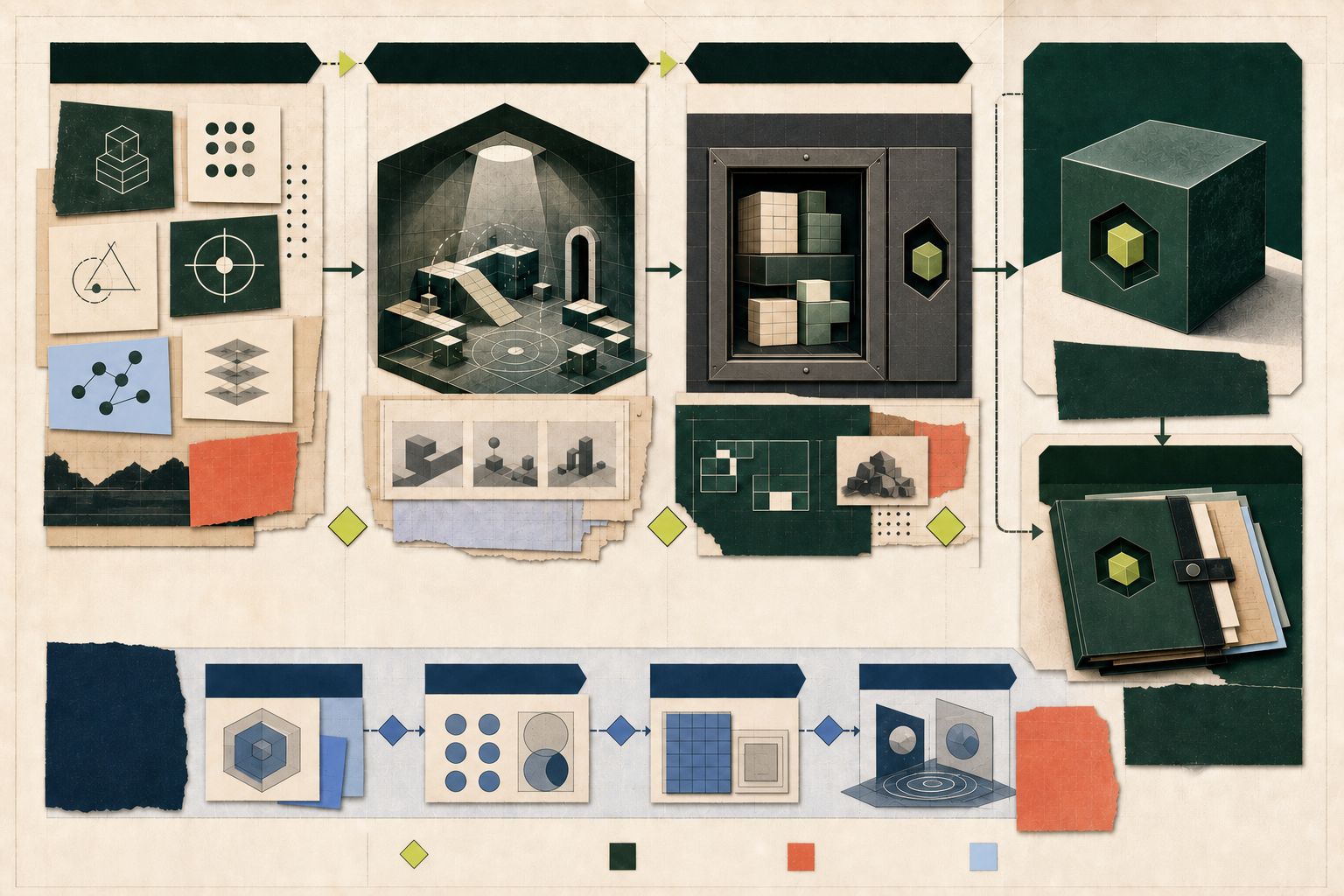
Outsourcing a game is not simply outsourcing software with more art. The buyer is commissioning a system in which mechanics, content, performance, platform rules, commercial design, telemetry, operations, and player trust interact. A technically correct feature can still make the game unpleasant. A beautiful vertical slice can still hide an unmaintainable production pipeline. A build that runs on a developer device can still fail store review, device coverage, accessibility, security, age-audience, or regulated-market requirements.
The practical answer is to stop buying “the game” as one indivisible promise. Buy a sequence of accepted states. Each state should have a visible purpose, a reproducible build, named evidence, a decision owner, and an exit artifact. That structure lets a U.S. buyer work with a studio anywhere outside the United States without transferring product authority by accident.
Define the game as an operating system, not a pitch
A pitch describes the fantasy. A production brief describes the system required to deliver and operate it. Before asking studios for estimates, write a one-page decision record that separates what is known from what discovery must prove.
At minimum, name the intended player, play session, platform, interaction model, content boundary, revenue model, online dependency, launch territory, operational life, buyer owner, and the result that would justify continued investment. If the game includes accounts, user-generated content, chat, payments, children, gambling, prizes, location, advertising, or transferable digital items, identify those facts now. They can change architecture, policy, moderation, data, legal, security, review, support, and testing work.
Avoid treating the genre label as a specification. “Mobile puzzle game,” “multiplayer RPG,” and “casino slot” each leave the most expensive questions unanswered. A studio cannot responsibly estimate content volume, server authority, simulation complexity, device coverage, art throughput, anti-abuse controls, moderation, live events, or certification work from a genre alone.
Use a short assumption ledger:
| Decision area | Known before proposals | Must be proved in discovery | Buyer-owned decision |
|---|---|---|---|
| Player and use | Intended audience and excluded audiences | Comprehension, session behavior, accessibility needs | Audience, safety, and acceptable experience |
| Mechanics | Core interaction and desired feeling | Fun, clarity, balance, technical feasibility | Which mechanic earns production funding |
| Platform | Candidate devices and distribution route | Performance envelope, review constraints, service dependencies | Accounts, territories, release timing |
| Content | Initial theme and content boundaries | Production rate, localization, moderation, rights | Approved content and brand limits |
| Operations | Expected online and live-service needs | Support load, telemetry, event tools, recovery | Service level, player communications, shutdown |
| Ownership | Existing material and intended deliverables | Third-party rights and tool constraints | What must remain portable and buyer-controlled |
This ledger is intentionally incomplete. Its job is to expose uncertainty without allowing uncertainty to become an unlimited statement of work.
Choose the delivery model before choosing the studio
Game outsourcing can mean at least four materially different arrangements.
Specialist production buys one bounded discipline, such as concept art, animation, audio, porting, backend engineering, quality assurance, game mathematics, or technical art. This works when the buyer already owns integration, creative direction, acceptance, and release.
Staff augmentation adds named contributors to the buyer’s existing production system. The buyer manages priorities, technical direction, integration, reviews, tools, and continuity. It offers control but does not purchase an accountable game outcome.
Co-development divides a product between teams. The boundary may follow a platform, game mode, content stream, service, or production discipline. It needs a shared architecture, branch and integration policy, synchronized milestones, and one authority for cross-team decisions.
Managed production asks one studio to coordinate the complete result or a large product slice. This can reduce buyer coordination, but only if the proposal names the actual team, subcontractors, countries, tools, acceptance model, change process, and handover. “Full service” is not evidence that every discipline is internal or that the same people will remain through release.
Use the staff augmentation versus project outsourcing guide when the main uncertainty is who should manage delivery. Use the software-team guide when the missing capability is a multi-role engineering team rather than a game-specific production system.
Make the vertical slice a decision instrument
A prototype asks whether an idea is possible or interesting. A vertical slice asks whether a representative part of the intended product can be produced to an agreed standard. Those are different investments and should not share one vague acceptance test.
The prototype may use temporary art, throwaway code, manual steps, mocked services, or a narrow device target. That can be rational if the brief labels those compromises and prevents the prototype from silently becoming the production foundation. The acceptance question is whether the team learned enough to choose, change, or stop.
The vertical slice should cross the disciplines that make production hard. Depending on the game, that may include final-quality interaction, representative art and animation, audio integration, save or account behavior, one online path, telemetry, localization, accessibility behavior, build automation, performance on target hardware, and the proposed content pipeline. Its job is to reveal integration risk and production throughput—not to create a trailer while postponing the difficult systems.
Require a slice report with:
- the exact build identifier and reproducible source revision;
- included and excluded features;
- temporary components and replacement plan;
- target device or environment results;
- known defects, performance limits, and unresolved risks;
- asset, code, audio, font, tool, engine, plugin, dataset, and model-rights inventory;
- measured production effort for the representative content;
- the proposed production architecture and staffing model;
- a recommendation to proceed, re-scope, repeat, or stop.
A strong slice can justify production. A weak slice can save the remaining budget. Both are useful outcomes when the gate is honest.
Contract for the production system and evidence
The contract should translate the game plan into controllable work packages. Scope alone is not enough. Define how a candidate becomes an accepted build, who can change requirements, which evidence accompanies delivery, and what happens when a dependency, platform rule, tool, or subcontractor changes.
The NIST Secure Software Development Framework is useful here because it treats secure development as organized lifecycle practice rather than a final scan. The CISA software acquisition guide adds buyer-side questions about supplier and software-assurance evidence. Neither document is a game-production template, but together they support a disciplined request for responsibilities, components, test evidence, vulnerability handling, maintenance, and change control.
For each milestone, name:
- the player or business result the milestone is meant to prove;
- the source, asset, configuration, infrastructure, and data revisions included;
- the environments and devices on which it must run;
- the automated, human, experiential, performance, security, and policy checks required;
- the defects or risks that block acceptance;
- the buyer role authorized to accept an exception;
- the source, build, documentation, credentials, and operational artifacts delivered at acceptance;
- the warranty, remediation, support, and rollback expectations after acceptance.
Do not let a video, screen share, or studio-hosted demo become the only acceptance artifact. The buyer should be able to identify and reproduce the accepted candidate inside the agreed ownership boundary.
Keep repositories, builds, accounts, and rights portable
The buyer does not need to operate every tool during production, but it should know which assets could strand the product if the relationship ends. Make an ownership and custody map before production begins.
That map should cover source repositories, large-file storage, art sources, animation rigs, audio sessions, fonts, build automation, package and plugin accounts, engine licenses, cloud resources, signing keys, store accounts, domains, analytics, crash reporting, customer support, localization memory, moderation tools, test devices, certificates, vendor portals, game mathematics, simulation code, model files, training or reference material, and technical documentation.
For every object, record the legal owner, operational custodian, account owner, access path, backup, export format, license restriction, replacement path, and exit test. A contractual ownership sentence cannot export a proprietary studio tool, recreate a missing source file, or recover a store account created under the wrong identity.
Use the source-code and IP guide to separate assignment, background material, third-party components, open-source obligations, contributor chains, and practical custody. Obtain qualified advice for the actual entities and contributor countries. “Work made for hire” should not be treated as a universal substitute for a complete rights and delivery record.
Test the experience and the system separately
Game quality has at least two evidence layers. The experience layer asks whether players understand, enjoy, trust, and can use the intended product. The system layer asks whether the software behaves reliably, securely, observably, and maintainably across its operating boundary.
Experience evidence may include structured play sessions, comprehension, input behavior, difficulty progression, economy or reward understanding, motion and sensory settings, readability, accessibility, localization, and qualitative observations. Do not turn a small test group into a market forecast. Record who participated, what build they used, what tasks they attempted, what the team observed, and which decisions changed.
System evidence may include unit and integration tests, deterministic simulations where appropriate, save migration, network failure, concurrency, latency, device performance, memory, storage, battery, install and update, account recovery, authorization, dependency scanning, privacy behavior, telemetry accuracy, moderation tooling, backup, rollback, and incident exercises.
Accessibility belongs in both layers. The WCAG 2.2 quick reference is directly useful for web surfaces such as launchers, account management, purchasing, support, and companion experiences. A game also needs input, timing, motion, audio, contrast, text, difficulty, cognitive, and assistive-technology decisions specific to its interaction model. Automated checks are evidence, not a substitute for representative human testing.
Treat store review and audience declarations as product work
If a game will ship through an app marketplace, review preparation is not a clerical task at the end. The product, account architecture, content, data behavior, payment model, support route, metadata, and reviewer access must agree.
Apple’s App Review Guidelines organize review considerations across safety, performance, business, design, and legal topics. Google Play’s review-preparation guidance requires app-content information used to assess safety and policy compliance. Requirements change, and the applicable details depend on the product. Confirm the current rules in the owner’s account before each release.
Make the following buyer-owned deliverables rather than studio-only knowledge:
- store and developer accounts under the approved entity;
- signing, build, release, and rollback procedure;
- current audience, content, data, advertising, payment, and access declarations;
- privacy-policy and support destinations that match the product;
- reviewer instructions and test credentials with controlled expiry;
- screenshots, descriptions, localization, and age or content-rating inputs tied to the accepted build;
- a record of review questions, resolutions, exceptions, and changes;
- monitoring for platform-policy changes that affect the live product.
When a game is directed to children under 13, or the operator has actual knowledge that it is collecting personal information online from a child under 13, the FTC’s COPPA rule page identifies a U.S. compliance boundary that requires qualified attention. Audience ambiguity is not a safe release strategy. Decide the intended audience, data operations, parental and consent model, third-party services, advertising behavior, retention, and deletion path before those choices harden into the build.
Separate regulated gambling-game development from ordinary game production
A social, entertainment, training, promotional, or ordinary commercial game should not inherit gambling controls merely because it contains chance, points, or virtual items. Conversely, a regulated real-money game cannot be treated as an ordinary app with a certification task added at the end.
Start by identifying the exact product, operator, jurisdiction, distribution channel, game type, platform, laboratory, technical standard, regulator, and approval path. The GLI standards library publishes separate materials for gaming devices, interactive gaming systems, and other system categories, while also stating that jurisdictions retain authority over their own standards. A lab standard is not a universal license, and a studio’s “certification-ready” claim is not evidence of regulator approval.
The regulated workstream may need controlled game mathematics, random-number behavior, simulation evidence, source and binary correspondence, configuration control, event and meter behavior, error handling, recovery, audit records, game rules, artwork consistency, platform integration, laboratory submissions, defect responses, and change classification. The buyer should know which version was tested, which environment was approved, which changes trigger re-review, and who controls the evidence package.
For buyers who need this specialization, Wizards describes a related game-development practice spanning game mathematics, engine work, art, audio, documentation, and certification-readiness for slot and casino titles. Related-party disclosure: Wizards and Outsourcing.ai are under common ownership. This link is a transparent route to a related specialist, not an independent ranking, endorsement, or claim that a particular build has been certified. The proposal must still identify the contracting party, named team, jurisdiction assumptions, laboratory boundary, evidence, commercial terms, and acceptance process.
Plan live operations before promising a live service
A live game is an operating commitment, not merely a feature list. Before production, decide whether the buyer or studio will own service monitoring, player support, moderation, content scheduling, economy changes, incidents, releases, on-call authority, vendor management, privacy requests, fraud or abuse investigation, community communication, and shutdown.
Create an operational responsibility matrix for normal work and degraded conditions. Name the person or role who can stop a release, disable a feature, roll back, communicate with players, rotate a credential, restore data, block an abusive account, change an economy value, approve emergency access, and accept residual risk. A twenty-four-hour service does not require every team to work every hour, but it does require an explicit detection and authority path.
Telemetry should answer product and reliability questions without becoming indiscriminate collection. Define each material event, purpose, field, retention period, access role, environment, user notice, and downstream destination. Test whether the same event means the same thing across clients, server components, versions, and analytics tools. Keep sensitive debug or player data out of broad dashboards unless the purpose and access justify it.
Budget for maintenance, platform changes, service dependencies, content tools, moderation, support, observability, security response, backups, restore exercises, and eventual retirement. If the buyer cannot afford to operate the proposed system, the production scope is not yet acceptable.
Compare complete cost rather than studio rates
A studio rate or milestone total is only one part of the buying decision. Normalize proposals against the same work and expose what each price excludes.
The complete-cost model can include discovery, prototype, vertical slice, production, content volume, buyer product leadership, creative direction, technical review, devices, accounts, infrastructure, third-party services, engine or plugin licenses, localization, accessibility, security, privacy, store preparation, laboratory or regulatory work, travel where necessary, support, live operations, change allowance, rework, transition, and shutdown.
Add scenario ranges instead of pretending one estimate is precise. Useful scenarios include:
- the slice disproves a key mechanic and the project stops;
- the slice succeeds but production throughput is lower than assumed;
- a platform, plugin, engine, model service, or vendor term changes;
- the team must support an additional device class or territory;
- a multiplayer or live-service dependency requires redesign;
- a store or laboratory review requires remediation;
- a named specialist leaves and the replacement needs ramp-up;
- the buyer invokes the exit plan before launch or during operation.
Use the software-development cost guide and cost calculator with your own proposal inputs. Do not insert a generic offshore hourly rate and treat the result as a complete game budget.
Run a paid pilot that includes an exit
The best pilot tests the proposed relationship, not a simplified substitute. Use the named team, target engine and toolchain, representative asset pipeline, buyer review cadence, real build path, and one difficult integration. Keep protected production data or unreleased high-value material out until access controls and need are proven.
The pilot should end with four decisions:
- Does the team understand and improve the product question?
- Can it produce a reproducible, reviewable result at the expected quality?
- Can buyer and supplier resolve uncertainty, defects, and changes without hiding them?
- Can the buyer take custody of the accepted slice and continue with a replacement team?
Perform a mini-exit even when the pilot succeeds. Clone the repository from buyer-controlled access, reproduce the build in a clean environment, open source art and audio files, restore a representative backup, rotate a credential, export project and test records, and ask someone outside the producing team to follow the handover. Fix the gaps before production multiplies them.
A buyer checklist for game-development proposals
- The intended player, platform, territory, revenue model, online boundary, and excluded uses are named.
- Prototype and vertical-slice goals are separate, with explicit throwaway work and production assumptions.
- The engagement model, contracting entity, named team, countries, subcontractors, and specialist roles are disclosed.
- Every milestone identifies a reproducible candidate, evidence, blockers, exception owner, and delivered artifacts.
- Repositories, build systems, store accounts, signing materials, domains, cloud resources, analytics, and support ownership are mapped.
- Source, art, animation, audio, font, engine, plugin, dataset, model, and contributor rights are recorded.
- Experience, accessibility, performance, security, privacy, store, and operational tests are separately planned.
- Audience and child-directed features, data, advertising, communication, and third-party services are reviewed early.
- Regulated gambling work has an exact jurisdiction, standard, laboratory, evidence, approval, and change-control path.
- The live-service responsibility matrix names normal, incident, recovery, player-communication, and shutdown authority.
- Complete cost includes buyer work, tools, infrastructure, review, operation, remediation, transition, and downside scenarios.
- A paid pilot uses the proposed team and ends with a buyer-operated mini-exit.
Frequently asked questions
What should I outsource first in a game project?
Outsource the smallest representative question that reduces an expensive uncertainty. That may be a mechanic prototype, technical spike, art-direction test, multiplayer proof, performance target, game-mathematics model, content-pipeline trial, or vertical slice. Do not begin with a large content order when the core interaction, architecture, production rate, rights, or release route remains unresolved.
Is a vertical slice the same as a minimum viable product?
Not necessarily. A vertical slice is a representative quality and integration proof. An MVP is a minimum product offered to real users to test a market or operating hypothesis. A slice may be too narrow or controlled for launch, while an MVP may use broader but deliberately incomplete production systems. Define the audience, purpose, and acceptance of each term instead of assuming the studio uses your meaning.
Should the buyer own the source repository?
Buyer-controlled custody is usually the safest default for commissioned product source and release evidence, but the exact model depends on pre-existing studio technology, licensed components, security boundaries, and the commercial agreement. At minimum, the buyer should have continuous access to the agreed deliverables, a reproducible accepted revision, documented dependencies, verified backups, and a tested export or escrow path. Qualified counsel should address ownership and licensing for the actual parties.
How do I compare game studios in different countries?
Compare the named team and operating system, not country reputation. Evaluate relevant shipped work, role depth, production discipline, language and decision overlap, rights chain, security, subcontractors, tools, platform experience, test evidence, continuity, complete cost, and handover. Country affects legal, tax, employment, payment, sanctions, export, time-zone, and data questions, but it does not replace provider evidence.
Can an outsourced studio publish the game through its own store account?
It may be technically possible, but it can create dependency and identity problems. Decide which entity should be the publisher or merchant, then verify the current platform rules and transfer options before implementation. Keep approved account ownership, contracts, signing, payments, tax information, privacy notices, support, reviewer access, and release authority aligned with that decision.
Does certification-ready mean a gambling game is certified?
No. Certification-ready is a supplier description of preparation. Certification or approval depends on the applicable jurisdiction, regulator, laboratory, product, platform, submitted version, evidence, findings, and final authority. Keep studio testing, laboratory review, regulator approval, operator acceptance, and production release as separate recorded states.
When should I use Wizards?
Consider the related Wizards path only when the project genuinely needs its stated slot, casino, game-mathematics, engine, art, audio, or certification-readiness specialization. Evaluate it against the same brief and evidence gates as any other candidate. Because Wizards and Outsourcing.ai are under common ownership, the relationship must remain visible and cannot create an editorial ranking advantage.
What should remain with the buyer?
The buyer should retain product purpose, approved audience, budget, risk acceptance, legal and policy decisions, store or operator identity, final release authority, player communications, material exceptions, and exit acceptance. A studio can perform substantial discovery and delivery, but it should not silently become the owner of decisions the buyer remains accountable for.
When the outcome is defined well enough for a fit review, use the project intake. Keep provider sharing set to “No” if you want Outsourcing.ai to review the project without sharing it with an outside provider.
Evidence ledger
Sources used on this page
- Secure Software Development Framework — National Institute of Standards and Technology. Supports: A lifecycle framework for defining secure-development practices, responsibilities, evidence, vulnerability response, and continuous improvement rather than treating security as a final test. Direct source; independently sourced; commercial relationship: none. Verified 8/16/2026 by Outsourcing.ai Editorial Team. Accessed 8/16/2026.
- Software Acquisition Guide for Government Enterprise Consumers — Cybersecurity and Infrastructure Security Agency. Supports: Buyer-side software-assurance questions and acquisition evidence across the software supply-chain lifecycle, used here to structure supplier, component, testing, acceptance, and maintenance controls. Direct source; independently sourced; commercial relationship: none. Verified 8/16/2026 by Outsourcing.ai Editorial Team. Accessed 8/16/2026.
- App Review Guidelines — Apple Developer. Supports: Apple's current review guidance covering functionality, content, design, business, privacy, and technology considerations that can affect an iOS game release. Direct source; provider-supplied; commercial relationship: none. Verified 8/16/2026 by Outsourcing.ai Editorial Team. Accessed 8/16/2026.
- Prepare your app for review — Google Play Console Help. Supports: Google Play's current app-content and review preparation path, supporting the need to treat store declarations, access instructions, privacy facts, audience, and release artifacts as owned deliverables. Direct source; provider-supplied; commercial relationship: none. Verified 8/16/2026 by Outsourcing.ai Editorial Team. Accessed 8/16/2026.
- Children's Online Privacy Protection Rule — Federal Trade Commission. Supports: The current U.S. rule context for online services directed to children under 13 and services with actual knowledge of collecting personal information from a child, supporting an early audience and data gate. Direct source; independently sourced; commercial relationship: none. Verified 8/16/2026 by Outsourcing.ai Editorial Team. Accessed 8/16/2026.
- How to Meet WCAG (Quick Reference) — World Wide Web Consortium Web Accessibility Initiative. Supports: A filterable reference for WCAG 2.2 success criteria and techniques, used to frame accessibility acceptance for web interfaces, launchers, account flows, support surfaces, and other applicable game-adjacent experiences. Direct source; independently sourced; commercial relationship: none. Verified 8/16/2026 by Outsourcing.ai Editorial Team. Accessed 8/16/2026.
- GLI Standards — Gaming Laboratories International. Supports: The testing laboratory's public standards library for gaming devices and systems, including separate standards for gaming devices and interactive gaming systems, while noting that each jurisdiction controls its own requirements. Direct source; independently sourced; commercial relationship: none. Verified 8/16/2026 by Outsourcing.ai Editorial Team. Accessed 8/16/2026.
- Game development from maths to release build — Wizards. Supports: Wizards' own description of its related-party game-development offering across game mathematics, engine work, art, audio, testing documentation, and certification-readiness for slot and casino titles. Direct source; provider-supplied; commercial relationship: related party. Verified 8/16/2026 by Outsourcing.ai Editorial Team. Accessed 8/16/2026.
Next scheduled review: February 16, 2027. Corrections: hello@outsourcing.ai.